Get Full Government Meeting Transcripts, Videos, & Alerts Forever!
Get email alerts on the Research Funding Prioritization topic
No spam. Unsubscribe anytime.
Higher Education panel trims research pilot to $35M after debate, forwards funding priorities to EAC
Summary
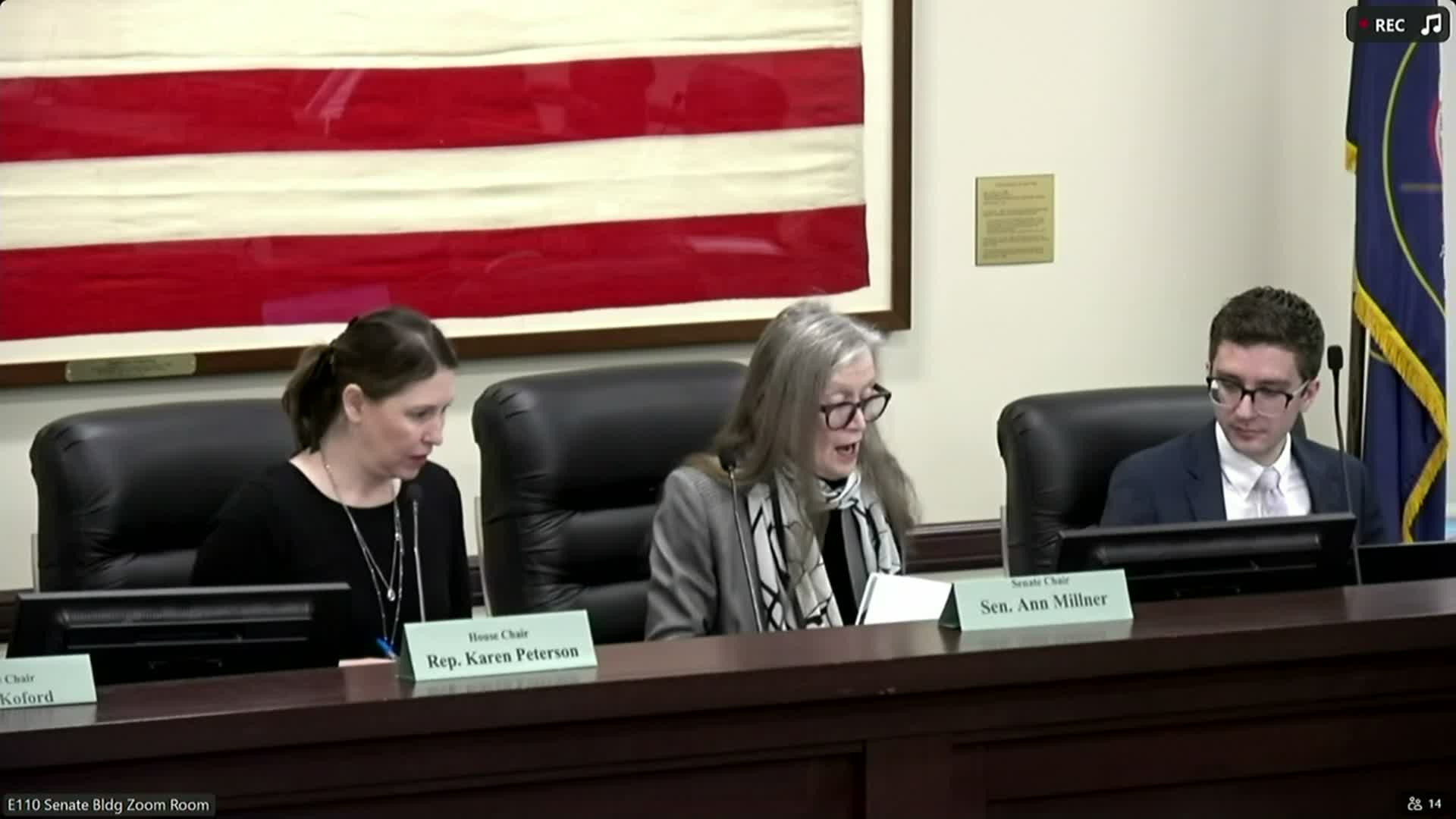
The Higher Education Appropriation Subcommittee on Feb. 11 approved its set-asides and a funding-prioritization list and, after amendments and debate, set a one-time research pilot at $35 million; the package was forwarded to the Executive Appropriations Committee for final decisions.
SALT LAKE CITY — The Higher Education Appropriation Subcommittee on Wednesday approved a package of funding set‑asides and a prioritized list of funding requests and amended a one‑time research pilot to $35 million after floor debate and competing amendments.
Senator Milner introduced the set‑asides and funding‑request prioritization, describing the list on pages 12–13 of the committee packet as a negotiated compromise between House and Senate priorities. “I think we need to let it go forward,” Milner said, urging members to forward the package to the Executive Appropriations Committee (EAC) for final action.
Representative Walter offered a substitute motion to cut the proposed higher‑education research funding pilot from $50 million one‑time to $20 million, arguing the larger appropriation would widen funding gaps between the state’s Research 1 (R1) institutions and other colleges. “In 2027, $908 million of state funds was allocated to Utah State University and the University of Utah,” Walter said, adding this was for roughly 60,000 students compared with $700 million for other degree‑granting institutions serving about 100,000 students.
Several members pushed back. Senator Kwan said additional cuts would harm research projects and the state’s ability to capitalize on federal and private matching funds. Senator Milner stressed the package represents one‑time funds and noted other institutions could compete for applied research dollars and matching support under the proposal. “This is one‑time money,” Milner said. “We don’t know how the budget’s really gonna finalize out in the end.”
Representative Mike Peterson framed the scale of the request in per‑capita terms, saying, “At $20 million, that’s $5.71 for every single Utahn. At $50 million…that’s $14 per person for every single Utahn,” and suggested a midrange figure would be more practicable given competing priorities.
After the substitute to $20 million passed some members’ chambers but not others, Representative Vickers offered a compromise amendment to set the pilot at $35 million. The committee adopted that amendment and then passed the set‑asides and prioritization list as amended. The clerk reported the final disposition as 4–2 in the Senate and 5–2 in the House. The package, including the amended $35 million research pilot, was sent on to the Executive Appropriations Committee for further consideration.
The packet also included routine items the committee approved earlier in the meeting: tuition adjustments to reflect anticipated collections, reporting requirements for institutional vehicle additions, revenue‑neutral internal reallocations, and intent language requesting a report on funding sources for veterans centers.
The panel adjourned after forwarding the package to EAC. EAC will make the final decisions on appropriation amounts and the committee’s recommendations.