
Norwalk Planning & Zoning Commission continues review of FY2026–27 capital budget after public comments on trail maintenance, clean energy and City Hall repairs
Get AI-powered insights, summaries, and transcripts
Sign Up Free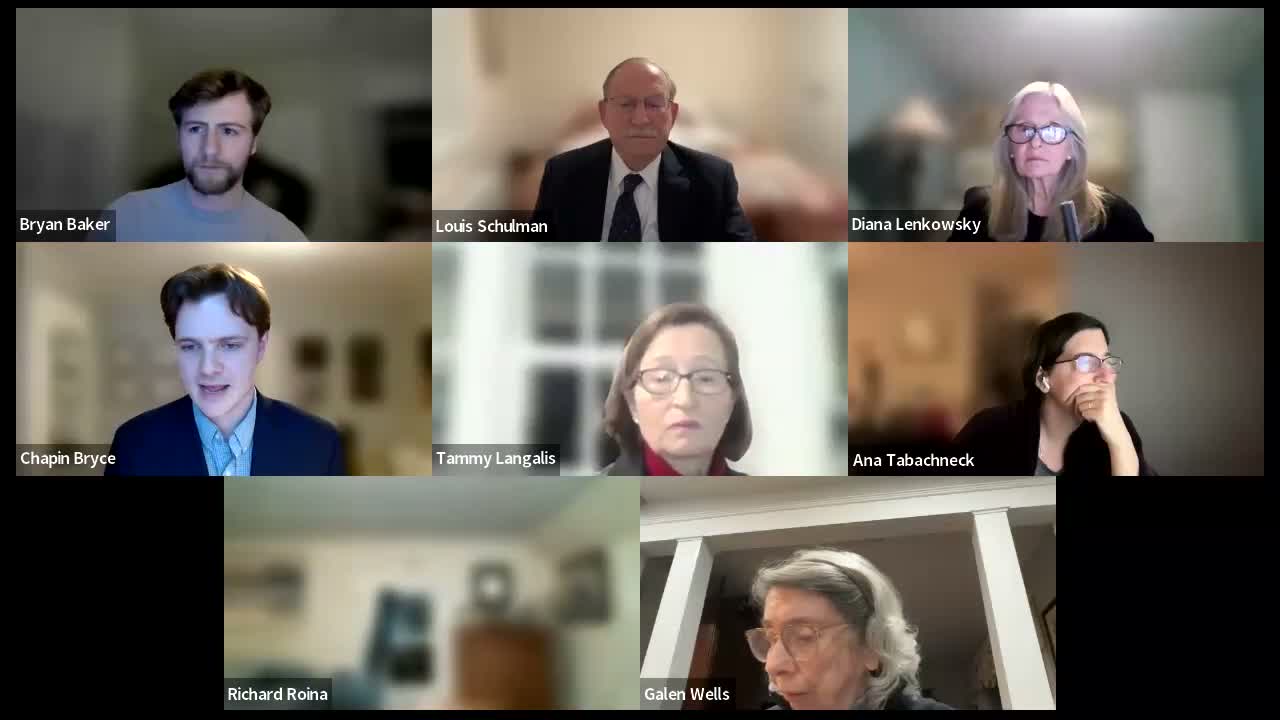
Summary
The Planning & Zoning Commission held a public hearing Feb. 11 on Norwalk’s FY2026–27 capital budget, heard public comments urging maintenance for the Norwalk River Valley Trail, more city clean‑energy investment and repairs to a deteriorating City Hall ceiling, and voted to continue its review to March 4.
The Norwalk Planning & Zoning Commission on Feb. 11 heard public comment on the city’s FY2026–27 capital budget and agreed to continue its review to the commission’s March 4 meeting to allow time to consider written letters and public input.
Chairman Bryce opened the special meeting by saying the commission’s role is limited to reporting whether proposals are consistent with the city’s Plan of Conservation and Development (POCD) and that the commission does not vote to allocate funding. "We do not vote on which projects are granted funding," he said, noting the commission will prepare a report for the City Council and Board of Estimate and Taxation.
Speakers urged the commission to consider maintenance, historic placards and clean-energy investments while making its POCD assessment. Tanner Thompson, a Norwalk resident, told commissioners the Norwalk River Valley Trail is "the backbone of our walking and biking, transportation network" and said parts of the trail had not been plowed recently. "Any investments that we make in walking and biking infrastructure ... are especially biking are ancillary to those that we make in the Upper Valley Trail," he said, urging the capital budget to include funds that can be used for maintenance and snow removal.
Diane Loracella, who identified herself as a longtime public commenter, asked the new City Council and mayor to consider expanding the commission’s role beyond strict POCD alignment and urged more visible investments along the NRVT. She suggested funding or pursuing grants for historic placards along the trail so new residents and businesses understand the river’s role in Norwalk’s development. She also urged larger clean‑energy investments for public property — listing ground‑mounted and roof‑mounted solar, geothermal and air‑source heat pumps — and said current local policy "only allows for solar panels ... to be placed on either new construction ... or additions to older schools," which she argued limits opportunities to capture available grant funds.
Commissioner Tammy raised a facilities issue, describing a deteriorating dome‑shaped ceiling on an upper floor of City Hall that has begun to shed plaster onto the floor and said repairs should be prioritized before costs grow. Tammy said she had contacted facilities staff and Mayor Rilling’s office previously and was willing to share photographs and prior correspondence.
Chairman Bryce and staff noted that the capital‑budget packet had been posted alongside the meeting agenda on the city’s civic‑clerk site and that the commission had received written letters to review. After brief discussion about department priority listings and how the POCD alignment is represented in the budget document, a motion to continue the item to March 4 was made and approved by a show of hands; the chair said the public would not be permitted to speak again at the continued hearing. The commission then adjourned the special meeting for the evening.
Next steps: the commission will review submitted letters and resume consideration of the FY2026–27 capital budget at its March 4 meeting; the commission will forward its consistency report to the City Council and Board of Estimate and Taxation.