
Senate committee advances SB72 on conscience protections for health workers after heated public testimony
Get AI-powered insights, summaries, and transcripts
Subscribe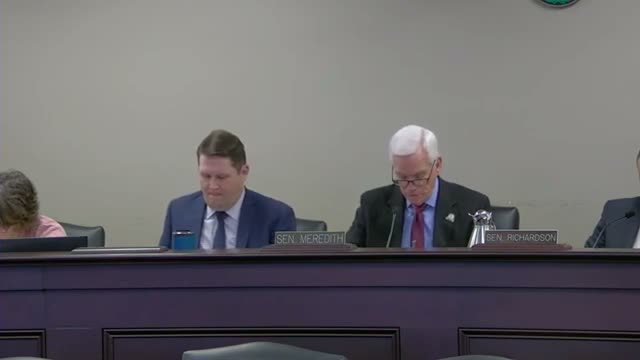
Summary
Senate Bill 72, described by its sponsor as a recruitment and conscience-protection measure for health professionals, advanced from the Health Services Committee by an 8-2 vote after extensive testimony from faith leaders, medical providers and advocacy groups who warned it would enable discrimination against patients.
The Senate Health Services Committee voted 8-2 to give Senate Bill 72 a favorable recommendation after more than an hour of public testimony and questions from members.
Sponsor Senator Don Douglas (District 22) told the committee SB72 is a "provider recruitment and retention tool" intended to allow health care professionals to follow "sincerely held" religious, moral or ethical beliefs without being forced from practice. Douglas said the bill would not apply to emergency-room care and described it as narrowly focused on protecting conscience where doing so would not "put others in danger or even interfere with the rights of others." He told members the statute would add civil remedies for affected providers that he said current federal remedies do not provide.
A long line of witnesses opposed the measure, arguing it is overly broad and would permit discrimination with limited recourse for patients. Reverend James Todd Smith of the Kentucky Council of Churches read the council's statement opposing SB72 and said, "We condemn the use of religious perspective... being applied in law without regard to scientific consultation and evidence based outcomes." Kent Gilbert, also representing the council, said the bill "shifts the protections of patients to become the protections of providers."
Medical and advocacy witnesses described a range of harms they say could result. Dr. Jack Skillis, a licensed clinical psychologist and executive director of an outpatient practice, said licensure exists to protect the public and that allowing providers to "abdicate this professional responsibility is a disservice" to patients. David Conway, an ordained minister and registered nurse, recounted a case he alleged involved repeated emergency visits that culminated in the death of an 18-year-old he named Nevaeh Crane; he said the bill's breadth raised patient-safety concerns. Jackie McGranahan of the ACLU of Kentucky warned that SB72 "creates a broad right to any health care professional or health care institution to refuse to provide a health care service" and noted the bill shields exercising providers from civil, criminal and administrative liability. Chris Hartman of the Fairness Campaign described hypotheticals—including receptionists, custodians and pharmacists—who could deny services under the bill's broad definitions.
Committee members questioned the bill's origins and scope. Senator Berg asked which medical societies requested the legislation and Senator Rawlings cited the Kentucky Constitution's Section 5 protections for conscience; Douglas answered legislators relied on constituent input and maintained the bill supports recruitment of providers. Senator Herron said recent measures to expand rural health access make this bill counterproductive and announced she would vote no.
On roll call, the committee recorded an 8-2 favorable recommendation. Senator Berg recorded a "no" vote; Senator Herron also voted "no." The chair said the bill will move to the full Senate for further consideration.
Next step: SB72 advances to the Senate floor where opponents and proponents may present further amendments and debate.