
Senate committee advances bill to seed nuclear-ready sites, sparking consumer protection concerns
Get AI-powered insights, summaries, and transcripts
Subscribe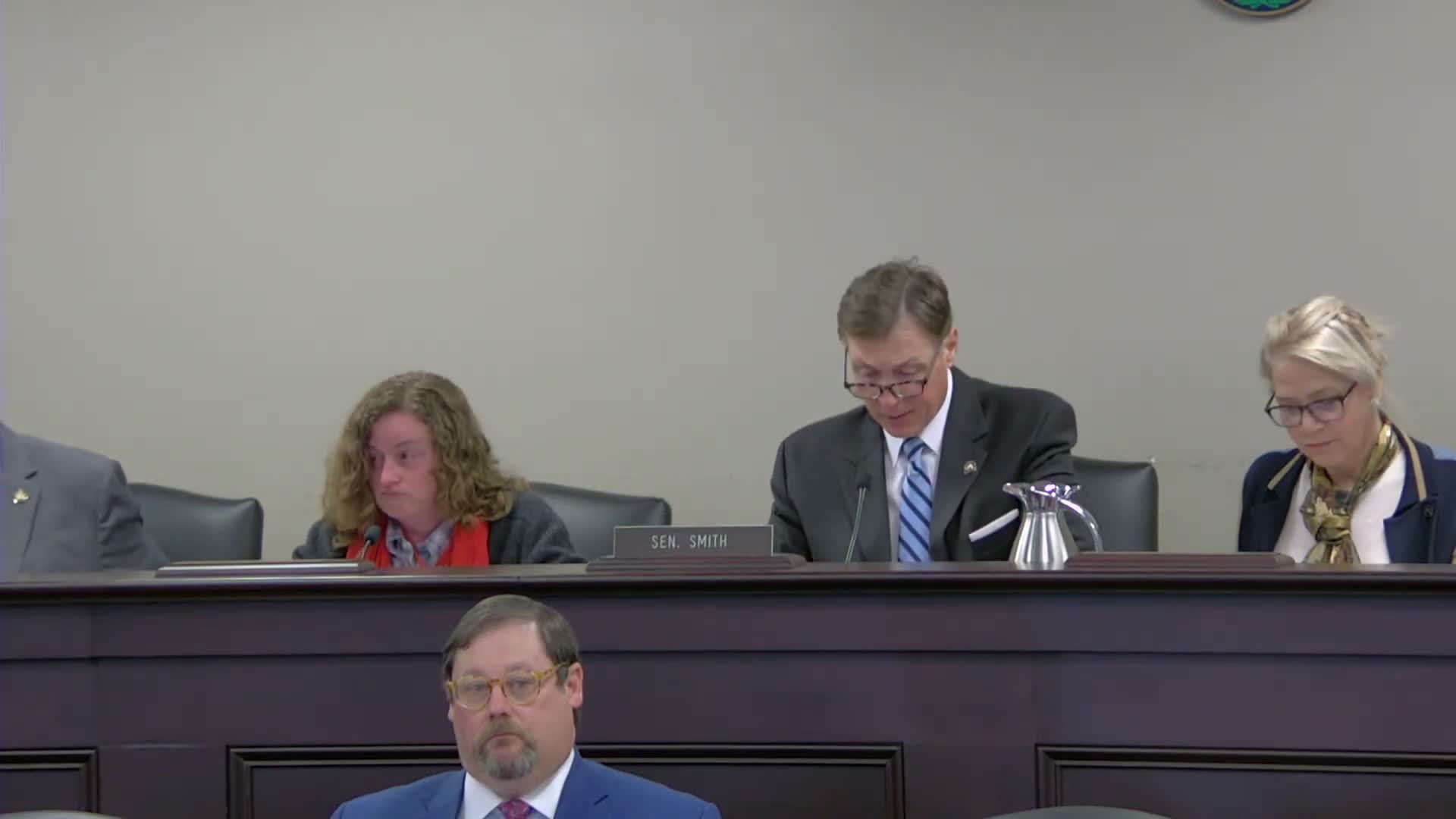
Summary
The Senate Natural Resources Committee voted to advance SB 57 to the floor. Sponsor Sen. Danny Carroll said the bill creates a NEDA-run pilot to award grants (up to $25 million per project) to develop nuclear-ready sites; Kentucky Resources Council warned the measure could shift early-stage costs onto ratepayers without adequate safeguards.
The Senate Natural Resources Committee on Thursday voted to advance Senate Bill 57, a pilot program that would fund preparation of sites and regulatory approvals to attract nuclear energy development, advancing the measure to the full Senate with a favorable report.
Sponsor Sen. Danny Carroll described SB 57 as a “nuclear ready site readiness pilot program” that would partner state agencies, utilities, developers and hyperscalers to support procurement of early site permits, construction permits or combined licenses from the Nuclear Regulatory Commission. Carroll said the program would be administered by the Kentucky Nuclear Energy Development Authority (NEDA) and that the state would contribute up to $25,000,000 toward permit procurement per awarded project, with NEDA reviewing proposals and recommending awards for a minimum of three projects.
Supporters said the bill is intended to kick-start a nuclear ecosystem in Kentucky, encourage private investment and create jobs, particularly in Eastern Kentucky. Carroll said the package also includes tax-incentive language to allow nuclear ecosystem projects to access economic development programs; the bill authorizes NEDA to hire third-party experts and requires training for NEDA advisory-board members. Carroll told the committee that proponents expect a $75,000,000 set of awards (three $25 million awards) could spur as much as a $20,000,000,000 economic return to affected communities.
“Those that may aspire to be supervisors or managers or directors or even commissioners … learn what it means to be a leader,” said Larry Taylor, legislative liaison for the Energy and Environment Cabinet, during an earlier recognition; Rodney Andrews of the UK Center for Applied Energy Research and Dr. Rodney Andrews also answered technical questions about small modular reactor (SMR) site footprints and federal permitting pathways.
Audrey Ernst Brecher of the Kentucky Resources Council (KRC), a nonprofit environmental law firm that represents downwind and downstream communities, urged caution. Brecher said SB 57, as originally filed, lacked codified protections to prevent ratepayers from bearing early-stage costs if projects never produce power. She noted the bill’s language allows utilities to seek cost recovery from ratepayers through the Public Service Commission and said the original drafting did not require surety bonds or repayment mechanisms comparable to the state grant provisions.
"Section 1 required utilities receiving state grants up to $25,000,000 to post a surety bond so the Commonwealth could recover the funds," Brecher told the committee. "Section 2 as filed also allowed utilities to recover costs from ratepayers without a corresponding surety or repayment mechanism to protect customers."
Carroll and witnesses said the committee substitute incorporated protections and set timelines, that NEDA would impose conditions and that grants could be refundable if milestones were not met. Carroll also said the legislature — not NEDA alone — would make the final selections of projects to avoid conflicts of interest given utility involvement on NEDA.
During Q&A senators pressed on fiscal exposure, site size and permitting timelines. Senator Boswell asked for an estimate of taxpayer cost over 10 years; Carroll responded that the state set aside a maximum of $75,000,000 for the pilot awards and that any cost recovery by utilities would depend on future PSC decisions and project-specific variables. Dr. Andrews and others described SMR exclusion zones as far smaller than traditional reactor sites and noted federal programs and preapproved designs could accelerate timelines.
The committee recorded the following votes on SB 57 (as amended by committee substitute 1): Aye — Boswell, Carpenter, Elkins, Maiden, Mills, Webb, West, Wheeler, Williams and Chair Smith; No — Neal; one member asked to explain a pass vote. Chair Smith announced the bill passed the committee with a favorable expression and recommended the bill for the floor.
The committee record shows sponsor Carroll thanked legislative staff (naming Stefan Kasikovich and Jeff Harmon) for drafting assistance. The committee chair said members with outstanding questions could follow up with the sponsor as the bill moves forward.
SB 57 now goes to the Senate calendar for further consideration.