Get Full Government Meeting Transcripts, Videos, & Alerts Forever!
Get email alerts on the Housing Development topic
No spam. Unsubscribe anytime.
Committee Advances Bill Letting Local Governments Create Infrastructure, Housing Development Districts
Summary
Senate Bill 9, designed to spur housing construction, was reported favorably by the committee (9 yays, 1 pass). The bill authorizes residential infrastructure development districts (minimum 5 acres, at least $5M infrastructure) and housing development districts (up to 1,000 acres; projects of 15+ units) and allows local negotiable incentive payments and permitting flexibility; sponsors say bonds and assessments will be repaid from the district.
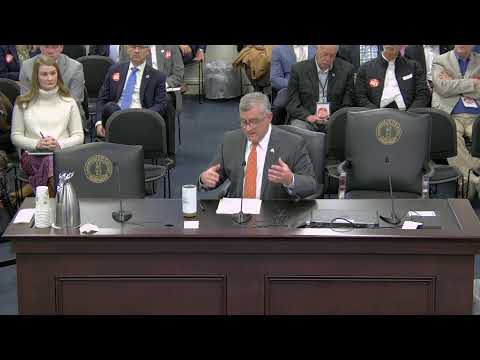
State Sen. Robbie Mills presented Senate Bill 9 to the Senate State Local Government Committee, which voted to report the bill favorably with nine yays and one pass.
Mills framed the bill as one response to what he described as a shortage of housing in Kentucky, saying the Commonwealth is "short 206,000 housing units" and predicting that without action the shortage could grow. He said SB9 creates two voluntary tools for local governments to encourage development.
The first tool, a residential infrastructure development district, must include at least five acres and require at least $5 million in infrastructure costs. Under the proposal, a developer proposes an infrastructure plan; upon approval a local government could bond for the infrastructure and make funds available immediately. Repayment would be via a special assessment on lots in the district, with the local government acting as collector, and the bill allows an administrative fee to reimburse the local government for collection costs.
The second tool, a housing development district, would be established by local ordinance and may not exceed 1,000 acres. Within a housing development district, developers may apply with projects of at least 15 housing units, including multifamily or mixed-use housing. Local governments could negotiate annual housing incentive payments based on a percentage of prior-year property tax revenue from participating taxing districts; the payments would be limited to a maximum of seven years for new construction and 15 years for rehabilitation. The bill also allows alternative permitting or expedited review within a district if the local government chooses.
Sen. Tishner expressed concern about public input and the potential for local governments to shift long-term costs onto municipal budgets; Mills responded that the bonds are intended to be repaid from the district itself and not from outside taxpayers. Sen. Chambers Armstrong asked whether the bill requires affordable units; Mills said the bill does not impose mandatory affordability percentages, but gives local governments authority to negotiate workforce housing or first-time-buyer requirements as part of incentive packages.
After discussion, the committee voted to report SB9 favorably and the chair announced the measure passed committee with nine yays and one pass; the bill is expected to move to the full Senate.