
Boyertown Area SD finance committee previews 2026–27 budget with 2% tax increase and phased pay adjustments
Get AI-powered insights, summaries, and transcripts
Sign Up Free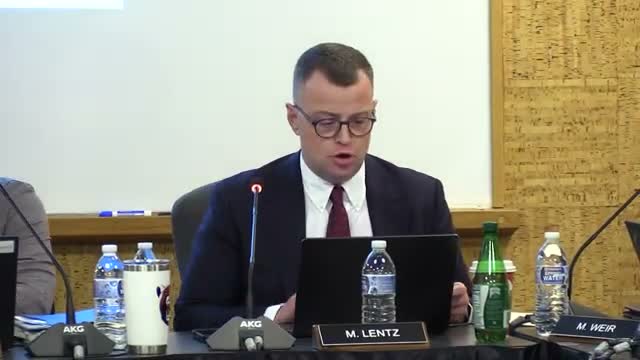
Summary
Finance committee presented a draft 2026–27 budget that includes a proposed 2% property tax increase, $252,000 in annual market adjustments for support staff phased over two years, capacity for full-day kindergarten staffing, and planned transfers to capital and debt-service reserves.
Presenter (Speaker 1) presented the Boyertown Area School District’s draft 2026–27 budget, saying, “So at this point still, we're looking at a 2% property tax increase.” The finance update tied the draft to completion of the 2024–25 audit and to updated revenue trends that staff said raise total projected revenue from roughly 148.0 million to about 158.3 million.
The draft includes capacity for full-day kindergarten and staffing assumptions: two FTEs carried forward this year and an assumption of five full-time equivalents in 2026–27 so the district can add positions without a substantial additional tax increase when the program is launched. Presenter (Speaker 1) also listed four full-time additions budgeted for next year—an ELL position at the high school, two elementary intervention positions and one middle-school intervention position—and six coaching positions.
On compensation, Presenter (Speaker 1) said the budget incorporates a market-adjustment plan for support staff totaling roughly $252,000 per year and $505,000 over two years. Mr. Hahn, who explained the county benchmarking, said some district support roles lag neighboring markets: “From a Montgomery County standard, some of our positions are roughly about $10.50 an hour off,” and he described a two-year phase to move half the variance into the 2026–27 budget and the remainder in 2027–28 to improve recruitment and retention.
Presenter (Speaker 1) said the district expects some contractual costs to rise—one vendor shown as “Kres” is projected at about a 3% increase—and staff included a 10% trend assumption for health-care rates in the draft because the final health-insurance rates are not yet available.
The draft also sets aside reserves and transfers intended to smooth large projects and debt. Presenter (Speaker 1) described a $2.7 million capital reserve transfer and a $1.5 million budgetary reserve. Staff noted planned allocations that could include up to $7.5 million allocated to capital reserve (including $2.5 million aimed at technology replacement) and a $5.0 million transfer to the debt service fund to help phase in or pay down obligations.
On audits and timing, Presenter (Speaker 1) said local auditors are expected to present the 2024–25 audit at the district’s legislative meeting later this month; a federal single-audit guidance delay pushed finalization of many districts’ audits. Next steps in the schedule include any state-funding updates in March, a practical budget review in April, required board approval of the proposed final budget in May 2026 (with public advertisement), and final approval at the June legislative meeting before submission to the Department of Education.
No public commenters were signed up for either public comment period. A motion to adjourn was made and the meeting was closed.
What’s next: auditors will present the 2024–25 audit at the legislative meeting later this month; the board is scheduled to consider the proposed final budget in May and approve it in June if timing proceeds as presented.