
Council briefed on bills affecting municipalities, including damages rules and special-service districts
Get AI-powered insights, summaries, and transcripts
Subscribe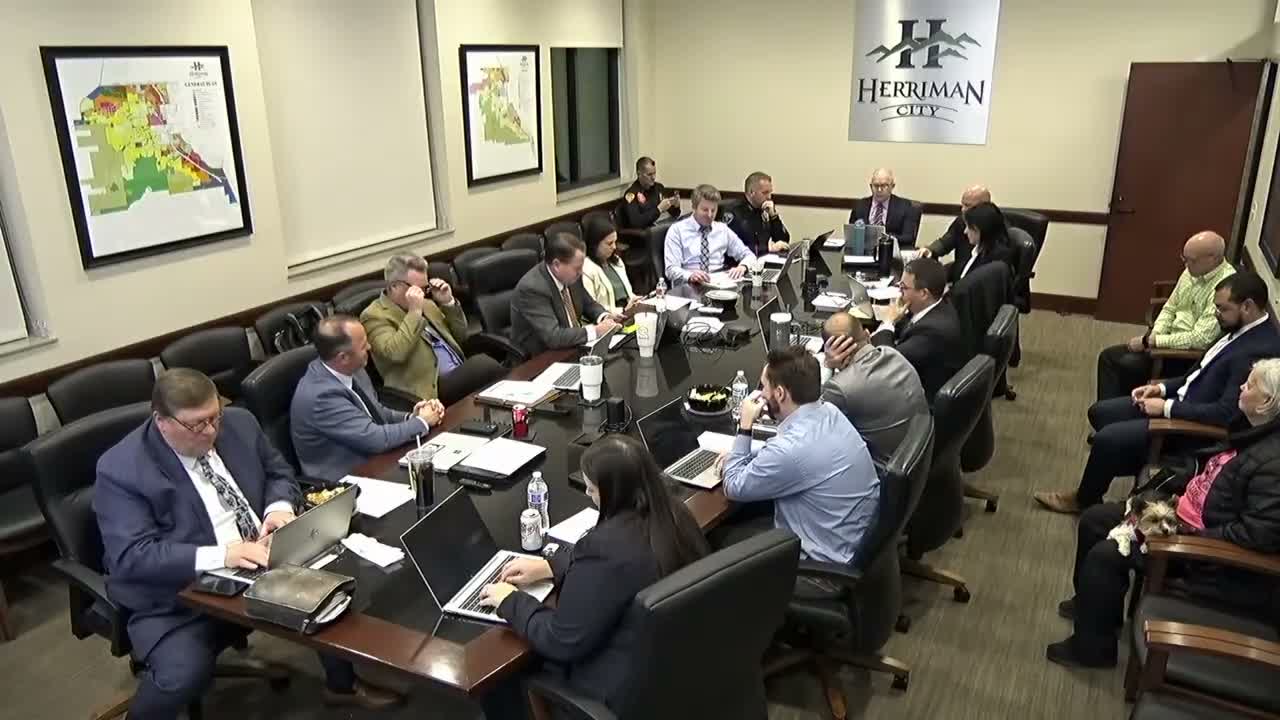
Summary
Council reviewed two competing bills on personal-injury damages (SB211 and SB280) and discussed HB429, a bill to create a feasibility-based exit path from certain trash service special districts; concerns centered on municipal liability exposure and the difficulty of withdrawing from special districts under current law.
During the Feb. 11 meeting, council members and staff reviewed pending state legislation that could affect municipal liability, service-district governance and housing policy.
Personal-injury damages: staff summarized two bills: SB280 would follow a Utah Supreme Court decision allowing evidence of what a plaintiff paid (and thus what providers charged/reimbursed) in special damages; SB211 would take the opposite approach and largely exclude evidence of the insurer-negotiated paid amounts. A presenter said SB211 could increase municipal exposure in personal-injury cases because it would permit higher damage calculations and that the council and league were working to oppose SB211.
Special-service districts (HB429): staff described HB429 as a narrowly tailored bill addressing trash service districts and creating a formal process for municipalities to withdraw. Under the bill as discussed, the municipal legislative body may pass a resolution notifying the district and conducting a feasibility study focused on debts, liabilities and assets; the feasibility study (and who pays for it) was discussed but not fully specified in the presentation. Staff said the language attempts to make withdrawal feasible without requiring the city to shoulder all costs and that the bill had been well received in committee.
Housing and preemption bills: council members debated housing-related legislation, including a referenced preemption bill (noted as “184” in discussion) that some members worried could force cities to approve developer requests or limit municipal infrastructure planning. Council members said they were tracking hundreds of bills and coordinating with the League and county groups on items with fiscal impacts.
Next steps: staff asked council members to keep tracking and reach out to representatives where appropriate and noted ongoing coordination with the city’s lobbyist and legislative partners.