Senate approves interstate dental hygienist compact after debate over sovereignty and costs
Loading...
Summary
The Oklahoma Senate passed Senate Bill 540, an interstate dentist/dental hygienist compact intended to ease licensure portability for military families and address a shortage of dental hygienists. Opponents warned it could limit state rulemaking and expose Oklahoma to out-of-state enforcement costs.
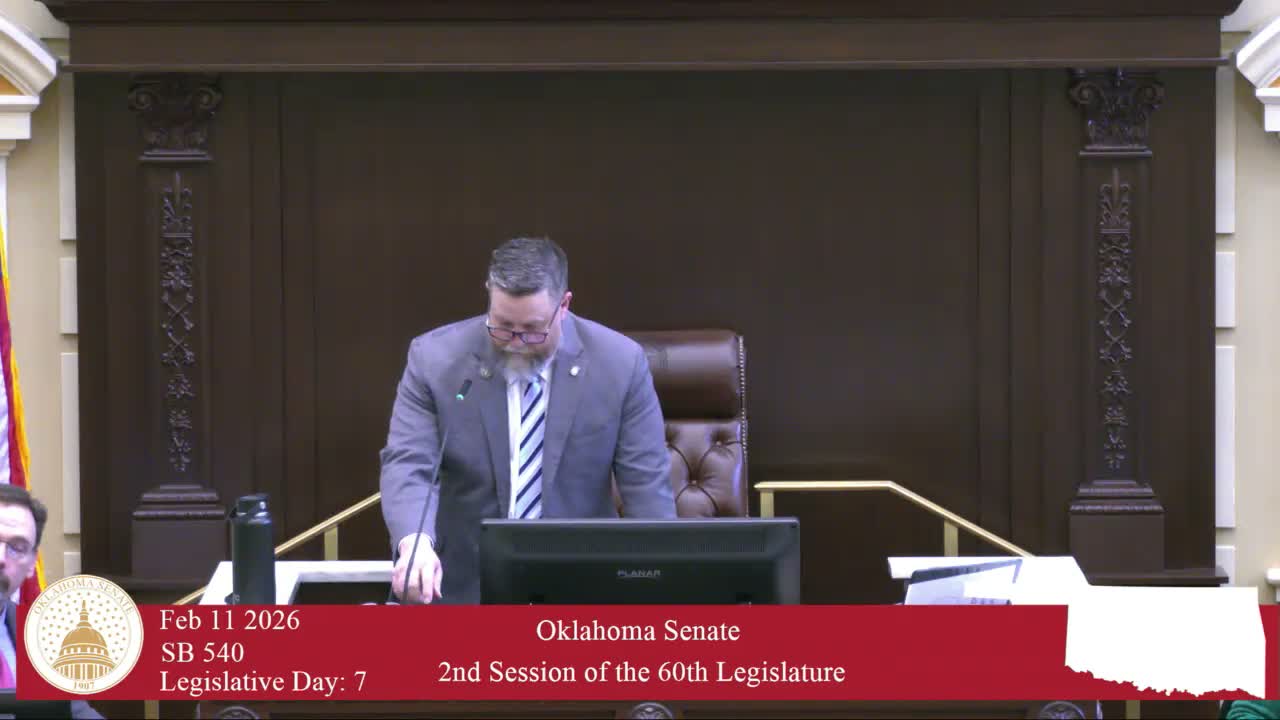
Senator Stanley secured passage of Senate Bill 540 on third reading after floor debate that centered on licensure portability, state sovereignty and potential fiscal exposure. The bill enacts an interstate compact to recognize dentist and dental hygienist credentials across member states and was introduced as a Department of Defense-request measure to ease workforce portability for military families.
Supporters, led by Senator Stanley, said the compact is intended to allow dental hygienists and dentists with the same credentials used in other member states to practice in Oklahoma without undergoing duplicative licensure steps. "This makes it easier for military spouses to move into the state, recognize licensures," Stanley said in explanation, citing personal experience as a military spouse. Proponents argued the compact would help address a shortage of hygienists and contribute to workforce development.
Opponents including Senator Grellner and Senator Bergstrom raised constitutional and practical concerns about ceding regulatory control. Grellner asked whether the compact would "impede on the sovereignty of Oklahoma," and questioned whether agreeing to a compact could mean accepting lower standards from other states. Bergstrom pressed on a provision stating "no participating state's rule making requirements shall apply under this compact," and outlined a hypothetical where a majority of compact commission members could adopt rules and seek enforcement in federal court — potentially binding dissenting states and imposing legal costs.
Senator Stanley responded that the compact follows standard interstate-compact language and the Administrative Procedure Act, and that the provisions have been vetted by professional groups. On fiscal concerns — including a provision allowing the compact commission to "levy an annual assessment" on participating states and impose fees on licensees — Stanley said she had seen no fiscal impact and noted similar language has not produced reported problems in other compacts.
After debate and a roll call, the clerk announced the result as 35 ayes and 12 nays. The Senate advanced and passed Senate Bill 540 on third reading.
The next procedural step is enactment processes and any required implementation actions by Oklahoma occupational boards; the transcript did not specify an effective date or implementation timeline.