Get Full Government Meeting Transcripts, Videos, & Alerts Forever!
Get email alerts on the Child Protection topic
No spam. Unsubscribe anytime.
House passes amended bill criminalizing pattern 'grooming' of minors after lengthy debate and multiple amendments
Summary
House Bill 9, a measure creating a crime for pattern grooming behavior directed at children, passed the Committee of the Whole after a long debate and eight committee amendments that narrowed and clarified scope, penalties, online/digital coverage, and age thresholds.
House Bill 9 — which would criminalize repeated and intentional conduct aimed at preparing a minor for sexual contact or exploitation — passed out of the Committee of the Whole after extended debate and a series of amendments intended to refine the bill’s reach and penalties.
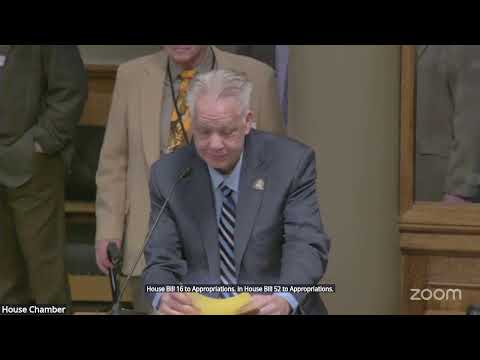
Representative Lee, the bill’s floor explainer, said the statute targets patterns and intent rather than single communications: "It does not criminalize a single text message or compliment," Lee said, adding the offense focuses on a deliberate pattern to normalize contact and produce harm. The Committee of the Whole adopted a standing committee amendment that clarified the statute’s language and adjusted penalty structures to align with existing criminal code.
Members offered a range of amendments and critiques. Representative Wiley’s committee amendment updated definitions for digital platforms and proposed higher penalties for 'trusted' individuals (teachers, clergy) who abuse positions of authority; Representative Brown offered a series of drafting amendments to avoid duplicating existing sexual‑assault statutes; other amendments adjusted age thresholds and penalty levels to avoid unintended prosecutions of near‑age peers. Several clarifying amendments were adopted; one amendment to carve out certain educational or faith‑based sexual‑health instruction failed on a division.
Supporters said the law is narrowly tailored to predatory conduct. Representative Washut, sponsor in committee, said expanding the statute addresses a tragic local case where adult conduct toward teenagers remained a misdemeanor and victim services were constrained. Critics warned about scope creep and the risk of chilling legitimate educational or mentorship communications; Representative Chastick proposed and pressed an amendment to protect bona fide sex‑education and sponsored programming.
After debate and adoption of multiple committee amendments, HB9 was recommended by the Committee of the Whole to pass with amendments and will advance to later readings. Sponsors and committee chairs said they will work with prosecutors and enforcement agencies to finalize implementation and training.