Public testifiers press commission to strengthen enforcement and preserve humans-in-the-loop for AI
Loading...
Summary
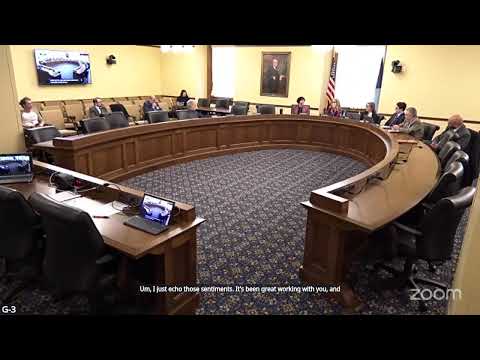
Public witnesses and commissioners urged clearer enforcement pathways for the Data Practices Act and recommended studies and graduated enforcement options; several speakers stressed preserving human oversight in AI systems used by government.
Public testimony at the Feb. 11 meeting emphasized that statutory rights to public data often fail in practice because enforcement is fragmented, slow or cost-prohibitive.
Dr. Bebe Neumann, a Saint Anthony Village resident, urged the commission to focus on enforcement design rather than only statutory wording. "Transparency laws succeed or fail not primarily based on how clearly they are written, but on how enforcement is structured," she told commissioners, arguing that reliance on advisory interpretations and litigation can make access uneven and dependent on resources.
Matt Ealing of Minnesotans for Open Government urged the commission to commission a study documenting how government currently uses AI and to align retention periods with established model retention schedules where possible. He noted some bills under discussion model a three-year retention period on existing retention schedules.
Rich Neumeister recommended clarifying the role and capacity of the Data Practices Office and asked whether advisory opinions should be binding. Representative Hudson and others discussed a graduated enforcement approach — for example, moving early violations to a ticketing/misdemeanor model that would allow non-escalatory remedies and permit escalation only after repeated noncompliance.
On AI, multiple speakers stressed a "humans-in-the-loop" requirement for decisionmaking tools used in employment or court-related contexts to prevent error, bias and misplaced reliance on automated outputs. Senator Lucero warned that removing humans from decisions affecting due process could cause significant infringements.
The commission did not adopt enforcement legislation at the meeting but members encouraged further study and to brief committee chairs, and they signaled willingness to coordinate on targeted proposals.