
Committee advances 'freedom of conscience' workplace bill limiting pronoun mandates
Get AI-powered insights, summaries, and transcripts
Subscribe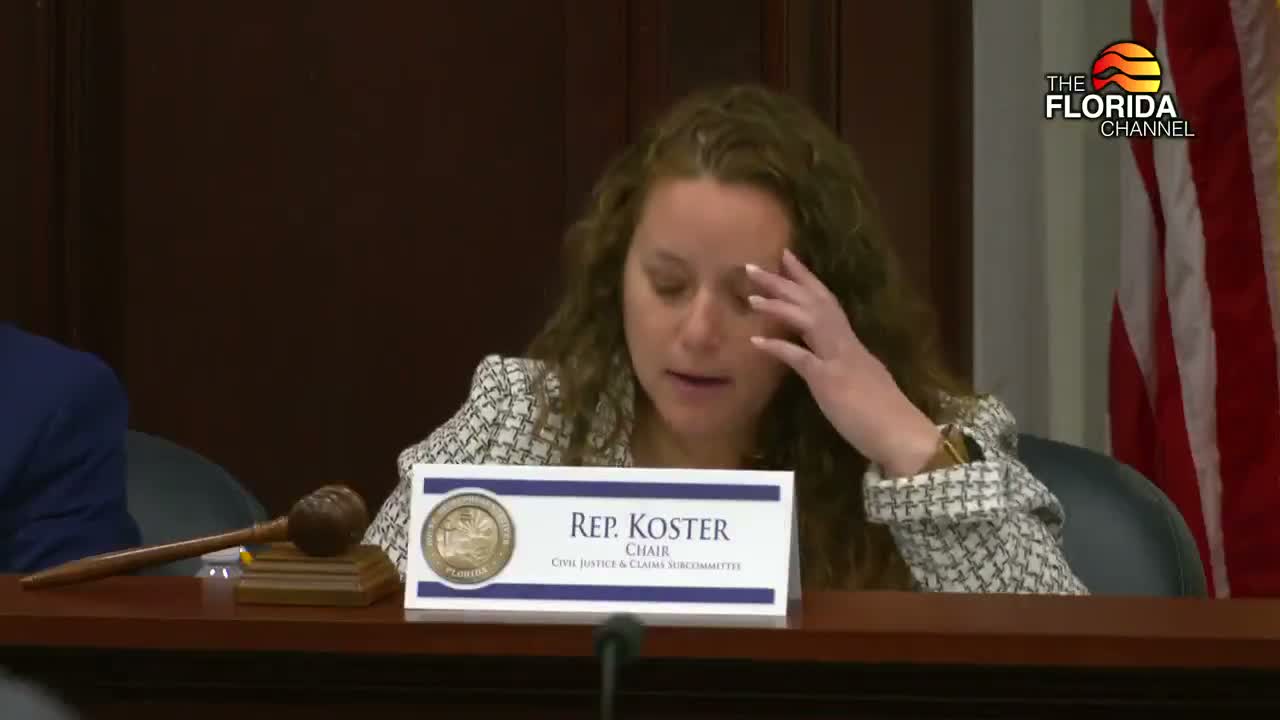
Summary
CS/HB 641, presented as protecting conscience and free speech by prohibiting public employers from requiring pronouns that conflict with beliefs, passed the subcommittee after hours of questioning and a large public-comment record. Supporters say it protects conscience; opponents say it permits harassment. The committee reported favorably as amended.
The Civil Justice and Claims Subcommittee considered CS for HB 641 on Feb. 12, a bill the sponsor described as the "Freedom of Conscience in the Workplace Act." Representative Plagen told members the measure would prohibit public employers and their employees or contractors from requiring use of preferred pronouns that do not "correspond to a person's sex at birth," limit gender designations on state employment forms, and bar state-funded employers from requiring trainings on gender ideology.
Ranking Member Rhett Raynor and others asked detailed questions about how the bill would operate alongside federal anti-discrimination law (including the Bostock decision), whether repeated misgendering could still be considered harassment, and how agencies would enforce compliance. Sponsor Plagen repeatedly responded that the bill does not permit harassment and left room for investigations where misconduct was shown; she said the Department of Management Services would have rulemaking authority to implement unclear elements (for example, verifying birth-assigned sex).
Public testimony was extensive and sharply divided. Supporters — including the Christian Family Coalition and some city officials — said the bill protects employees from compelled speech and preserves conscience and religious liberty in public employment. Opponents, including Equality Florida, Voices of Florida, teachers, medical and mental-health professionals, and many individuals, argued the bill would create carve-outs for harassment, weaken workplace protections for transgender employees, and result in negative mental-health and recruitment consequences for employers and schools.
Representative Nicks, who spoke in favor during debate, urged protection of conscience and local workplace flexibility. Critics warned of operational ambiguity: how employers and supervisors would reconcile conflicting claims, who would bear the burden, and whether the statute would invite litigation. Sponsor and proponents said the bill applies to government employers and entities receiving state funds, not to private businesses generally.
By late afternoon the committee voted to report CS/HB 641 favorably as amended, with the clerk recording the committee action. Debate participants signaled that the issue will continue to be litigated and debated in later stages given its collision with federal employment law and civil-rights obligations.
What’s next: The measure moves forward with a substantial public record that opponents say will fuel further scrutiny and potential legal challenges as the bill advances through the House.