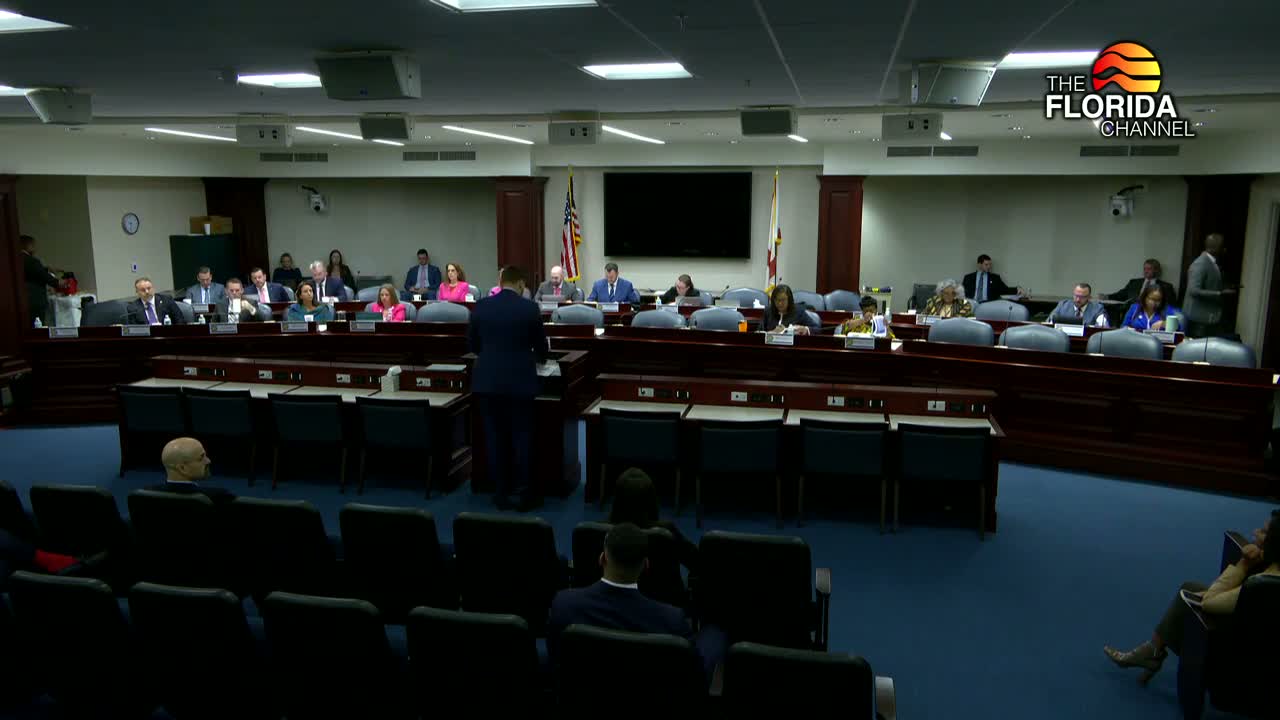
Subcommittee advances bill to create a framework for a Florida cryptocurrency reserve
Loading...
Summary
Representative Snyder's HB 1039 would create a legal framework for a state cryptocurrency reserve administered by the State Board of Administration, with strict eligibility (very large market-cap coins), institutional custody and biannual reporting to the legislature; the committee adopted an amendment moving administration to SBA and reported the bill favorably.
Representative Snyder told the Insurance & Banking Subcommittee that HB 1039 would establish the legal framework for a possible Florida cryptocurrency reserve without appropriating funds. The stated purpose is diversification of the state's investment options and preparedness for future opportunities in digital assets.
Snyder said the bill creates strict eligibility criteria intended to limit purchases to the largest, most established coins. “As of today, there's about 5 or 6 cryptocurrencies that would meet this eligibility of a $100,000,000,000 cap in the last 12 months,” he told the committee, citing Bitcoin and Ethereum as examples. He emphasized the bill is optional: it does not fund a reserve now and any funding decision would be separate and require legislative appropriation.
A strike-all amendment moved executive oversight of the reserve from the CFO’s office to the State Board of Administration (SBA) and added definitions to strengthen custody and selection processes for qualified liquidity providers. Proponents including Eric Baker of Satoshi Action Fund said the amendment was appropriate because the SBA manages billions in state assets and has the institutional expertise needed to oversee such a reserve.
Members pressed for more frequent reporting given market volatility. Snyder said the bill requires biannual reporting but that the legislature could request more frequent information and that the administrator has authority to liquidate assets if market conditions change.
The committee adopted the amendment, heard proponent testimony and voted to report HB 1039 favorably with a committee substitute. The measure will move forward with sponsor and committee members expecting additional technical work on definitions and implementation details.