Lifetime Citizen Portal Access — AI Briefings, Alerts & Unlimited Follows
Sumner council and planning commissioners attend training on Robert's Rules to sharpen meeting practice
Loading...
Summary
Sumner City council members, planning commissioners and staff attended a joint training led by Tisha Geezer of Jurassic Parliament covering Robert's Rules hierarchy, chair/member roles, the eight-step motion process, points of order, public comment rules, quorum and voting procedures.
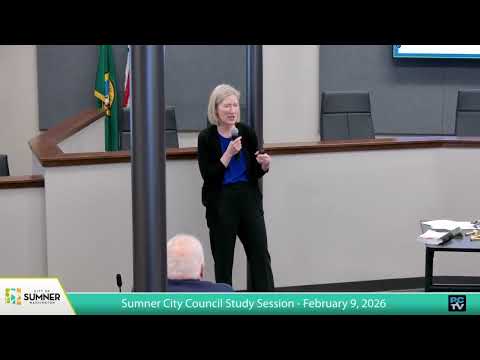
Sumner City council members, planning commissioners and key staff participated in a joint training session on Robert's Rules of Order led by Tisha Geezer, a registered parliamentarian and trainer with Jurassic Parliament. The session, framed as interactive training rather than legal advice, focused on chair and member roles, motion processing, managing discussion and public comment, and handling points of order and appeals.
Tisha Geezer said the session aimed to give the bodies a consistent process so “policy gets made” in a repeatable way and to foster civility at meetings. She framed a central principle for deliberative bodies: “the authority of the group is more important than any single individual,” and walked attendees through how that principle affects chair conduct and member voting.
Trainer guidance emphasized that the chair serves as a neutral facilitator: recognizing speakers, managing time, enforcing order and restating motions so the body is clear on what it will vote on. She recommended that chairs exercise restraint—speak and vote after others when practical—and use clerks or the parliamentarian to track amendments and complex motions.
The training covered the eight-step motion process (motion, second, chair restates, discussion/amend, chair restates, vote, announce outcome, next business) and used a brief role-play about homeowners building “catios” to demonstrate maker’s privilege, the function of a second, amendment handling and the sequence for final votes. The instructor advised drafting motions in writing when possible to ensure accurate wording and clear minutes.
On quorum and voting, trainer guidance identified Sumner’s quorum at four members for both bodies and noted the default voting rule is a majority of those present (for example, three votes when four members form a quorum). She also said that under local practice abstentions are generally not allowed unless a member has a conflict of interest; in that case, “you are excused from voting,” commonly called a recusal.
The instructor detailed tools for managing discussion so meetings are equitable and efficient: requiring recognition by the chair, limiting sidebar conversations, round-robin speaking options, and rules that prevent a member from speaking a second time until others who wish to speak have had a turn. She cautioned that smaller committees may operate with more informality but recommended consistent application of rules to prevent domination by a few voices.
Tisha Geezer reviewed point-of-order procedure and appeals: a point of order is a timely claim that a procedural mistake occurred and the chair must rule; members can appeal a ruling to the body, and a tie vote sustains the chair. She noted that local council and planning commission rules may alter debate or seconding requirements for appeals.
On public comment, the trainer advised treating comment periods as structured opportunities to inform the body (not to debate on the spot), keeping any time/place/manner limits viewpoint-neutral, discouraging demonstrations such as applause or booing, and routing substantive follow-ups to staff to ensure consistent responses. She urged chairs to thank commenters and to rely on staff for more detailed answers after the meeting.
The trainer closed by summarizing the session’s learning goals and offering handouts and follow-up resources; the city purchased copies of Jurassic Parliament materials and staff circulated a sign-up sheet for further training.
The session ended with a brief Q&A and adjournment. No formal council or commission actions were taken during the training.