Get Full Government Meeting Transcripts, Videos, & Alerts Forever!
Get email alerts on the Housing And Homelessness Policy topic
No spam. Unsubscribe anytime.
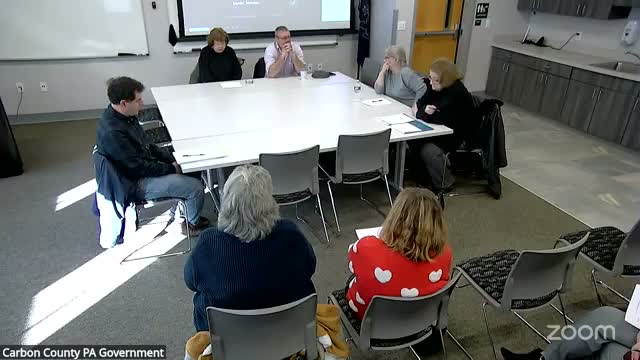
Task force flags landlord engagement, voucher shortfalls and transit gaps as barriers to housing in Carbon County
Summary
Members reported a lack of affordable rentals, landlord reluctance to accept clients with records, a potential HUD voucher 'shortfall' that may limit voucher availability, and confusing or limited public transit that prevents clients from sustaining employment.
Carbon County task force members described multiple barriers that they say are preventing people served by local programs from obtaining or keeping housing: limited affordable rentals, restrictive landlord screening, federal voucher funding shortfalls, and transportation gaps.
An action-committee representative said the committee recorded 48 contacts since its last meeting (Nov. 21), with seven people identified as street homeless, 19 households enrolled and seven HMIS referrals, and is currently serving 34 households. The speaker said budget limitations and staff vacancies have constrained homeless-prevention and rapid-rehousing work and that reallocated salary funds temporarily supported prevention assistance that averaged about 10 households per month.
On voucher funding, a housing representative warned of a federal "shortfall" affecting housing authorities: "We have about 430 vouchers that we should be eligible for. We fund about 360, 70 in that area," the speaker said, describing a gap between voucher eligibility and funded vouchers as rents rise and HUD allocations lag. The representative said the gap could widen in coming years and noted national conversations about program changes, including possible time limits for certain populations.
Participants discussed landlord engagement as a near-term strategy. Committee members reported outreach to Tom Campbell at United Way of Monroe, who may present information about landlord-engagement funding in the spring. The housing committee scheduled a meeting for March 26 at 3 p.m. to pursue short- and long-term goals and to invite landlords to describe requirements and application criteria.
Transportation was repeatedly cited as a practical barrier. Speakers described Carbon County Transit and GTI schedules as confusing and limited (no evening service on many routes), which makes it difficult for clients to access and keep daytime jobs. The group proposed inviting Larissa Kimmel, described in the meeting as a transportation ambassador, to present and explain the system at a future meeting.
Participants suggested interim measures including trusted landlord partnerships, shared-housing or senior home-share models and regional partnerships (Pocono Mountain United Way, Lehigh Valley programs) as ways to expand options while longer-term development or rehab projects are pursued. A participant raised the PHFA program that appears to be a no-interest ARP loan program (statewide funds were cited at about $35 million and per-project caps were described as around $200,000), but speakers said rehab costs and HUD uncertainties could limit use locally.
Next steps: the task force will pursue landlord outreach, convene working groups with specific goals, follow up with regional partners about funding models, and invite transportation and United Way representatives to future meetings.