
Planning board forwards traffic‑study rules and zoning amendments on adaptive reuse and reconstruction to town council
Get AI-powered insights, summaries, and transcripts
Sign Up Free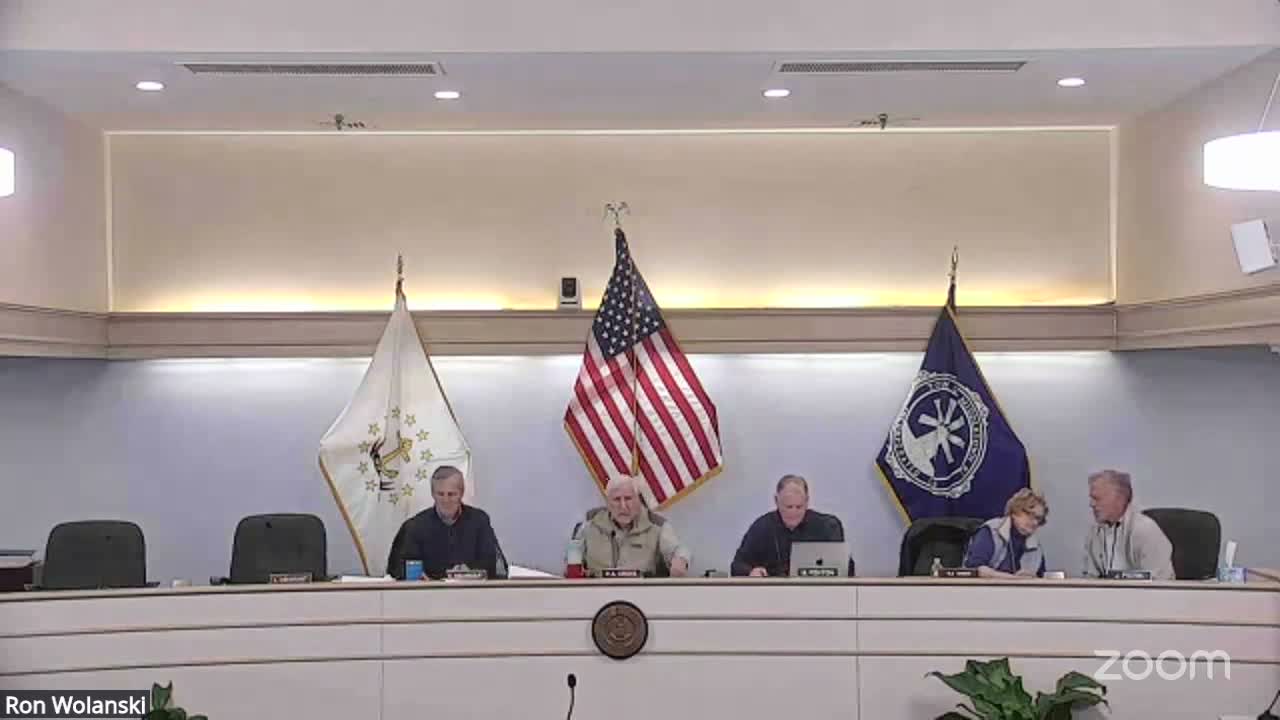
Summary
The board voted to forward (1) traffic impact study requirements for subdivision/development regulations, (2) adaptive‑reuse zoning amendments (allowing limited expansion), and (3) a zoning change clarifying a property owner may seek zoning relief after destruction of a nonconforming structure, to the Town Council for ratification.
The Middletown Planning Board voted unanimously to forward a package of technical and zoning amendments to the Town Council for ratification.
The board adopted proposed Appendix D, which adds traffic impact study requirements and guidance to the town’s subdivision and development regulations; no members of the public commented at the hearing. The board approved a motion to adopt the standards for planning‑board use and to forward a recommendation to the Town Council for ratification.
Staff also presented draft amendments to Town Code §152‑728 (adaptive reuse) to implement changes in state law. The draft would, at the board’s discretion, allow a single‑story addition or up to a 50% increase in the footprint of an existing building as part of an adaptive reuse project, and in some cases permit additional residential development on properties converted to housing provided dimensional and zoning requirements are met.
A solicitor‑recommended change to Town Code §802 was also forwarded. That amendment adds language to make explicit that a property owner may seek zoning relief in cases where a nonconforming structure is destroyed or demolished — a clarification prompted by a Rhode Island Supreme Court decision involving the town of Westerly. The board’s solicitor and staff recommended the change to avoid a statutory gap that could prevent appropriate relief after an appeal.
All three items were advanced with favorable recommendations to the Town Council for their review and adoption.