DNR and county outline monitoring, SnapPlus training and cover‑crop outreach for Buffalo Lake watershed
Loading...
Summary
DNR and Marquette County staff described a monitoring program of eight sites and monthly samples, explained phosphorus assessment thresholds and outlined farmer outreach including SnapPlus nutrient‑management training and cover‑crop demonstrations to reduce loads.
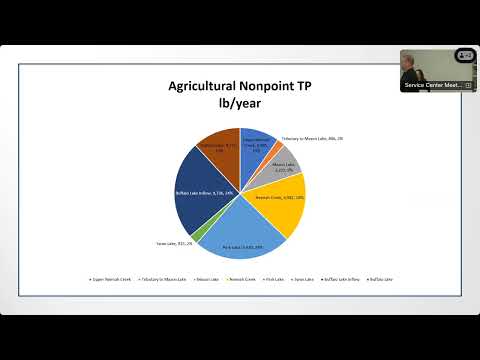
DNR and county staff told a Buffalo Lake stakeholder meeting that they have begun baseline water‑quality monitoring at eight sites in the two HUC12 study areas and will sample monthly May through October to evaluate pre‑ and post‑implementation conditions.
A DNR biologist (Speaker 3) said the monitoring network includes downstream Fox River sites and tributaries (Ox Creek, Chapman Creek and others). He described the stream phosphorus criterion used for screening: “stream water quality criteria for phosphorus... 0.075 milligrams per liter,” and noted the Fox River has a different total‑phosphorus threshold (0.10 mg/L). Early samples show variability across tributaries, with some sites below and others above the screening values.
County staff and Morgan (Speaker 5) described outreach to farmers to expand nutrient‑management coverage and to design practices that are financially feasible. Morgan detailed the SnapPlus nutrient‑management process — soil sampling (one sample per five acres, updated every four years), grid sampling and program reporting — and said Marquette County is offering free training and lab pickup to reduce barriers for producers.
Staff also highlighted demonstration farms and soil‑health field days used to promote cover crops and interseeding. They emphasized cost‑share and incentive programs that a completed 9‑key plan can help secure so that adoption doesn’t create financial hardship for farmers. No regulatory changes were proposed; county officials repeatedly described the effort as voluntary.