Get Full Government Meeting Transcripts, Videos, & Alerts Forever!
Get email alerts on the Oral Fluid Testing Report topic
No spam. Unsubscribe anytime.
Working group recommends state adopt oral‑fluid testing for evidentiary use, flags major startup costs
Summary
A multidisciplinary working group voted 8–1 to recommend adopting confirmatory (lab) oral‑fluid testing for evidentiary use, estimating first‑year equipment and staffing costs of just over $1 million and ongoing annual costs near $340,000; the group advised against roadside oral‑fluid use for court evidence.
A bipartisan working group convened by the Bureau of Highway Safety recommended that Maine adopt oral‑fluid testing for evidentiary (confirmatory lab) use but not endorse roadside oral‑fluid devices as court evidence. Traffic Safety Resource Prosecutor Joshua Saucier presented the group’s report and said members voted 8–1 for the recommendation.
Saucier described two broad categories of oral‑fluid testing: roadside screening devices and evidentiary confirmatory testing conducted in a laboratory after arrest. He said the working group’s view was that "properly administered oral fluid test be used as a basis for administrative license suspensions and refusal suspensions" and that the state should adopt statutory changes (appended in the report) to accommodate evidentiary oral‑fluid testing.
The report lists substantial laboratory requirements and costs. Saucier said the state laboratory would need a liquid chromatography tandem mass spectrometer and additional chemistry staff. "The instrument alone I think is $700,000," he said, adding that first‑year implementation was estimated at a little over $1,000,000 and the unadjusted annual operating cost around $340,000 for chemists, collection kits and other recurring expenses. He estimated roughly two years from funding to implementation, given accreditation and validation processes.
Committee members asked whether existing field devices (one product name cited was TrueNarc) could be used as a shortcut. Saucier said field devices are useful as screening tools and can influence probable‑cause decisions but are generally not sufficient as courtroom proof without laboratory confirmation. He emphasized that oral fluid testing is qualitative (it identifies substances present) and will not provide a numerical concentration the way blood does, a limitation that matters for some prosecutions.
Saucier also noted evidentiary advantages where blood draws are impractical or unavailable (remote locations or hospital access limits). Several members raised cost and prosecutorial reliability questions; Saucier acknowledged the price tag and that oral fluid is a supplement rather than a replacement for blood testing.
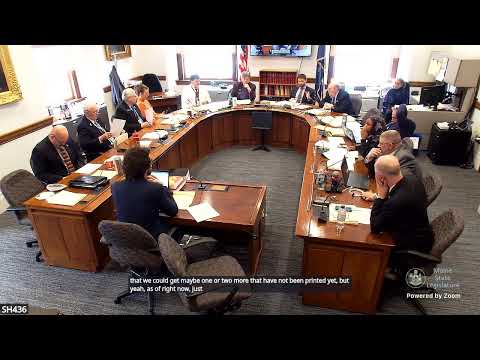
The committee heard the report, asked follow‑up questions, and indicated further review of funding and statutory language in a work session rather than an immediate vote.