Get Full Government Meeting Transcripts, Videos, & Alerts Forever!
Get email alerts on the Cjcc Strategic Planning topic
No spam. Unsubscribe anytime.
Washington County CJCC begins action planning; members prioritize data sharing, governance and communications
Summary
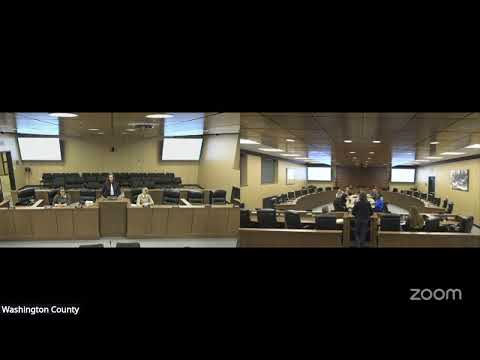
At a meeting of Washington County’s Criminal Justice Coordinating Council, members and JMI consultants began action planning to strengthen the council, prioritizing data-sharing agreements and KPIs, revisiting leadership structure, and creating internal and external communications goals, including a possible website.
Washington County’s Criminal Justice Coordinating Council (CJCC) spent its meeting focused on turning survey results into an action plan to ‘strengthen the CJCC,’ delegating three work groups to develop tactics on data-sharing, leadership/governance options and communications.
Gabby, a consultant with JMI, told the council that the membership survey showed unanimous interest in developing a vision for the CJCC: “A 100% of respondents expressed expressed interest in developing a vision,” she said. The survey also identified leadership and governance, data-sharing and communications as top objectives; about 70% of respondents supported creating a public-facing website.
Amy, JMI’s facilitator, framed the session as the start of an iterative planning process: “We’re not solving problems today. We’re planning for the problem solving,” she said, describing a one-page action-planning worksheet the council would use to name objectives, tactics, leaders, resources and deliverables.
On data, members emphasized a purpose-driven approach: identify the specific key performance indicators the CJCC will track, limit shared information to aggregate or appropriately redacted data, and formalize a data-use agreement. County staff and members raised privacy concerns, including HIPAA and the need to avoid sharing individual-level sensitive information. The data work group proposed three tactics: 1) identify KPIs (starting with JMI’s suggested indicators), 2) assign analysts to process and maintain aggregate reports (the group suggested Elisha Doerr and county staff member “Brad” as leads), and 3) adapt a JMI draft data‑use agreement to govern sharing and housing of data.
Members also spent substantial time on governance. Several members asked for an educational briefing on the options — the existing chair/vice-chair model versus co-chair arrangements — and their practical trade-offs. Judge Sadie Gernoth, who identified herself as chair of the CJCC, urged clarifying the chair’s facilitation duties and improving transparency about how leadership communicates with one another. The leadership work group recommended educating members on pros and cons, reviewing bylaws, and considering a periodic review of roles and potential term limits before proposing bylaw changes.
On communications, the council focused on internal coordination and basic external outreach. The communications group recommended scheduling an agenda item no later than the August meeting to develop a CJCC website with up to three prioritized items for initial publication, and establishing clearer expectations for agenda timing, materials distribution and file storage to ensure members can come prepared.
JMI and members sketched a timeline: work-group sessions continued the same day; March will be used to draft the Priority 1 action plan; April to review that plan and action plans for priorities 2 and 3; May for drafting the full strategic plan; and by June the membership is expected to review a final strategic plan for possible approval. No formal votes were recorded at the meeting; the council approved the December 9 minutes as posted and adjourned at the meeting’s close.
The CJCC represents local criminal justice stakeholders and serves in an advisory capacity; members repeatedly noted the council’s limits under open‑meetings rules and the importance of documenting communications and data‑sharing arrangements. JMI will consolidate the work-group worksheets and draft action plans for the council’s review at upcoming meetings.