
Stillwater council declares Remington Ranch a public nuisance, authorizes possible court action
Get AI-powered insights, summaries, and transcripts
Subscribe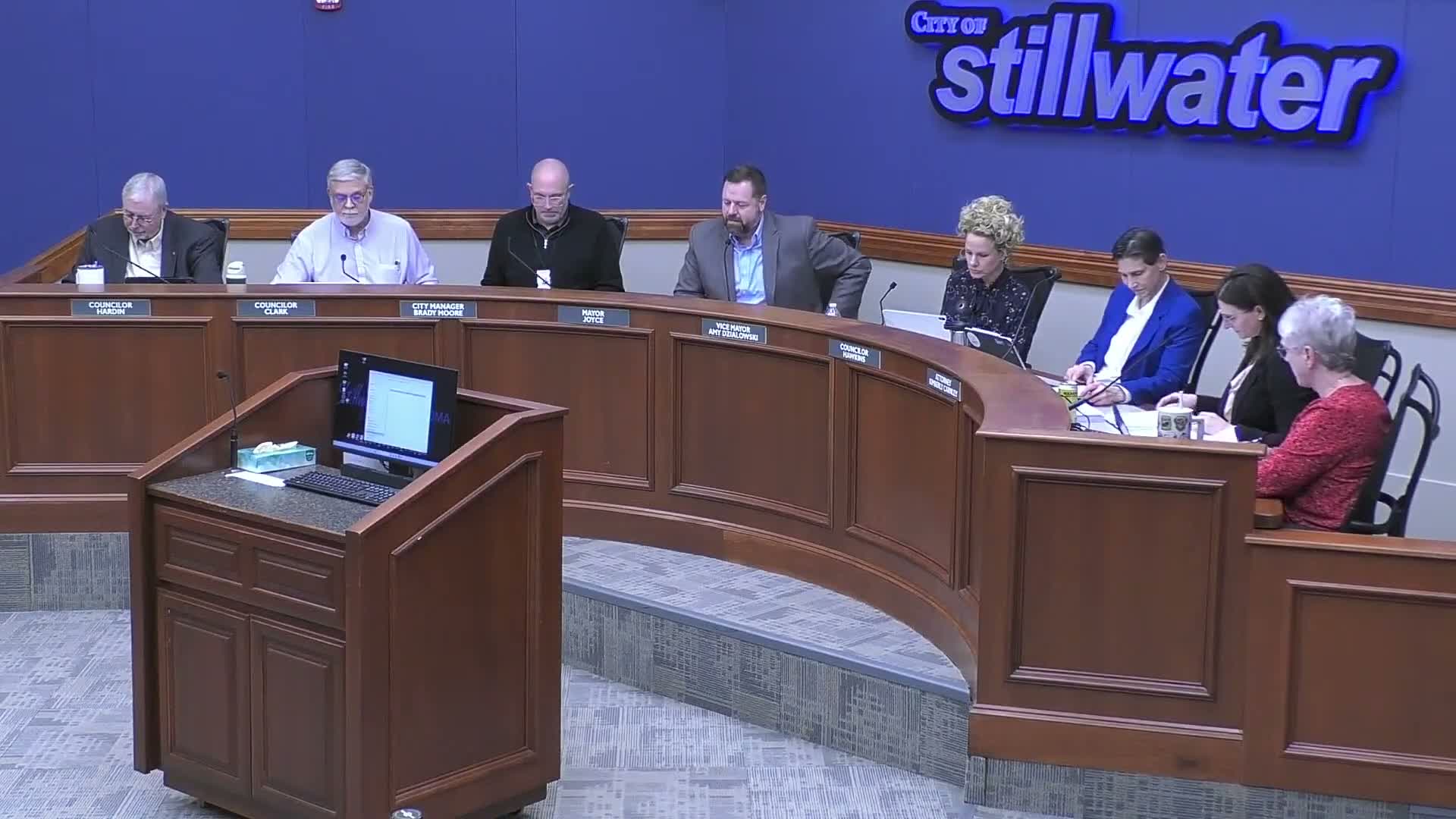
Summary
After months of hot-water outages and resident testimony, the Stillwater City Council on Feb. 9 adopted a resolution declaring the Remington Ranch apartments at 1815 N. Boomer Road a public nuisance and authorized staff to pursue a district-court action; the vote was 5–0.
The Stillwater City Council voted 5–0 on Feb. 9 to adopt Resolution CC-2026-2, declaring the Remington Ranch apartments at 1815 North Boomer Road a public nuisance and authorizing the city manager to pursue district-court proceedings to obtain a judicial declaration and abatement if needed.
Special nuisance counsel Beth Ann Childs told the council the city’s code-enforcement staff had documented conditions that, under 11 O.S. §22-121 and sections of the Stillwater Code of Ordinances and the International Property Maintenance Code (IPMC), left the dwellings unfit for occupancy because of intermittent lack of hot water, inadequate heating and other unsafe conditions. Code enforcement staff described an aging, 50-year-old boiler/recirculation system affecting multiple buildings and said crews had begun installing individual electric water heaters for units.
Code Officer Moore said the complex was built in 1969 and consists of roughly 301 one- and two-bedroom units across 12 buildings. Inspectors reported 16 units in Building A had passed inspection after recent work; staff estimated approximately 283 units still needed conversion to individual hot-water systems. Moore also reported that the property owed close to $200,000 to the city for utility payments.
Representatives for Vesta Realty, the property manager/operator, asked the council to allow time for repairs rather than immediate litigation. Paige Walters, Vesta’s in-house counsel, told the council multiple contractors are working on the site, that Buildings A through D are being prioritized, and that the company anticipates completing priority-building work in March. Walters requested a 30-day continuance and warned that immediate escalation to district court could trigger contract notice requirements that might complicate repairs.
Several tenants told the council the problem has persisted for months. Ronald Balderson, a resident at 1815 N. Boomer Road, said his family experienced repeated delays in service calls. Joyce Fox recounted a neighbor who is deaf waiting weeks for a tank and relatives who had to boil water. Desiree Pierce said she had no reliable hot water since Nov. 11, described relocating temporarily when heaters failed and said she had not received promised reimbursement or credit. “It’s been going on for long enough that I don’t feel the sincerity,” Pierce said.
Vesta’s on-site property manager, Laura Berg, said the company has spent more than $250,000 on hot-water line repairs since Oct. 31 and has offered one-month rent credits to residents in units that have passed inspection. Contractor contact Okey Grama said recent crews completed four units and expected to reach roughly eight units per week as work continues.
After discussion, Councilor (speaker 7) moved to adopt Resolution CC-2026-2 authorizing district-court action as needed; the motion was seconded and carried 5–0. Counsel and staff noted the city may choose to monitor progress and defer filing, but the resolution provides authority to proceed to court if repairs and compliance are not achieved.
What happens next: The resolution authorizes staff to pursue a judicial declaration and abatement with costs assessed to the property owner; the city also said staff will continue on-site monitoring and meet with Vesta and affected tenants to track repairs and any tenant relief measures.
Authors’ note: Quotes and specific statements are attributed to speakers who identified themselves at the Feb. 9 hearing. Numbers—unit counts, dollar amounts, timelines—are taken from staff testimony and participant statements at the meeting; where staff gave approximate counts, the article reports them as stated (e.g., “approximately 283 units remaining”).