
Lauderhill officials outline $65 million RISE GO bond, say debt millage won’t increase
Get AI-powered insights, summaries, and transcripts
Subscribe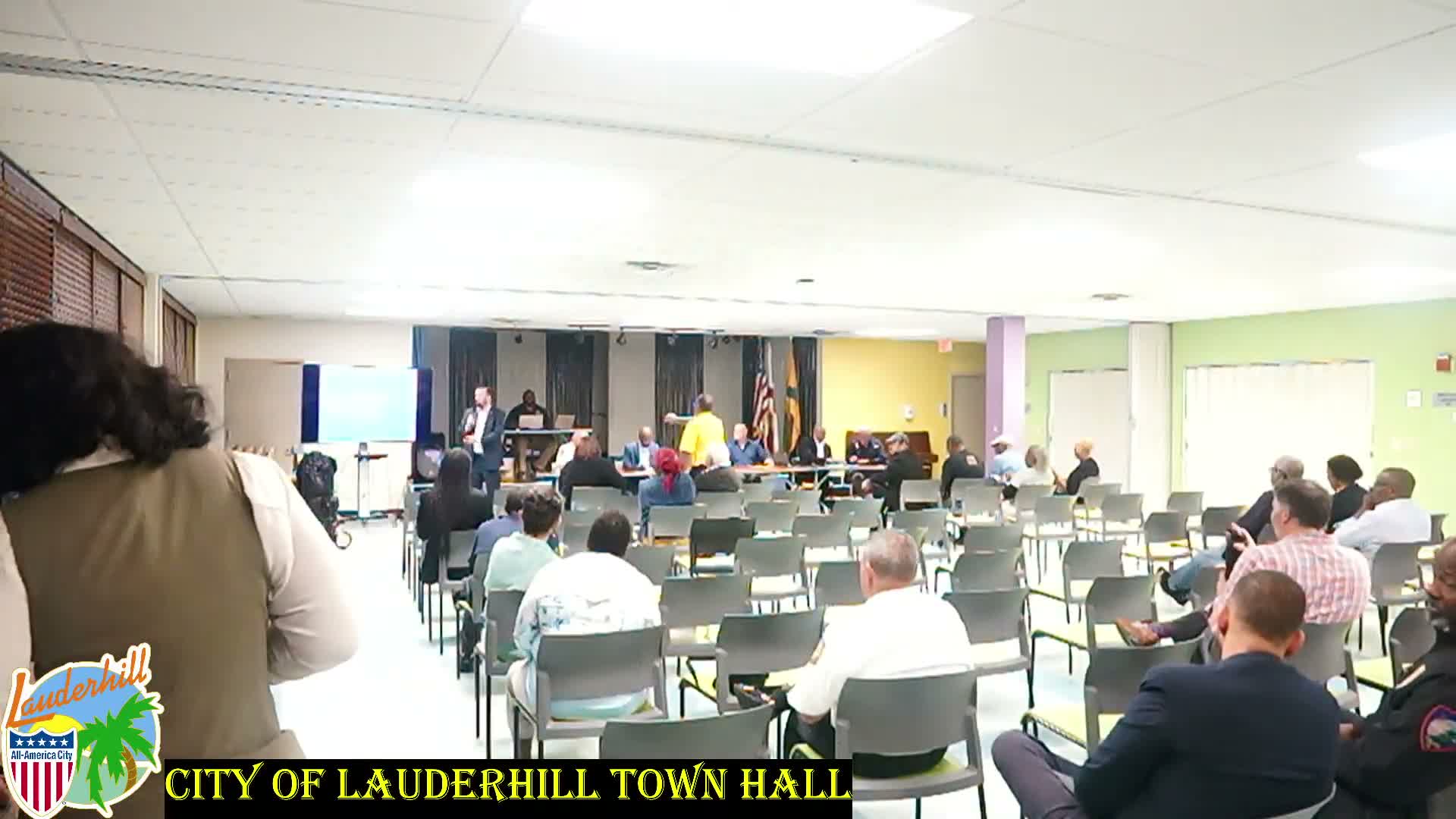
Summary
Lauderhill officials outlined a $65 million general obligation (GO) bond called RISE — for roads, infrastructure, safety and environment — to be decided by three yes/no questions on the March 10, 2026 referendum; city finance staff said the debt portion of the millage will be held steady while projects would be funded in tranches.
Lauderhill officials urged residents to vote on a proposed $65 million general obligation bond, saying it would fund parks, roads, public safety and citywide infrastructure without raising the debt portion of property taxes.
City Manager (speaker 3) and Deputy City Manager/Finance Director Sean Henderson described RISE — an acronym for roads, infrastructure, safety and environment — as the city’s third GO bond after previous issues in 2005 and 2016. Henderson said the city plans to issue the bond in tranches to limit interest costs and to structure payments so the debt-service millage would remain at roughly the current level (about 1.1212), while operating millage reductions could offset net taxpayer impact.
Henderson presented a high-level budget that allocates the $65 million across broad categories: roughly $33 million for citywide projects and $32–34 million for parks (presentations included slightly different figures at different points), about $9.5 million for public safety, roughly $7 million for transportation/technology, and $14.4 million for general government items. He provided example household impacts under a conservative scenario (an 8% property value increase): sample properties’ annual debt-service contributions rising by roughly $4–$6 per year (from about $60.84 to $65.64 in one example). Officials emphasized those amounts are annual and tied to the debt portion only.
City leaders said the GO bond allows the city to access funding immediately and reduce inflation and delivery risk compared with a pay-as-you-go approach or multiple smaller revenue bonds that require dedicated collateral. The city manager said three separate yes/no questions (public safety, parks, streets/roads) will appear on the March 10, 2026 ballot for Lauderhill voters; each question needs a simple majority to pass.
Officials also described project priorities by neighborhood: resurfacing and drainage work, lighting upgrades, traffic-calming measures, a proposed parking structure at the Lauderhill Performing Arts Center, pump-station connections, park pools and restroom replacements, turf and field renovations, splash pads, and shade/canopy structures at sports venues. The administration said it will draw funds as needed and that interest earnings may be applied to cost overruns or to accelerate projects.
The city pointed to recent rating-agency reviews (S&P and Moody’s referenced in the town hall) that they said support the city’s capacity to carry additional debt, and highlighted budget safeguards such as coverage requirements and a plan to complete a large share of projects within required timeframes.
The special election is March 10, 2026; voting will be by mail and on election day (officials said there is no early voting for this special election). The administration encouraged residents to review posted project updates and monthly reports if the bond passes.