Lifetime Citizen Portal Access — AI Briefings, Alerts & Unlimited Follows
Cache County approves Lauer Family Foods CUP while trimming road-dedication conditions after heated debate
Loading...
Summary
Cache County planning commissioners approved Lauer Family Foods’ conditional-use permit for a truck staging area but removed a requirement to build and dedicate a connecting public road after residents, the applicant and commissioners debated public-access needs, utility conflicts and whether requiring the corridor now would amount to an unfair exaction.
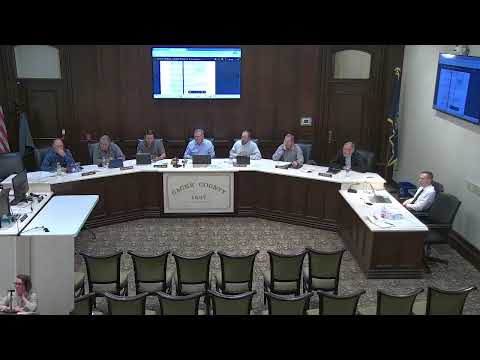
Cache County planning commissioners approved a conditional-use permit on a divided parcel for Lauer Family Foods’ truck staging and parking area Wednesday, voting to keep most conditions but to remove a requirement that would have forced the company to dedicate and build a new public road (9400 South).
The action followed lengthy testimony from company representatives, technical staff and more than a dozen residents and landowners who described safety problems on Highway 91 where semis have parked or stalled. Jake Latham and Steve Wood of Sunrise Engineering, representing Lauer, laid out the company’s view that the parking area would remove semis from the highway and reduce safety hazards while UDOT access and a limited-access line complicated a full public-road dedication.
Why the decision matters: Commissioners had to balance the county’s long-range grid and access requirements — which favor preserving corridors for future public roads — with immediate safety concerns, impacts on nearby residents and the practical toll of forcing an operator to build an expensive public road for a private staging area. The applicant argued that building a full public road would disrupt crucial utilities (a company well trunk and high-voltage lines) and undermine the project’s safety goals.
What was proposed and changed: Lauer asked the commission to alter Condition 9 so the county would accept dedication of the missing State Street right-of-way measured from the asphalt centerline but not require construction or dedication of 9400 South; the company also asked that Condition 11 (construction of 9400 South) be removed. Commissioners debated alternatives — including easement dedication, fee‑in‑lieu, or a recorded corridor reservation — and whether the county could legally require the full road given the project’s scope (a parking/staging area) rather than a subdivision. Several commissioners and the county attorney cautioned that a blanket demand for road construction could raise legal issues and set a difficult precedent.
Public safety and resident concerns: Multiple neighbors said local roads such as “Whiskey Lane” are narrow, poorly maintained and already see heavy school-bus and commuter use; they warned that a new thoroughfare or added truck turning movements could increase hazards and damage local infrastructure. Neighbors asked for assurances that trucks would not traverse tight local streets and that existing asphalt and buried utilities would be protected.
Applicant’s case: Alan and Lee Lauer described long negotiations with UDOT over access, including the cost and time to acquire a limited-access right from UDOT (an estimated valuation the applicant put at roughly $120,000). They said the company has been investing in water and power infrastructure and intends only to create a safe staging area off the highway; they argued that forcing a public-road dedication would amount to an unfair land grab because much of their frontage interacts with UDOT jurisdiction.
Commissioner and staff framing: County engineering staff and the public-works director emphasized the long-term planning rationale for preserving east‑west corridors and the half-mile grid spacing used in county code, noting that losing a corridor to private development can prevent future alignment where alternative access or emergency routing may be needed. Legal staff and one commissioner flagged the lack of a clear nexus between this specific CUP (a parking/staging area) and imposing an obligation to build an entire public road now, recommending further negotiation and potential use of a fee‑in‑lieu or recorded corridor dedication as a compromise.
Outcome and next steps: The commission moved to approve the CUP with the staff-recommended conclusions but modified the conditions per the applicant’s request: Condition 9 was revised to require only the State Street dedication measured from the centerline of asphalt and to remove the requirement to construct 9400 South; Condition 11 was removed. Commissioners asked staff, the applicant and county attorneys to negotiate the exact wording and to return any final revisions in the formal record. The decision includes monitoring and standard conditions for stormwater, signage, dark‑sky‑compliant lighting, and protection of buried utilities. The applicant may still need final approvals from UDOT for the highway access.
What remains unresolved: The commission deferred any broader policy change about when a private developer must build or reserve public corridors. Several commissioners recommended further work with the ombudsman’s office and the county attorney to craft clearer policy and potential fee‑in‑lieu mechanisms that balance property rights and long-term public access needs.