Get Full Government Meeting Transcripts, Videos, & Alerts Forever!
Get email alerts on the Rezoning Infrastructure topic
No spam. Unsubscribe anytime.
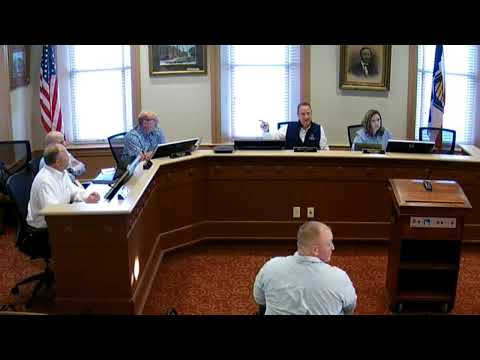
American Fork council denies TOD rezoning for Mill Pond Road, citing sewer and water constraints
Summary
The council voted to deny a proposed transit-oriented development (TOD) rezoning for about 24.4 acres at 200 South Mill Pond Road after staff said existing sewer and water infrastructure cannot currently serve the increased density. The applicant asked for more time to work with staff; council members said infrastructure must be fixed first.
The American Fork City Council voted to deny a proposed rezoning that would have converted roughly 24.4 acres near 200 South Mill Pond Road from RA-1/RA-5/R-1-20000 to transit-oriented development zoning, citing insufficient sewer and water infrastructure.
Planning staff and city engineering told the council there is "no way for us to gravity sewer this project," and that the area lacks a water loop and second feed necessary to support the higher densities allowed under TOD zoning. A city engineer explained that existing utility configurations and the presence of large lines by Central Utah and TSSD act as barriers to the gravity sewer alignment the master plan anticipates.
"Approving a zone change right now would be problematic in that we actually cannot serve it, with the required infrastructure," planning staff said during the presentation, summarizing the core technical obstacles.
The applicant, Andy Flam, representing the property owner, the Green family, said rezoning would help spur planning and collaboration to solve engineering problems. "Without the rezone, it kind of just pumps the brakes in all of this, and I think the landowner loses motivation to move forward and solve those [issues]," Flam said.
But multiple council members pushed back. Council member Hunter said approving the rezoning before an infrastructure solution would be putting "the cart ahead of the horse," and moved to deny the rezoning "subject to the findings that there is insufficient infrastructure available to serve the land should it develop under the TOD zoning." Council member Hawley seconded the motion. The council recorded affirmative votes by Council members Hunter, John, Holly and Carol, and the motion to deny carried.
The city attorney reviewed the standard for legislative rezoning decisions, telling the council it should consider the "totality of the circumstances" — including planning commission minutes, staff reports and public comment — and noted courts afford discretion to councils so long as decisions comply with state and federal law and applicable land-use statutes.
Council members who opposed immediate approval said the decision was primarily a timing and infrastructure issue: allowing higher density without an engineered sewer outfall and proper water service could overload existing systems and repeat past problems where infrastructure lagged behind development.
Next steps: Council members indicated the property owner and staff could return with an engineering solution or revised proposal that demonstrates how utilities would be provided; until then, the council will not approve a rezoning that increases density in the affected area.
(Reporting note: quotes and attributions are taken directly from council meeting remarks and the planning staff presentation.)