Get Full Government Meeting Transcripts, Videos, & Alerts Forever!
Get email alerts on the School Accountability topic
No spam. Unsubscribe anytime.
San Cayetano Elementary reports a B, highlights strong growth and flags EL proficiency and attendance gaps
Summary
San Cayetano Elementary told the Santa Cruz Valley Unified School District board it earned a B this year after a 15.89‑point increase, citing strong growth and high component scores but lower English‑learner proficiency and attention needed on chronic absenteeism.
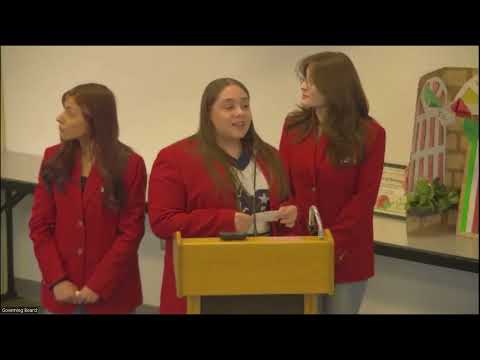
San Cayetano Elementary principal (identifying herself as "Miss Sandra") presented the school’s Integrated Action Plan and accountability data to the Santa Cruz Valley Unified School District board and said the school earned a B letter grade this year after a 15.89‑point increase from the prior year.
"So we're super excited that we did earn a B this year," the principal said, adding that the school was "1.67 points away from an A." The presentation cited an overall total of 80.33 points (prior year 62.94) and noted bonus points that brought a reported total to 82.33.
The school emphasized growth as its strength: staff reported a growth indicator of about 49.7 and strong component scores in ELA and math (examples cited in the presentation included 24.7 of 25 possible ELA points and 25 of 25 possible math points). The principal credited use of assessment tools and a district instructional hub to identify student needs, provide targeted interventions, and support teachers.
At the same time, presenters identified two clear priorities for improvement. English‑learner proficiency was reported at 10.14 percent for full‑academic‑year EL students, compared with a statewide rate the presentation listed as 14.47 percent; the presenters said that shortfall resulted in no points in that EL proficiency metric. On chronic absenteeism the transcript records the presenters noting a previously cited figure of 36.83 (prior year), current figures discussed as "right now, we're at 10" with a projection of 8.91, and the team said they were monitoring January data closely.
The plan laid out four primary goals—math, ELA, behavior and attendance—and described a framework of core instruction, targeted intervention and progress monitoring to raise proficiency levels. The presentation named instructional coach Sarah Boswell as leading an independent action research plan to support ELA work across grade levels.
Board members congratulated staff on the grade and the work to raise growth metrics, and trustees encouraged continued use of the district resources the school noted as helpful. The presentation concluded with the school’s stated target that, by the end of the school year, 90 percent of learners will achieve grade‑level proficiency under the school’s action plan.
Next steps noted in the presentation included continued implementation of the instructional hub, targeted interventions for EL students, and monitoring attendance trends; no formal board action on the IAP was recorded during the meeting.