
Library policy sparks debate over who can challenge books and how collections are curated
Get AI-powered insights, summaries, and transcripts
Subscribe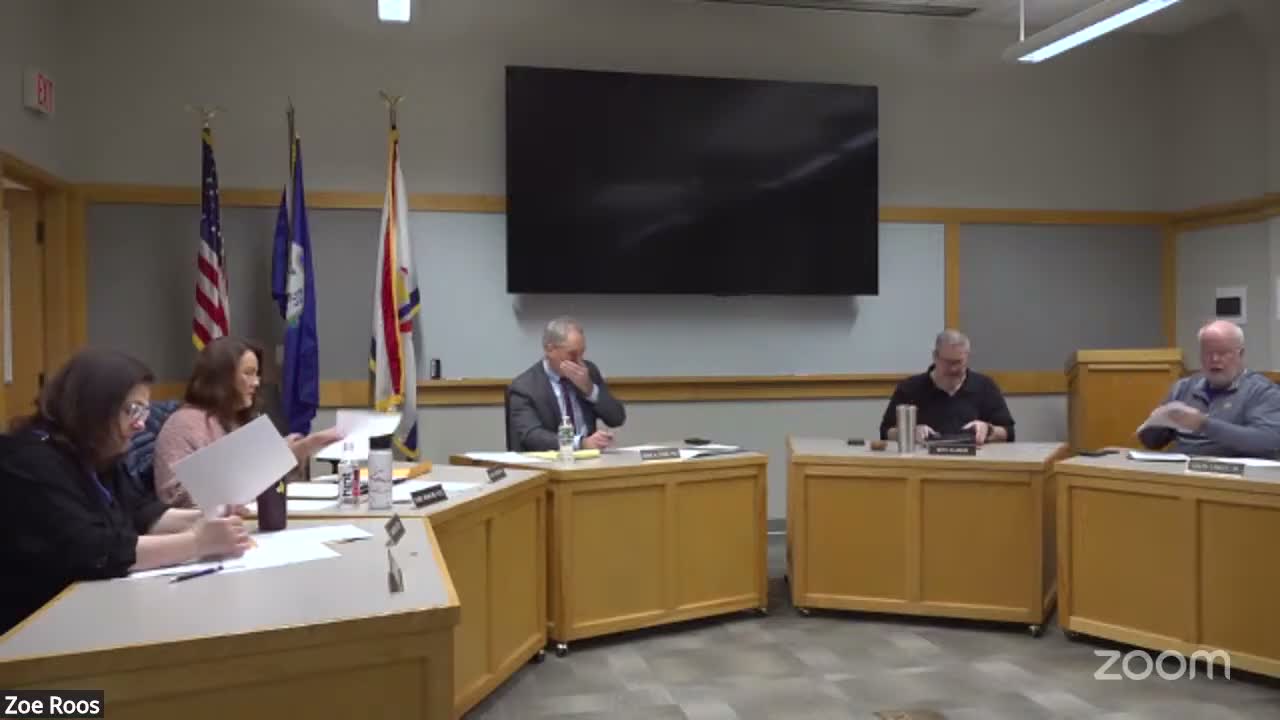
Summary
The committee reviewed a consolidated library policy required by state law and engaged in an extended debate over whether residents and board members should be considered "individuals with a vested interest," how acquisition and removal criteria should work, and whether the board's role should be procedural review or substantive decision-making. Members agreed to bring the policy to the full board for a first reading after legal checks.
The Madison Policy Committee spent the bulk of its meeting reviewing a comprehensive replacement for its long-standing library policy (6144.2) to comply with Public Act 25-168 §321, which requires boards to adopt policies on library collection development and maintenance, displays and programs, and material review and reconsideration.
Speaker 1 summarized the statute and argued the local draft, as written by Shipman and Goodwin, may be too restrictive about who qualifies as an "individual with a vested interest," noting the Connecticut Association of School Librarians' guidance and saying, "I think in our policy, we should also include the residents of Madison." Speaker 3 and others responded that the statutory definition limits challenges to people directly connected to the district (staff, parents/guardians, and enrolled students) and warned that opening challenges broadly could invite repeated ideological campaigns.
Speakers disagreed over where authority and responsibility should lie. Speaker 5 and others emphasized that librarians use curated, vetted lists informed by national and state librarian associations and the state Department of Education to determine age-appropriateness, and that removal should be difficult. Speaker 3 said the draft's criteria were "nebulous" and asked for clearer standards for acquisition and removal. Speaker 4 explained the new policy would usually leave substantive determinations in the hands of the library media specialist and the administration, with the board limited to verifying that the review process was followed, not selecting individual titles.
The committee debated a middle-ground: allowing board members some pathway to trigger a reconsideration while requiring a majority board vote to move forward so a single member could not unilaterally initiate removals. Speaker 5 warned of the risk of repetitive challenges, describing the phenomenon in nearby districts where objections became persistent and ideologically motivated.
Committee members agreed that the policy must be finalized this quarter. Speaker 2 proposed bringing the draft to the full board for a first reading on March 10 and checking with Shipman about the legality of any proposed changes that would add board members or residents to the local definition. The committee agreed to present the draft for a first read while staff completes legal review and considers whether to add a separate statement or process allowing limited board involvement.