
Board funds nine AIS prevention projects as state allocation is expected to halve next year
Get AI-powered insights, summaries, and transcripts
Subscribe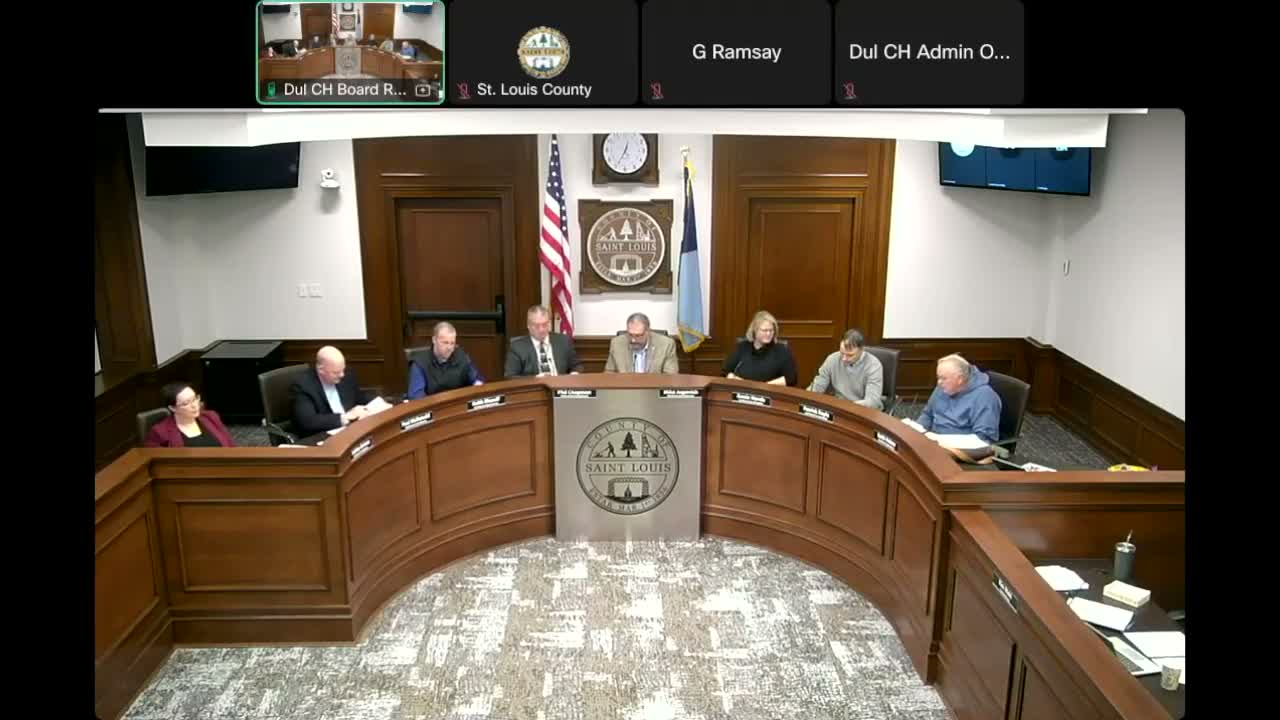
Summary
St. Louis County approved about $693,000 in aquatic invasive species prevention aid for nine local projects but heard warnings from staff and partners that statewide AIS funding may be cut by 50% next year, requiring program adjustments.
The County Board approved the recommended allocation of aquatic invasive species (AIS) prevention aid to nine regional projects, using roughly $693,000 in available funds and carryovers.
Director Ryan Logan told commissioners this is the twelfth year the county has received full funding under the state program; over that period the county has funded 88 projects totaling about $7.5 million. Director Logan cautioned the board that next year’s statewide appropriation could be cut in half (from $10 million to $5 million), meaning St. Louis County’s allocation could be roughly $350,000 in a future funding cycle.
Representatives from North St. Louis Soil and Water Conservation District (John Utech), Wildlife Forever (Zach Burnside) and the Lake Vermillion Association described on-the-ground AIS work: watercraft inspections (more than 20,000 inspections in recent seasons), public education via Clean, Drain, Dry outreach and eDNA monitoring. Wildlife Forever urged continued advocacy at the state level and said Saint Louis County is often cited as a model for community-led AIS prevention work.
Commissioners thanked partners and noted the program’s preventive value: several speakers argued prevention avoids property-value decline and costly tertiary responses once invasives establish. Director Logan and staff said contracts are reimbursement-based and include invoicing and backup documentation; unused awarded funds are reprogrammable into future cycles.
The board approved the recommended awards by voice vote; staff will manage reimbursements and monitor the impacts of any statewide funding reductions.
What's next: Staff and partner organizations plan to coordinate on a scaled delivery strategy for next year should funding be reduced, and the board urged continued advocacy with state legislators to restore or maintain AIS prevention funding.