Get Full Government Meeting Transcripts, Videos, & Alerts Forever!
Get email alerts on the Municipal Budget topic
No spam. Unsubscribe anytime.
Hutchinson leaders warn sales tax failure would force painful cuts across city services
Summary
City leaders used a Jan. 28 study session to map where services would be cut if a proposed 0.75% sales tax fails, citing risks to public safety, roads, parks and grants; department heads said personnel and deferred capital projects are the primary levers for savings.
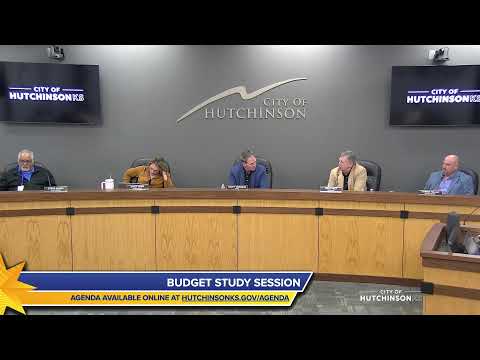
Hutchinson City officials on Jan. 28 laid out options they would pursue if voters do not approve a proposed 0.75 percent sales tax, saying difficult personnel reductions and multi-year project deferrals would be needed to balance the general fund.
City Manager Enrico opened the study session by framing the discussion around a single scenario: “this for tonight is if the sales tax does not pass,” and asked directors to identify where savings could be found if the revenue boost does not materialize. Staff repeatedly told the council that few nonpersonnel options remain and that many capital deferrals would raise long-term costs.
The proposed sales tax, as described by staff, is intended for streets, stormwater and parks and facilities and would cover both capital projects and operations and maintenance. Enrico told the council the measure would “provide a substantial amount of relief for the general fund.”
Department directors warned that personnel is the primary budget pressure. Fire, police, public works, parks and utilities leaders all said they are already lean and that further cuts would reduce service levels. The fire chief said the department had implemented nine years of reductions and that “we've now reached a point where additional reductions cannot be achieved without affecting service delivery.” He told council that, after exhaustive review, the only actionable recommendation to meet targets would be to close one fire station and reduce personnel, which he said would increase response times and reduce surge capacity.
Public Works cautioned that deferring arterial resurfacing or equipment purchases is possible short term but warned such delays would accelerate pavement failure and make future reconstruction far more expensive. Parks staff said holding vacancies across horticulture, forestry and building maintenance could save roughly $235,000 but would noticeably reduce maintenance and postpone amenities projects such as the Jim Martinez trail and improvements at Harsha and Elmdale parks.
City leaders also described second-order consequences: deferred capital and staffing reductions could push up homeowners’ insurance (they cited ISO rating risk), raise long-term maintenance costs, and reduce the city’s attractiveness to employers and visitors. The council noted the alternative to a sales tax would be a property tax increase—an estimated roughly 10-mill increase discussed in earlier sessions—placing a heavier burden only on property owners rather than spreading it to visitors and shoppers.
The meeting produced no formal votes; instead staff asked for council direction and said they would return with projections and ordinance or budget adjustments if the sales tax fails. Enrico and several council members urged a public information campaign explaining the trade-offs to residents before the March ballot.
The council adjourned with members emphasizing the stakes: without additional revenue, staff warned, the city would face multi-department cuts that would materially change service delivery.