Lifetime Citizen Portal Access — AI Briefings, Alerts & Unlimited Follows
Committee advances bill asking higher‑ed boards to add founding documents to required writing courses
Loading...
Summary
HB219 instructs the Utah Board of Higher Education to establish policy for institutions to incorporate seminal documents and presidential speeches into required general‑education writing courses; committee adopted substitutes and voted 12–3 to recommend the bill.
The House Education Committee voted to recommend HB219, which would direct the Utah Board of Higher Education to require institutions to incorporate seminal documents — including founding documents, presidential speeches and key Supreme Court opinions — into required general‑education writing courses beginning in the 2026–27 academic year.
Representative Ballard, the bill sponsor, said the measure preserves instructor and institutional discretion about how and where to incorporate the readings and analysis; the proposal is not prescriptive about every assignment but calls for analytical writing about primary source texts as part of required courses. The sponsor said she worked with multiple institutions, including Utah State University, Utah Valley University, the University of Utah and USHE to shape the substitute.
Testimony was mixed. Katie Massey of the Utah System of Higher Education told the committee that the Board had not taken a position but that line language gives deference to institutions and instructors on how to advance learning objectives. Higher‑education faculty and AFT Utah representatives expressed concerns about academic freedom and curriculum design; several classroom instructors asked for care that required composition courses preserve core pedagogical goals.
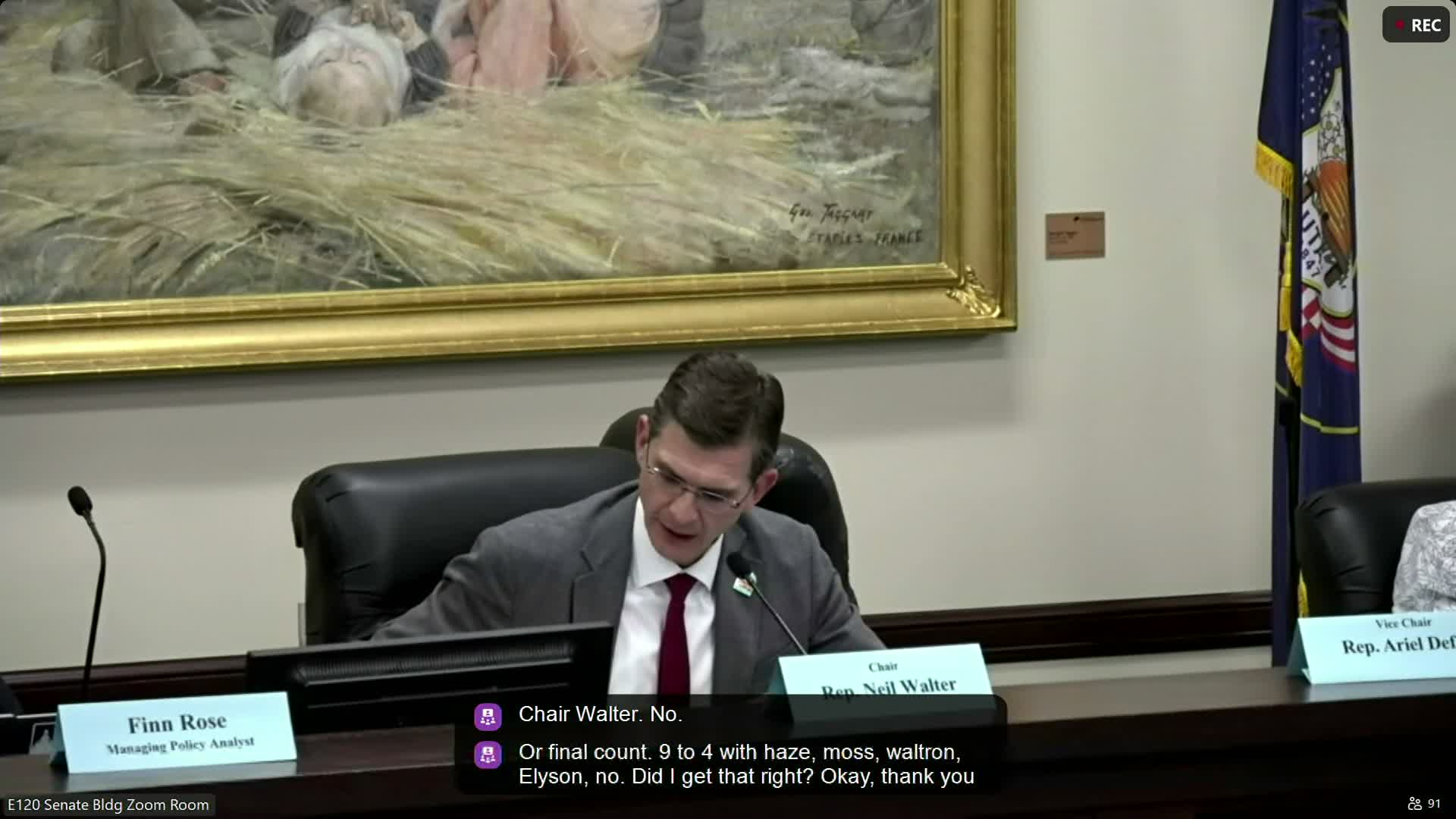
The committee adopted the first substitute and voted 12–3 to recommend HB219 favorably to the full House (recorded no votes included Representative Hayes, Representative Peterson, and Representative Lisonbee). The sponsor said the policy is meant to provide a common exposure while allowing institutions to retain curricular flexibility.
What happens next: HB219 will be scheduled for floor consideration; sponsors and higher‑education stakeholders said they will continue conversations about implementation.