Colorado's DPO outlines licensing steps for internationally trained workers, says immigration status won't block credential evaluation
Loading...
Summary
A Spanish-language video from Colorado's Division of Professions and Occupations explains how internationally trained professionals can pursue licensure: required documents, credential evaluation firms, exam-language issues, privacy protections and how to contact DPO for help.
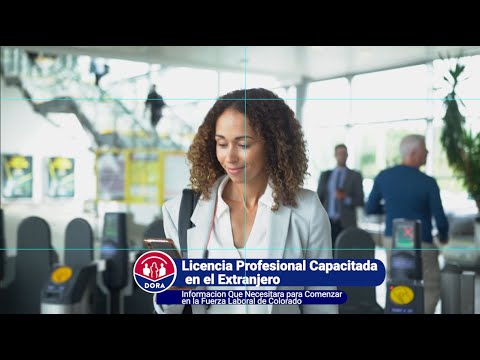
A presenter with the Division of Professions and Occupations (DPO) in Colorado outlined steps for internationally trained and foreign-qualified workers to pursue professional licenses in a Spanish-language informational video released by the agency.
The presenter said immigration status does not prevent an applicant from obtaining a formal evaluation of foreign credentials. "El estatus migratorio no afecta su habilidad para obtener una evaluación formal de su título o credencial internacional," the presenter said, adding that applicants must provide a Social Security number or an Individual Taxpayer Identification Number (ITIN) or, in limited cases, a sworn affidavit showing nonimmigrant, student or certain athlete status.
Why it matters: Thousands of Colorado jobs are regulated by state licensing boards. The DPO, the largest division within the Department of Regulatory Agencies (DORA), oversees licensing for more than 50 professions, including many health-care fields, electricians, plumbers, accountants and engineers. The process and documentation required differ by profession, and not all credential evaluations lead to licensure.
The presenter described the role of credential evaluation companies, which assess whether foreign education, prior licenses, work history and certifications meet Colorado requirements. Evaluations are often performed for a fee by firms that may be located outside Colorado; the presenter cautioned that "La presentación de una evaluación de credenciales extranjeras no es garantía de obtener la licencia." Licensing boards may still review evaluations and require additional U.S.-based coursework, exams or training for some professions, particularly dentistry, pharmacy and engineering.
Applicants are advised to gather transcripts, prior licenses, proof of work experience, training hours, certifications and any prior exam records before applying. Each application is considered individually, application materials remain valid for one year from receipt, and application fees are nonrefundable.
On privacy, the presenter emphasized the agency's legal limits: "La ley prohíbe al DPO de compartir su información con fines de control de inmigración," and DPO does not collect immigration status as part of the licensing process.
Help and next steps: The video directs applicants to profession-specific pages on dpo.colorado.gov (select the profession, then the blue "laws, rules and policies" or "licensing services" boxes) and to lists of approved credential evaluation companies where applicable. For questions, the presenter provided the agency email Dora_BPO_licensing@state.co.us and instructed viewers to use the DPO website to schedule appointments; the presenter also advised bringing an interpreter or requesting language assistance in advance.
The DPO suggested applicants consult an attorney if they have questions about whether they are legally authorized to practice in the U.S. The agency closed by pointing viewers to additional DPO tutorial videos on account creation and other licensing topics.