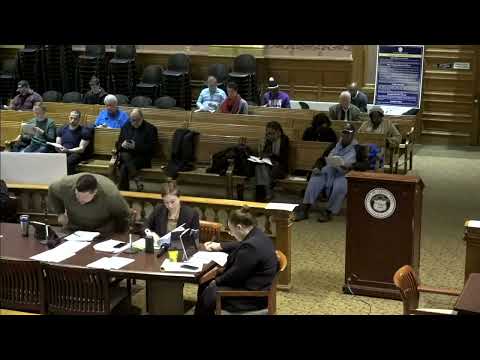
Jersey City council establishes rent-protection investigation after months of Portside tenant complaints
Loading...
Summary
After extensive public testimony alleging long-running enforcement failures and unpaid fines at Portside Towers, the Jersey City Municipal Council voted to create a Rent Protection Special Investigation Committee and approved related resolutions unanimously as part of a broader package of measures.
The Jersey City Municipal Council voted on a package of resolutions that included the creation of a Rent Protection Special Investigation Committee (resolution 26-067), responding to repeated public testimony about alleged enforcement lapses at Portside Towers and other large developments.
Residents from Portside Towers and tenant advocates delivered sustained testimony describing alleged failures by city enforcement offices to apply existing rent-control and building-code rules. Michelle Hirsch, president of the Portside Towers West Tenant Association, urged the council to “follow the money,” pointing to past settlements and alleged ongoing noncompliance and asking the new committee to use subpoena power if needed.
Multiple tenants supplied written documentation and photographic evidence, saying the city’s enforcement has allowed a pattern of violations to persist. Joel Rothfuss described a case in which he said the city’s own records contradicted a prosecutor’s courtroom statement, resulting in $142,000 in avoided fines for the landlord. Kevin Weller and other tenant speakers urged that the new committee hold open hearings and include a fifth seat to ensure transparency.
Council members framed the committee as an oversight and fact‑finding body under the Faulkner Act: Councilmember Gilmore and others described anti‑delay and open‑membership provisions to reduce the risk the prior committee experienced (meetings behind closed doors and subsequent inactivity). The council recorded the final package vote for the batch of resolutions (items 10.2–10.25) as approved in the meeting’s recorded roll call.
Council members emphasized the distinction between this investigative committee and concurrent litigation. Several councilors said the committee’s work should be public and collaborative with any municipal prosecutor or other city departments that have jurisdiction over enforcement.
Next steps: the council indicated the committee will be convened under the terms of the adopted resolution, with members and scheduling to be finalized and public meetings expected to follow. Several council members also asked administration staff to gather historic enforcement data and outstanding fines records to anchor the committee’s initial work.