
Local service leaders tell council homelessness and overdose numbers are rising
Get AI-powered insights, summaries, and transcripts
Sign Up Free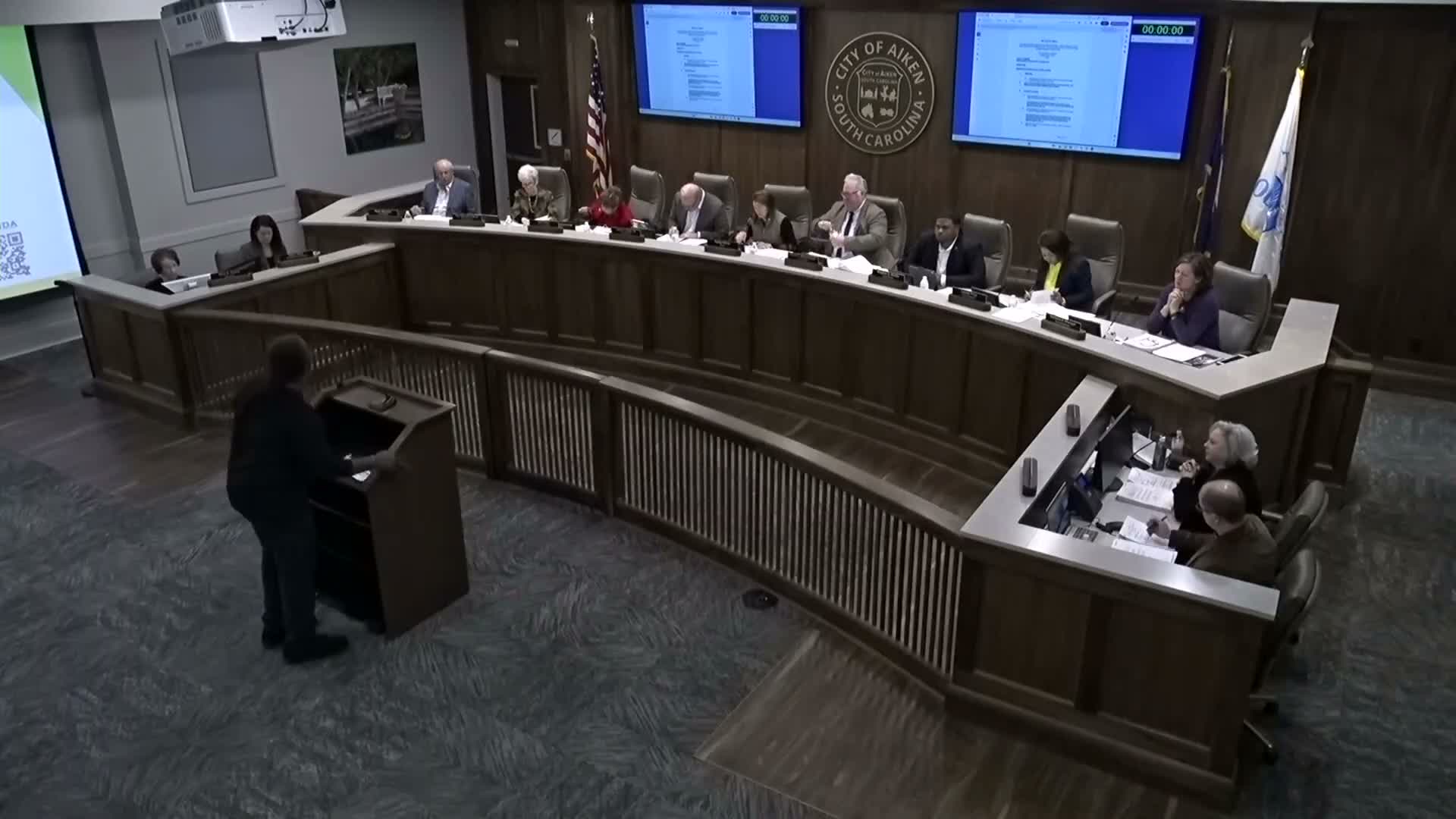
Summary
Service providers and residents told the council that C4 Impact is housing 32 people (21 adults, 11 children) and that Aiken County reported 250 overdoses and seven fatalities last month; speakers urged more housing and treatment options.
At the Feb. 9 Aiken City Council meeting, local service providers and residents urged continued support for housing and treatment as they described rising need across the county.
Lex Perry, pastor of C4 Impact Ministries, told council his program currently houses 32 people, up from 26 the prior month, and that 21 are adults and 11 are children. Perry said C4 Impact is focusing on bridging residents into permanent housing and working with the faith community to provide wraparound support: "We currently house, 26 people... We have 32. 21 of those adults, 11 of them will be kids," he said, and added the program keeps a 38-person wait list.
Kirk Johnson, a resident who provided an outreach update, reported what he described as a sharp rise in overdoses: "We had 250 reported overdoses last month in Aiken County. Out of that, we had 7 fatalities," he said, and added the county's fatality rate was higher than neighboring Lexington, Orangeburg and Richland counties combined. Johnson urged continued outreach and rehabs, noting successes including a client leaving for a Salvation Army program and others securing housing.
Council members asked about data tracking and whether programs participate in the Homeless Management Information System (HMIS); speakers said C4 Impact tracks clients internally and coordinates with faith partners. Council and members of the public discussed donation logistics; Johnson described using Amazon for supply deliveries and accepting direct donations when needed.
Next steps: Council heard the updates during the public-comment period; no formal action was taken during the meeting but council members commended volunteers and service organizations and acknowledged the need for more housing and treatment capacity.