
Utah committee deadlocks on bill to reduce acupuncture training hours after safety objections
Get AI-powered insights, summaries, and transcripts
Sign Up Free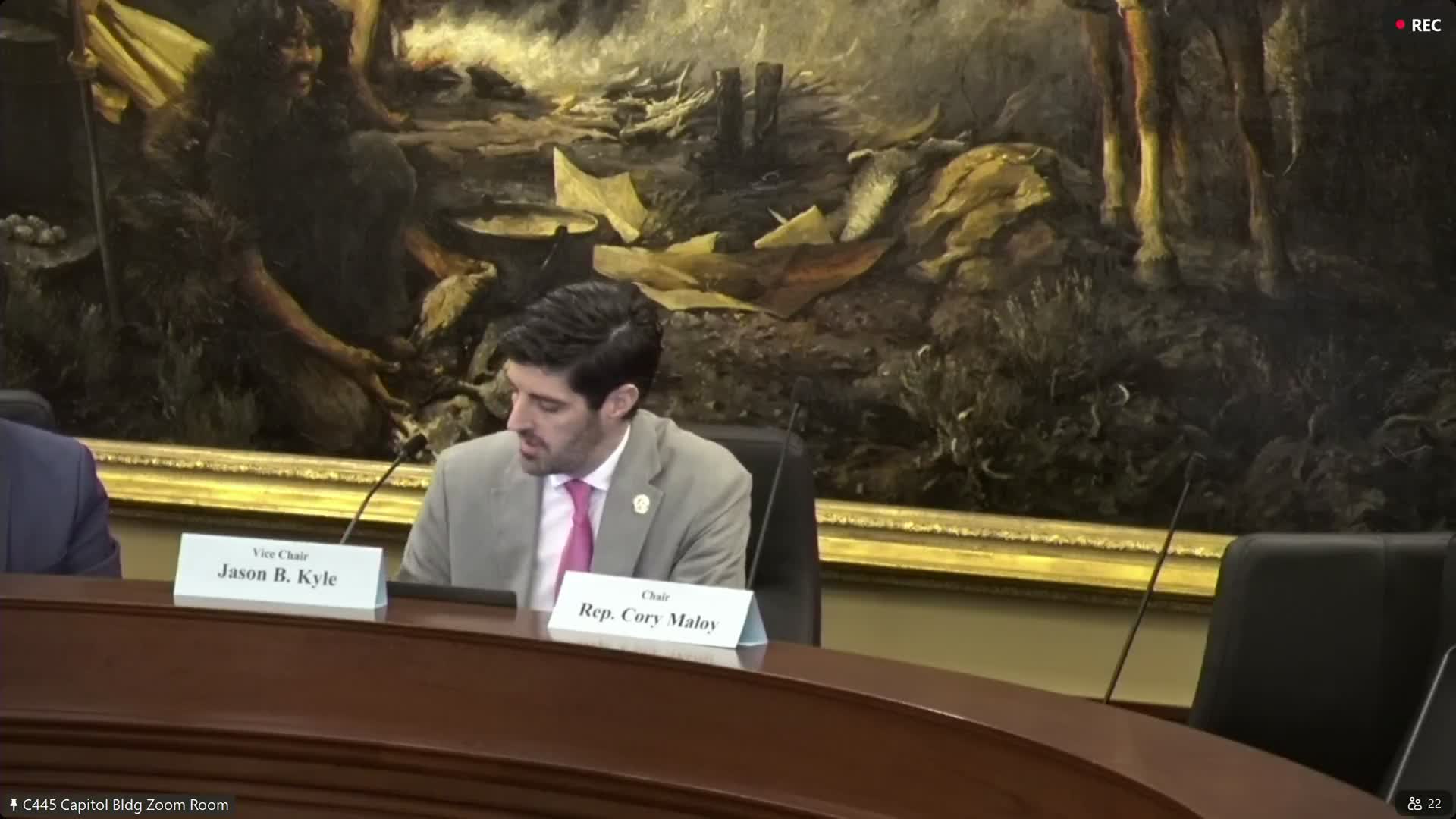
Summary
A House Business, Labor and Commerce Committee vote on HB202 (acupuncturist licensing amendments) ended in a 6–6 tie, failing to advance the bill. Supporters argued shorter, lower‑cost pathways would bolster the workforce; opponents — including practicing acupuncturists and patients — said the change risks patient safety and portability.
The House Business, Labor and Commerce Committee failed to advance House Bill 202, a proposal to revise acupuncturist licensing and create a lower‑cost entry pathway, after a 6–6 tie vote in committee.
Representative Chevrier, the bill sponsor, told the committee the substitute reframed prior language to make the standard specific to acupuncture and to respond to concerns raised in earlier hearings. She said the proposal would allow the Division of Occupational and Professional Licensing (DOPL) to approve an entry‑level exam focused on safety and clean‑needle technique rather than maintain existing requirements tied to national credentialing.
The bill’s presenters described how the proposed 1,350‑hour pathway would be structured. Lisa Rolliter, founder of the Oregon College of Community Acupuncture, said programs can be designed so 500 hours of supervised clinical internship deliver the core hands‑on safety training, with the remainder covering classroom and biomedical content. “Teaching acupuncture safety does not require thousands of hours,” Rolliter said, arguing the national NICBOM credentialing process currently acts as a barrier for graduates and employers.
Supporters said the change could reduce tuition and protect the training pipeline. Ryan Hofer, a board member at Oregon College of Community Acupuncture, said his program aims to graduate licensed acupuncturists for under $25,000 and warned that many master’s programs face federal earnings‑test limits that could cut off federal student aid and collapse the pipeline.
Opponents, largely drawn from practicing acupuncturists and patient advocates, urged caution. Several witnesses described adverse events and diagnostic failures they say underscore the need for more comprehensive training. Amanda Valente, a Utah licensed acupuncturist who practices in oncology, recounted a patient whose advanced metastatic cancer was discovered only after she had referred him for imaging; Valente said that kind of diagnostic judgment depends on extensive medical training. “Licensed acupuncturists work as people’s primary care providers, and they are trained to assess, recognize red flags, and refer when something is out of our scope,” she said.
Other witnesses raised portability concerns: if Utah lowers hours below national board requirements, practitioners licensed in Utah might not qualify to sit the national exams or to obtain licensure in other states. Testimony also stressed particular clinical risks — pneumothorax, nerve damage, and complications during pregnancy — that some speakers said require higher training standards.
Committee members noted OPLER (the occupational licensing review entity) contributed to the bill’s drafting and that the 2025 OPLER periodic review of acupuncture informed parts of the substitute. Some members still asked for additional review by OPLER or DOPL and said they were not yet convinced the hours were set at the correct level.
On a roll‑call to recommend the bill favorably, the committee split 6–6; the chair announced that Representatives Dunnigan, Ivory, Matthews, Wynne, Peterson and Tuscher voted no. Because the motion did not carry, HB202 failed to advance out of committee.
The committee record shows the substitute and an amendment replacing the phrase “East Asian” with “relevant” medical theory language were adopted earlier in the process, but the final recommendation vote was tied. The bill’s next steps will depend on whether sponsors refile or seek additional stakeholder and regulatory review.