
Committee advances SB135 to study and prepare Utah for potential nuclear life‑cycle activities
Get AI-powered insights, summaries, and transcripts
Subscribe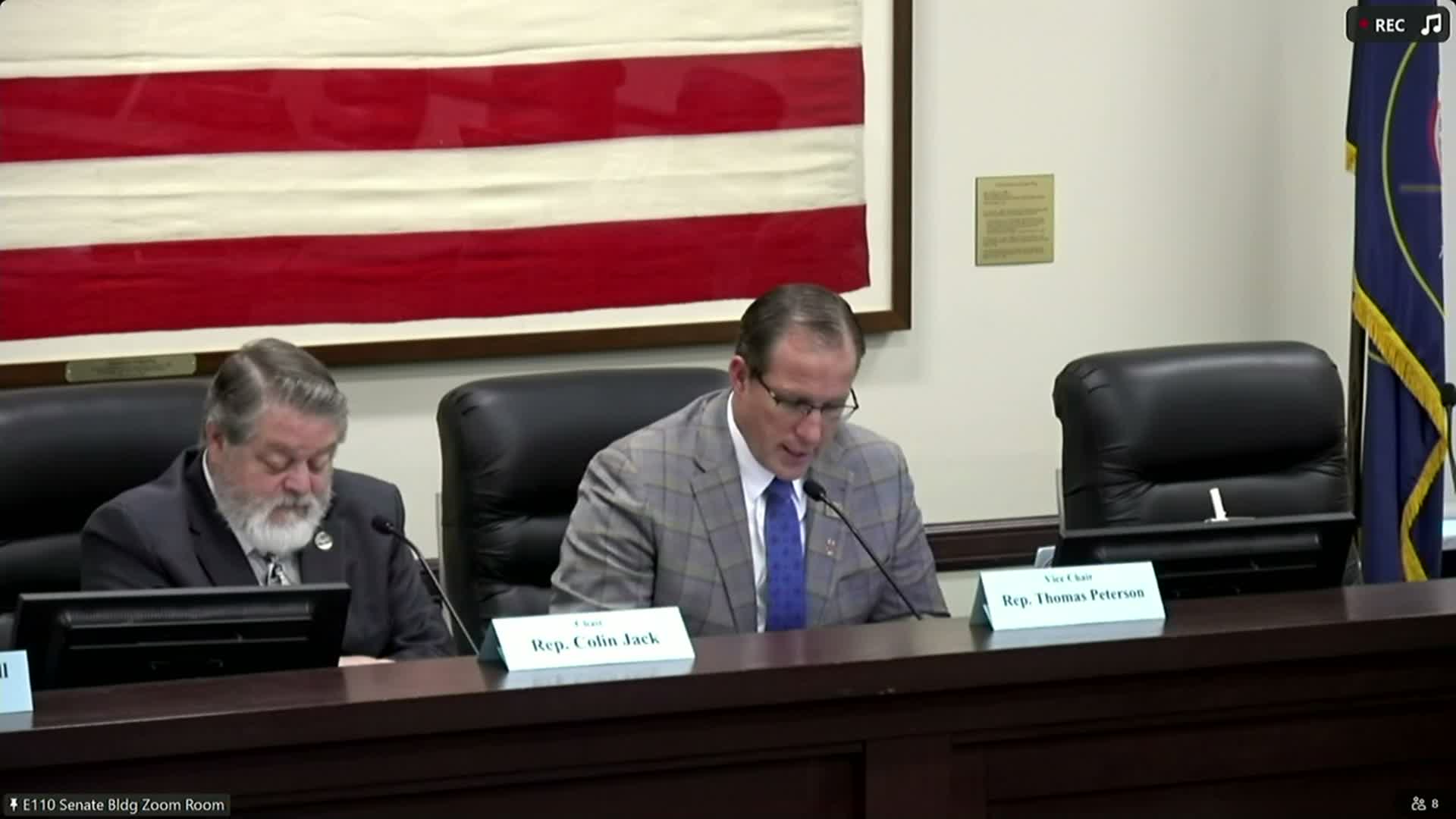
Summary
Senator Owens and agency witnesses described SB135 as establishing state mechanisms to explore nuclear fuel reprocessing and broader nuclear life‑cycle work, referencing potential federal hub investments and unique Utah geology; the committee recommended the bill favorably with two recorded nays.
Senator Owens presented SB135 (second substitute) to the House Public Utilities and Energy Standing Committee on Feb. 12, describing multiyear work with national labs and agencies to explore the state role in nuclear fuel reprocessing and related nuclear life‑cycle activities.
"These rods are only 3 to 4% spent and can be reprocessed into fuel," Owens said, framing reprocessing as a pathway to reduce waste and produce usable fuel. Owens and agency witnesses noted federal agencies (DOE, NRC) play central roles and that state action would depend on federal approvals.
Tim Davis (DEQ) said the legislation aims to study how Utah might safely handle aspects of the nuclear life cycle while ensuring protections and community trust. Emily Lislowski, director of the Office of Energy Development, told the committee the bill would include public education and engagement and that an eight‑month analysis requested by the committee was feasible.
Speakers presented contrasting views on economics and risk. Nathan Hall (citizen) noted the high capital cost of such facilities and said he would be surprised if state subsidies were not ultimately needed. Carmen Valdez of HEAL Utah urged slowing implementation and adding stronger public‑health and economic protections, saying reprocessing can produce additional highly radioactive waste streams and can carry long‑term taxpayer risk.
Senator Owens and Chair Jack argued Utah could be competitive because of salt caverns and federal hub investments; Owens cited DOE budget proposals and large federal investment estimates for regional hubs.
After discussion the committee voted to pass SB135 with a favorable recommendation. The chair announced two recorded nays (Representatives Moss and Dominguez) and ruled the motion passed. Committee members and agency witnesses emphasized that any actual reprocessing activity would require NRC approval and further planning.
What happens next: With a favorable recommendation, SB135 will move forward; agencies will conduct the requested analysis and public outreach, and federal approvals would be required before any state action.