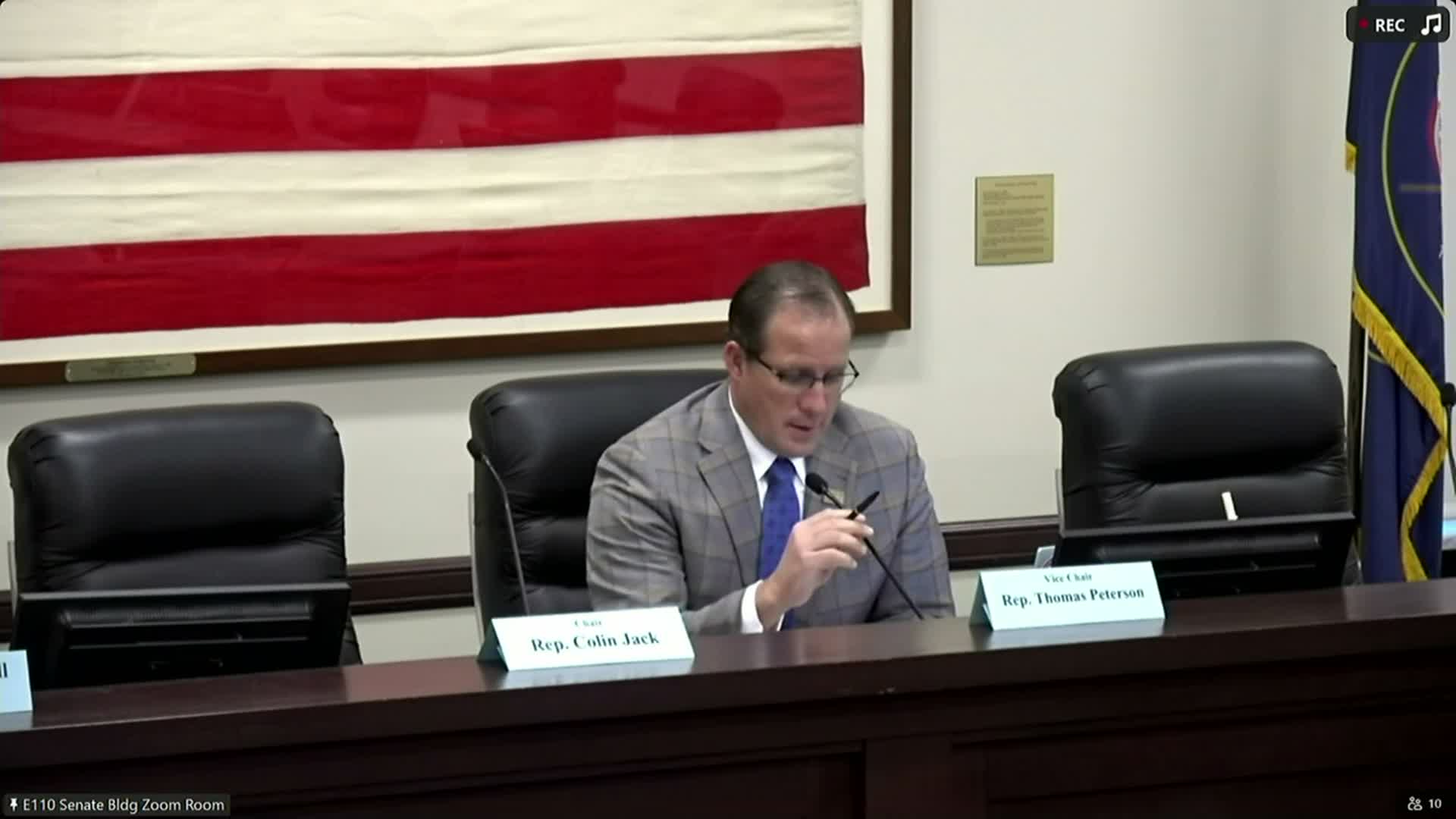
Committee holds new utility bill to study surplus interconnection service
Loading...
Summary
Representative Watkins described HB413 as a proposal to require utilities to analyze surplus interconnection service opportunities in IRPs to better utilize existing transmission capacity; the committee voted to hold the bill for interim work and stakeholder study.
Representative Michael J. Watkins presented HB413 to the House Public Utilities and Energy Standing Committee on Feb. 12, describing a proposal that would require affected electrical utilities to analyze "surplus interconnection service" opportunities within integrated resource plan filings and to solicit information from non‑utility facilities.
Josh Brown of Pew Charitable Trusts told the committee the concept is new in statute but reflects operational questions utilities already study. "You have essentially you've got cars on a highway. You wanna get that car filled up with electrons," Brown said, urging more summer study with utilities before firm legislative action.
Members questioned whether utilities already consider these options in IRPs and how private transmission rights would be treated. A utility representative said IRPs do consider efficiency opportunities today but acknowledged additional work could identify further gains. The committee and witnesses stressed the measure is intended to look for cooperative, non‑coercive opportunities rather than force take‑aways of property or rights.
Dylan Munn, who works in distribution electric utilities and strategic planning, supported the bill’s intentions while urging clarity about how "surplus capacity" would be calculated (nameplate versus operational forecasting). He noted many Utah plants meet the 20 MW+ threshold the bill contemplates.
After discussion the committee voted to hold HB413 for further study during the interim to allow sponsors and stakeholders to refine technical definitions and implementation language. The sponsor said he will work on drafting and stakeholder engagement over the summer prior to returning with clarified language.
What happens next: The bill sponsor and stakeholders plan interim study and technical work to define surplus calculations, stakeholder roles, and potential Commission processes.