
Kremlin-aligned broadcast floats idea of an "Armenian SVO" as Yerevan's Westward shift is highlighted
Get AI-powered insights, summaries, and transcripts
Subscribe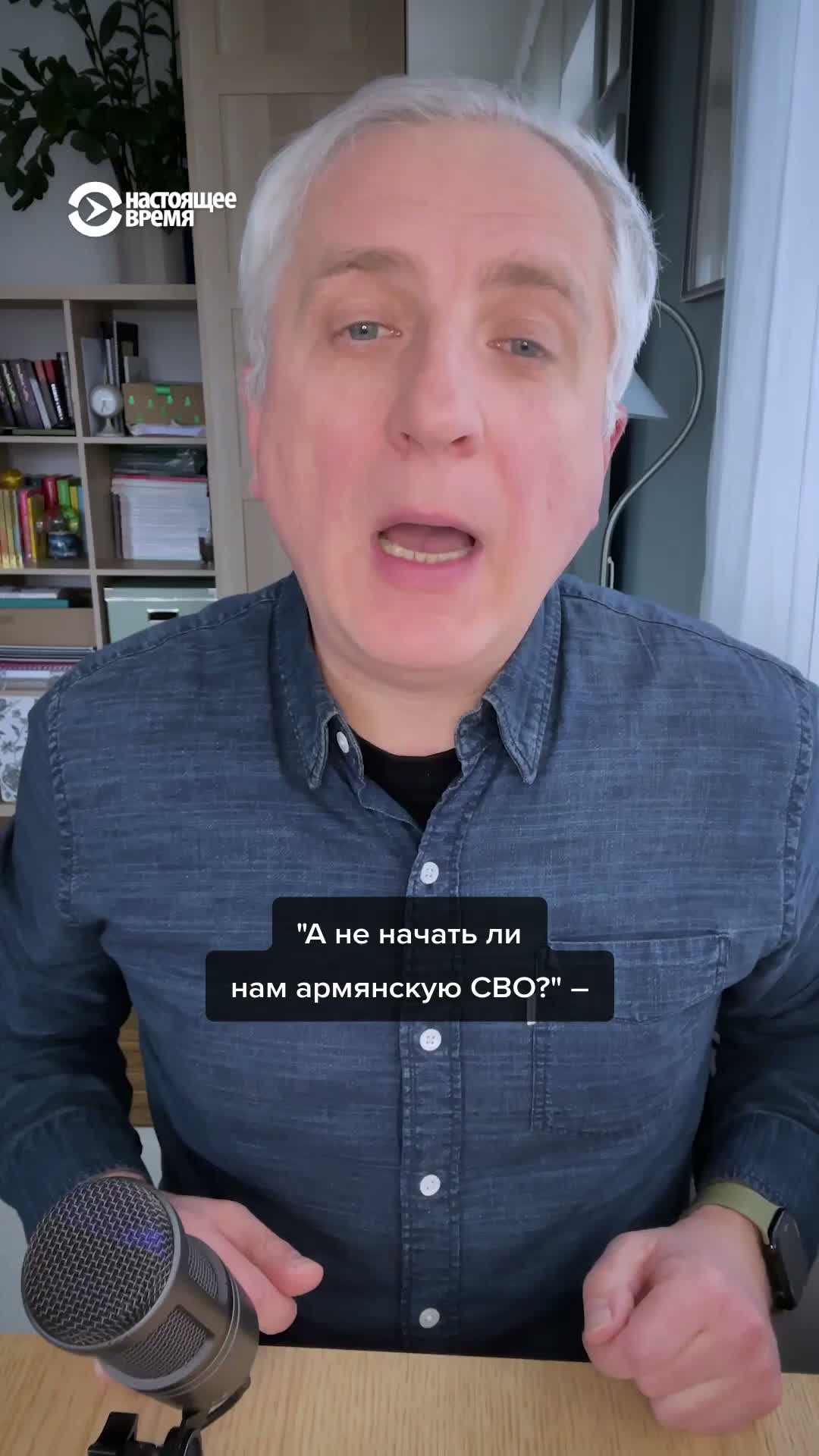
Summary
A Russian-language broadcast records commentators in Kremlin-aligned media proposing a possible "Armenian SVO" (special military operation) and advancing narratives that Armenia is pivoting to the West, citing an alleged U.S.-Armenia nuclear cooperation agreement, language shifts in Yerevan, and claims about hybrid Russian influence ahead of summer elections.
Russian-language commentators on a recording attributed to Kremlin-aligned media argued that a "special military operation" (СВО) directed at Armenia is being discussed and framed Armenia's recent political moves as justification for pressure from Moscow.
Speaker 1 opens the segment with a direct question: "А не начать ли нам армянскую СВО?" ("Should we start an Armenian SVO?"), which the broadcast presents as a topic under serious consideration in state-aligned outlets. The same speaker repeatedly described Armenia as a country that has "turned to the West," and asserted that Moscow's influence there had weakened following the Nagorno-Karabakh conflict.
The broadcast positions that argument against Armenia's formal ties with the Collective Security Treaty Organization (ОДКБ). Speaker 1 said Armenia is an "official military ally" and listed ОДКБ members, noting in the recording that there are "six countries, besides Russia," and then naming Armenia, Belarus, Kazakhstan, Kyrgyzstan and Tajikistan (the transcript lists five countries after saying six). The segment also states that Armenia suspended its ОДКБ membership after ОДКБ peacekeepers did not prevent Azerbaijan from taking control of the Nagorno-Karabakh enclave.
Speakers on the tape described social signals they said show a westward tilt in Yerevan. Speaker 3, citing an editor who had returned from Yerevan, said there were "American flags on the streets" and that in some cafes "they do not want to speak to Russians in Russian, they want to speak in English." The broadcast also relays charges repeated in Kremlin narratives that Armenian authorities "persecute Christians" and practice "satanism," and one speaker rhetorically invoked "Nikol Pashinyan?" when discussing who the accusations target.
The program draws a parallel to rhetoric that preceded Russia's 2022 full-scale invasion of Ukraine, noting similar labels applied to Kyiv before the war. At the same time, the recording includes a line that Moscow "states it does not plan military intervention in Armenia," while the Armenian side, Speaker 1 said, reports political interference and increased "hybrid" influence by Russian actors including political technologists.
The broadcast also highlights a recent cooperation agreement with the United States described in the segment as "on cooperation in the nuclear sphere," which the hosts said would reduce Armenia's energy dependence on Russia; the transcript does not provide the agreement's formal title or further implementation details.
There was no recorded formal decision or action taken in the segment; the content consists of commentary, allegations, on-the-ground anecdotes, and references to prior events and reported agreements. The recording closes by noting Armenia will hold parliamentary elections in the summer, saying the result could determine the country's geopolitical vector.
The program frames a set of narratives that include calls for or discussion of force, cultural and linguistic shifts in Yerevan, and allegations against Armenian authorities. The broadcast attributes those narratives to Kremlin-aligned media and anecdotal reporting but does not record a formal policy announcement or vote.