Get Full Government Meeting Transcripts, Videos, & Alerts Forever!
Get email alerts on the Telecommunications Land Use topic
No spam. Unsubscribe anytime.
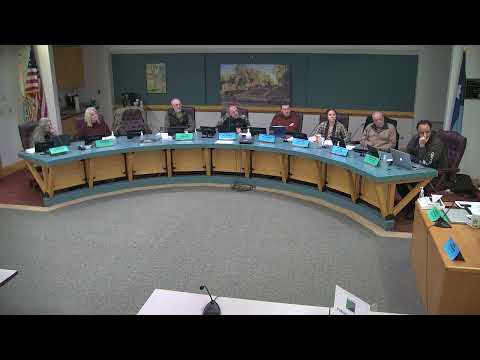
Planning commission recommends denial of Vertical Bridge CUP amendment after wetland, setback and sight-line concerns
Summary
After a contested public hearing with multiple residents objecting, the commission recommended denying Vertical Bridge’s proposed amendment to relocate a previously approved 199-foot tower; commissioners cited wetlands, sequencing options, fall-zone setbacks and public-safety coverage trade-offs.
The Cook County Planning Commission recommended denial of a conditional use permit (CUP) amendment from Vertical Bridge LLC to relocate a previously approved cell tower on a 58.61-acre parcel along Highway 61, following a lengthy public hearing that included technical testimony, written objections and multiple public speakers.
Staff explained the amendment seeks to move a 195-foot lattice tower (199 feet including a lightning rod) within the same parcel because a post‑approval wetlands delineation showed the original site would impact wetlands and trigger the Minnesota Wetland Conservation Act sequencing requirements. Staff noted the original 2024 CUP approval — granted by the county board — had been based in part on a public‑safety finding that the tower would improve coverage along Highway 61.
Mike Beeneck, representing the applicant (LCC Telecom Services on behalf of Vertical Bridge), said two alternative sites were analyzed to avoid wetland impacts and that the chosen relocation better balances access, elevation and coverage objectives. Beeneck explained the company’s fall‑zone letter from a licensed engineer showed a 155-foot fall radius and that the proposed site would remain within the subject parcel; he also said option B (further into the parcel) created access and shadowing problems and would raise construction and wetland‑mitigation costs.
Multiple neighbors and the U.S. Forest Service submitted written comments and several residents spoke at the hearing, citing concerns about property values, visibility, health effects raised by residents, and wildfire and access risks. One resident asked the commission to deny the amendment and require the applicant to pursue sequencing and mitigation that could place the tower in an alternative spot with fewer off-site impacts.
Commission deliberations examined: (1) whether the amendment is limited in scope such that only findings tied to the new location may be changed; (2) whether sequencing/mitigation could allow the tower to be built at the original approved site; and (3) public-safety benefits. Several commissioners said the variance decision (to be considered imminently by the Board of Adjustment) is the larger legal issue but that on the CUP amendment itself they were not persuaded to change the approved findings for the new location.
The commission voted to deny the CUP amendment and recommended the applicant pursue sequencing/mitigation or rely on the original CUP location and conditions. Staff noted the Board of Adjustment would hear the connected variance shortly and the county commissioners would receive the full record, including the variance decision, when they consider the CUP amendment.