Get Full Government Meeting Transcripts, Videos, & Alerts Forever!
Get email alerts on the Decentralized Wastewater topic
No spam. Unsubscribe anytime.
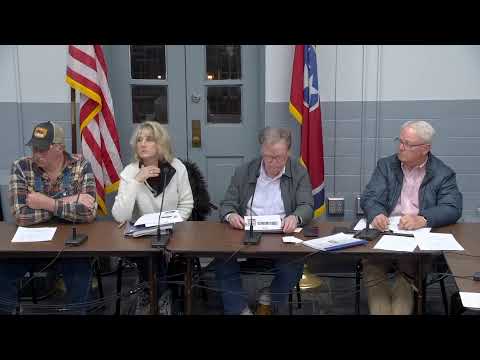
TDEC soil scientist tells Bedford County steering committee soils determine feasibility of decentralized wastewater systems
Summary
Terry Henry of the Tennessee Department of Environment and Conservation told a Bedford County steering committee that soil properties—depth, texture, structure and wetness—are the primary determinants of whether decentralized (drip) wastewater systems can be used, noting a 20-inch undisturbed minimum and maintenance and QA/QC concerns.
Terry Henry, a soil scientist with the Tennessee Department of Environment and Conservation, told a Bedford County steering committee that "the whole foundation of a decentralized system starts with soils," and that whether a drip irrigation wastewater system can be used depends first on local soil depth, texture, structure and wetness.
Henry, who said his TDEC unit covers Middle Tennessee, including Bedford County, said the agency's guidance uses a 20-inch minimum undisturbed depth in the soil profile as a bare-bones threshold and that the most sensitive top 8 inches must not be compacted or disturbed. He warned that soils with weak or massive structure, poor drainage or rock within the top 20 inches cannot support systems without extensive engineering measures.
The distinction matters for developers and county planners because preliminary soil maps—often commissioned by landowners—identify candidate areas but do not replace the final soil map and pits that engineers use to set hydraulic loading rates. Henry said the final design must be based on the "worst horizon" inside the top 20 inches, not the best-looking soil in a field.
County members pressed Henry on several practical points. He said the state performed QA/QC on private consultants' field work until February 2023 but that the state has since "got pulled out," leaving verification to local authorities or private county-level checks. "If nobody's checking them, it's what you're going to get," Henry said, urging counties to consider retaining verification capacity.
Henry estimated that about 60% of Bedford County soils might be usable for drip systems when marginal soils are included, but he cautioned that suitable soils are often clustered and that marginal soils require conservative hydraulic loading rates. On design detail, Henry noted the guidance limits engineers' baseline loading rates (the document indicates rates such as 0.25 with counties often using 0.15 or 0.10 after reductions for marginal conditions).
Maintenance and siting were a recurring theme. Henry showed examples where lines were exposed by head cuts or installed across drainage ways; in many cases the failures resulted from poor siting or lack of maintenance rather than inherently unsuitable soil. "You can take a well-drained soil and overload it to the point it'll turn hydric," Henry said, adding: "I don't think anybody knows the lifespan of a soil." He urged planners to factor maintenance and bonding into approvals.
Committee members discussed policy implications: the state currently reviews duplication/reserve area at roughly 50% for single-family designs and Henry said proposed rule changes are considering moving to 100%. Members noted that higher duplication or bonding requirements could increase system costs and affect housing affordability.
The steering committee agreed to continue the discussion. Members suggested inviting an approved installer (committee members recommended Eddie Price as one candidate) to present at the next meeting; the group tentatively scheduled that meeting for March 12. The meeting closed after a motion to adjourn.
Next steps: the committee will invite installers and utility representatives to explain installation, maintenance and utility roles and will consider whether the county needs local QA/QC capacity before crafting recommendations later in the spring.