
NCACC warns counties to plan for HR1 workload and property-tax pressures; Johnston County faces millions in budget exposure
Get AI-powered insights, summaries, and transcripts
Subscribe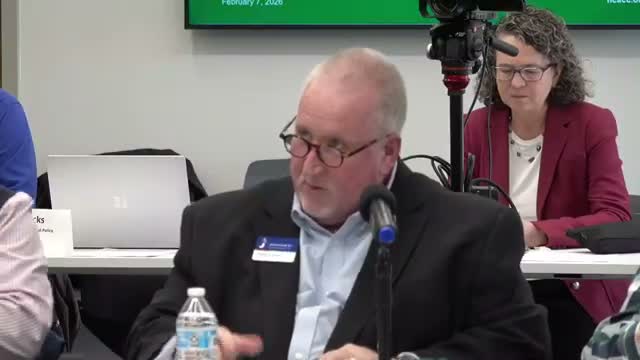
Summary
NCACC staff briefed Johnston County commissioners on property tax reform momentum and new federal/state rules (HR1) that will increase county SNAP/Medicaid redetermination workload and costs. NCACC estimates an approximate $1.3 million increase in Johnston County SNAP administration costs for the coming fiscal year and urged advocacy for timeline flexibility and state funding.
Joy Hicks, director of advocacy and policy for the North Carolina Association of County Commissioners, gave a legislative update focused on property tax issues and federal HR1 changes that affect county-administered SNAP and Medicaid redeterminations.
Hicks outlined the state-level discussion on property-tax reform, noting interim committee work and a House Select Committee on Property Tax Reduction and Reform. She described concerns about exemptions that can cause foregone revenue (for example, low- and moderate-income housing exemptions litigated under the Blue Ridge case) and singled out the solar property tax exemption as a top issue under consideration. Hicks said some counties have enacted moratoria where local impact is large.
On federal changes, Hicks described HR1’s expanded redetermination and work requirements for SNAP and related administrative changes. She said the legislation increases the frequency of eligibility checks and raises workload: county staff must verify work and other conditions twice a year and the eligible age for work requirements rose (previously 55, now 62 under HR1). The association provided an administrative cost estimate to the board: an approximate $1.3 million increase to Johnston County’s SNAP administration costs (presented as the estimated increase) and a larger statewide administrative increase. Hicks said the cost-share structure also shifted in ways that could require counties to carry more nonfederal expense unless the state provides aid.
Hicks and NCACC staff urged commissioners to coordinate on advocacy: they recommended asking the state and congressional delegation for implementation delays and state funding to hold counties harmless during the transition. She also encouraged participation in NCACC steering committees and the legislative goal-setting process to inform advocacy and to bring county-specific data into deliberations.
Commissioners asked clarifying questions about the revenue-neutral rate, the homestead exemption’s state administration and how different exemptions affect local levies. NCACC staff emphasized counties’ need to publicize local budget drivers and to prepare to explain to residents how revaluations, exemptions and mandates affect tax bills and service needs.
No formal action was taken during the session; the presentation was positioned to inform the county’s legislative priorities and upcoming budget discussions.