MassDEP proposes stricter bacteria criteria, removes low‑quality class designations in draft surface‑water standards
Loading...
Summary
MassDEP presented proposed amendments to 314 CMR 4 that would adopt EPA‑aligned methods for secondary contact recreation bacteria criteria (targeting 36 illnesses per 1,000), add a ‘PWS abandoned’ qualifier for seven reservoirs, remove unused classes c and sc, and revise site‑specific and metals‑adjustment procedures; written comments are due Feb. 9, 2026.
The Massachusetts Department of Environmental Protection on Jan. 28, 2026 presented draft amendments to the Massachusetts Surface Water Quality Standards (314 CMR 4) that would revise how the state sets bacteria criteria for secondary contact recreation, tidy classification tables, and adjust methods for aquatic‑life metals criteria.
Anna Mayer, Surface Water Quality Standards section chief, said the changes are intended to align state rules with U.S. Environmental Protection Agency guidance and to resolve EPA comments from the 2021 standards update. The revisions described at the remote public hearing would affect both the narrative portion of the MASWQS and the classification tables that list individual waterbody uses and qualifiers. "We will not be responding to any questions or comments regarding the amended regulation during this hearing," Mayer said; MassDEP will publish a written response‑to‑comments document after the public comment period closes.
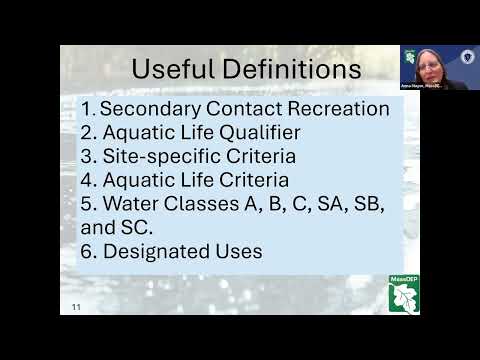
The department proposed a new approach for secondary contact recreation (SCR) bacteria criteria that follows EPA recommendations for equating estimated illness rates between primary and secondary contact activities. MassDEP said it selected an illness‑rate target of 36 illnesses per 1,000 people and used activity‑specific ingestion rates (noting that kayaking has the highest average water ingestion rate) to calculate criteria expressed in colony forming units per 100 milliliters (CFU/100 mL). MassDEP stated the proposed freshwater enterococci criteria are more stringent than current values and would apply year‑round.
Other notable changes include removing classes "c" and "sc" from the statewide classification tables because no waters are currently designated in those classes; moving aquatic‑life qualifiers that had relied on class c definitions into site‑specific criteria listed in table 28 (including consolidating two Sudbury River segments into one continuous segment); and adding a new "PWS abandoned" qualifier for seven reservoirs that were formally abandoned under Massachusetts drinking‑water regulations so that MASWQS continue to apply protective public water supply criteria where appropriate.
MassDEP also proposed edits to Appendix E (aquatic life criteria table 29a) to specify required test species for acute and chronic criteria adjustments, list acceptable alternative species and minimal testing requirements, and restrict the streamlined copper‑adjustment method to point‑source discharges to address EPA's prior comments.
MassDEP urged stakeholders to submit written comments by 5:00 p.m. on Monday, Feb. 9, 2026, either by email to DEP.WPP@mass.gov (subject line: public comments proposed MASWQS amendments) or by regular mail to Anna Mayer, MassDEP Watershed Planning Program, 8 New Bond Street, Worcester, MA 01606. The agency said the hearing recording and materials (clean and redline drafts and a summary of proposed amendments) will be available on the MASWQS web page; a link was posted in the chat during the hearing.
At least one oral commenter, Steve Silver of the Totten River Watershed Alliance, praised the revisions after an initial question about the purpose of a separate SCR standard: "I thought you did a good job on the standards revisions," Silver said, adding that after reviewing the draft he no longer objected to the secondary‑standard approach. MassDEP staff confirmed the agency will consider all oral and written comments before finalizing the regulation and will notify participants when the final rule is published.