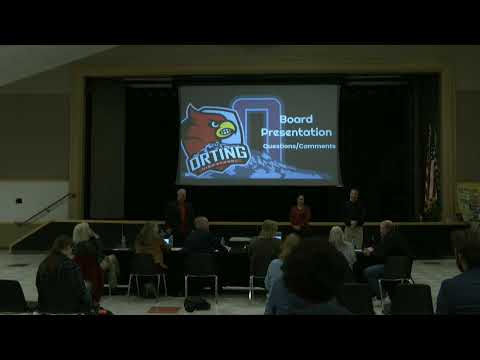
Orting School District highlights curriculum pilot, Panorama survey gains and new tracking tool to target interventions
Loading...
Summary
At a district presentation, staff described a standards-based curriculum pilot, shared Panorama survey results showing self-efficacy rising to about 54% (from roughly 45% last year) and explained use of a new assignment-tracking tool to target interventions for students behind in reading and math.
Orting School District staff presented a progress update on a curriculum pilot that emphasizes student-facing success criteria, goal-setting and targeted advisory lessons, and reported preliminary Panorama survey results showing gains in student self-efficacy.
District presenters said the work pairs classroom instruction changes with family engagement and a new tracking system so teachers can identify and support students who are behind. "We took a lesson and said, okay, we're gonna work on goals and we're gonna make sure that we're really intentional about what that looks like," one staff presenter said while describing advisory curricula designed to build communication and perseverance.
The presentation explained that teachers developed success criteria to translate academic standards into language students understand so they can set measurable goals. Staff read examples students wrote: one student wrote, "I want to have a stronger explanation," and another wrote, "I want to use words the audience can understand, but also be impressed by the elegance of my writing." District staff said many students need clearer models to make those goals actionable in day-to-day work.
Staff also shared Panorama survey data used to guide the effort. "We had 40 percent of our kids say that they think that they can succeed" in the fall, one staff member said, and later reported that the favorable self-efficacy metric is now about 54 percent, up from roughly 45 percent at the same point last year. The presenter thanked staff and the principal advisory committee for contributing to videos and messaging used with students.
To better track instruction and interventions, the district invested in an assignment-tracking system referred to in the presentation as "makeup." "What makeup has allowed us to do is really give the teachers a way to track what kids are supposed to be there," a staff member said, describing training for teachers and the system's ability to show which students were assigned to which teachers and how often they attended targeted interventions. Staff reported pulling semester data to compare student high grades in December with later results.
Presenters identified literacy as a priority, noting incoming high school students who are behind in reading and setting a district goal to move such students "one or more grade levels." Staff said data from the tracking tool and Panorama surveys will guide targeted interventions in math and English to close gaps.
Parents were part of the process: the presentation noted four parents (Amanda Morris, Derek Jenkins, one parent described as "Derek from Wallwrap," and Keith Crouch) completed instructional rounds and provided feedback that staff have shared with teachers.
The district framed the results as early and promising, not as final or conclusive: presenters described deliberate lesson design, family engagement and data systems as combined supports to increase student confidence and academic growth. Staff said they will continue to use Panorama results and assignment-tracking data to refine lessons and target supports in upcoming semesters.