Bakersfield council directs Prop. 218 notice for phased sewer rate increase after staff presentation and public review
Loading...
Summary
After two rounds of community outreach and consultant engineering work, council voted to begin Prop. 218 notices for a phased five-year sewer rate increase (year 1: $475; up $100 annually to $875) with an anticipated bond later. Council discussion focused on bonding size, impacts on county agencies and protections for low-income residents.
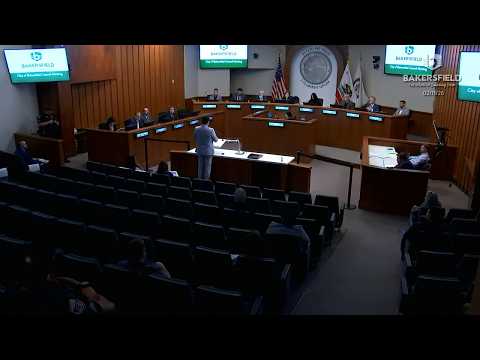
Council voted on Feb. 11 to direct staff to begin the Proposition 218 notice process for a recommended, phased sewer user rate increase after a multi-month review that included consultant engineering analyses and community town halls.
The council's action follows a staff presentation summarizing AECOM's infrastructure evaluation and a separate HF&H cost-of-service analysis. Ms. Budak, who led the staff presentation, said the recommended scenario would set year one rates at $475 annually (about $39.60 per month) and add $100 each year for four years, reaching $875 annually by the fifth year. "The recommended rate is to increase the year 1 to $475, and then over the next 4 years, increase a $100 a year until the end of the Prop 218 5 year period," she said.
Why it mattered: staff and consultants told the council that the city's treatment plants require near-term maintenance and medium-term upgrades to meet demand and regulatory requirements. AECOM identified alternatives including upgrading Plant 2 and expanding Plant 3, replacing Plant 2 and consolidating flow to Plant 3, or building a new Plant 4; staff recommended a blend of upgrade-and-replace phasing to balance cost and operations.
Public and interagency concerns: Kern County Supervisor Philip Peters told council the county had only just received the AECOM engineering report and asked for time to review potential impacts to county residents and to special districts that share flows and costs. "When significant rate increases are proposed, we want to ensure the process is as transparent as possible," Peters said, urging publication of the full engineer's report before action. Kern Sanitation Authority’s engineer also asked for full public access to the study and clarity about which service areas would absorb which costs.
Staff response and process: City Manager Christian Clegg and Ms. Budak said the city had held 12 community meetings across wards, posted the cost-of-service analysis online, and would mail a Prop. 218 notice with updated reports and a 45-day period for protests and public review followed by an April public hearing. Ms. Budak noted AECOM's work identified immediate needs at Plant 3 (Phase 0) including electrical and mechanical equipment and odor controls and explained staff's intent to seek a moderate bond (staff cited an anticipated ~$150 million bond around year six) alongside the rate increases to finance longer-term construction.
Council debate: members asked whether the city could bond more upfront to reduce near-term rate pressure and whether bond sizes would constrain future councils. Finance Director Randy McKeown explained bonding capacity ties to the enterprise's rate base and reserves, saying the city would need to set rates adequate to service any proposed bonds. Several councilmembers and commenters urged a targeted rate-assistance program for seniors and low-income residents; the council made a referral for staff to develop such options.
Vote and next steps: Councilmember Smith moved to direct staff to mail the Prop. 218 notices for the recommended rate schedule. The motion passed (recorded as approved with Councilmember Weir voting no). Staff said notices would be mailed by the end of the month, begin a 45-day review period, and return for a public hearing in late April, with formal adoption subject to that hearing and any valid protests.
What remains unresolved: county and special-district review of the AECOM engineer's report, precise bond sizing which staff said would be determined later in the design process, and the scope and funding for a proposed rate-assistance program that council requested staff to develop.