
Board hears midyear literacy, STAR and IXL review; administrators defend Wonders adoption and fidelity checks
Get AI-powered insights, summaries, and transcripts
Subscribe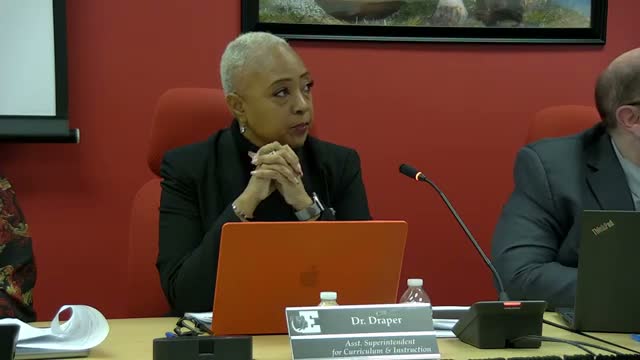
Summary
District leaders reported mixed midyear literacy results, explained fidelity checks for Acadience and plans for 25 certified Acadience mentors, and justified Wonders as the district’s primary structured-literacy resource while board members questioned IXL usage and teacher autonomy.
District curriculum leaders presented a midyear review of screening and growth assessments and outlined next steps for instruction and interventions.
Director Jennifer Hilton reviewed Acadience (referred to in materials as a universal screener) results across K–5. She said kindergarten rose from 54% at/above benchmark to 62% at midyear, first grade held around 54% amid tougher midyear expectations, second grade rose from 65% to 67%, and third grade dipped from 66% to 59% with only about 50% of third-graders making typical progress. “We have about 55% of our kindergarteners making typical or above typical progress,” Hilton said, and administrators stressed fidelity checks and training for interventionists.
Administrators described a district push for structured literacy aligned to state guidance: the Wonders curriculum was adopted as the district’s primary evidence‑based resource and the administration said it is required under recent Pennsylvania guidance to use an evidence-based program for reading instruction. “Wonders is our primary resource,” one administrator said; the board heard that the resource aligns with state expectations and the district has supplemented the scope and sequence with local alignment work.
The meeting included an extended debate about IXL, the district’s supplemental digital practice platform. Administrators said IXL usage dropped this year — which correlates to less IXL-driven growth — because teachers are prioritizing core instruction and resources built into Wonders and small-group, teacher-led interventions. One administrator said IXL remains useful for enrichment and above-grade-level learners, while others urged examining whether district-wide IXL time expectations (30–50 minutes for K–5) are being met.
Board members raised concerns about pacing, teacher autonomy and the heavy reliance on a single program. One board member said the adoption “puts our teachers in a box” and asked whether the pacing guides are constraining classroom judgment; administration replied that the scope and sequence are recursive and aligned to Pennsylvania standards, and principals may approve evidence-based supplemental materials when needed.
Administrators listed four critical next steps: adjust master schedules to preserve core instructional time (the “80% rule”), strengthen implementation of adopted curriculum materials, institute consistent program-based common assessments, and expand regular progress monitoring for K–5 students to better target Tier 2 and Tier 3 interventions.
What’s next: the board was invited to participate in classroom learning walks to observe implementation; administration will report on progress and fidelity checks in future updates.