Get Full Government Meeting Transcripts, Videos, & Alerts Forever!
Get email alerts on the Budget Amendment topic
No spam. Unsubscribe anytime.
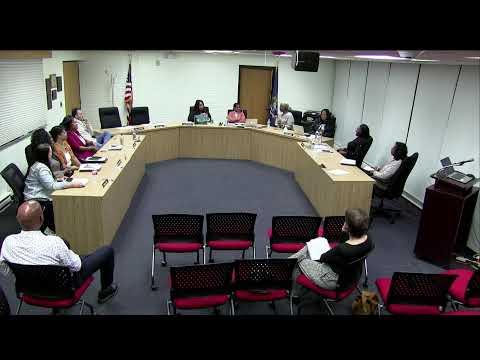
Oak Park board hears first amendment to 2025–26 budget, staff warns audit may change totals
Summary
The board reviewed a proposed first amendment to the 2025–26 budget from Executive Director of Business & Finance Charice Foster that reflects new state revenue projections, grant carryovers and line‑by‑line expense adjustments; Foster said an imminent audit could require another amendment.
Charice Foster, executive director of business and finance for the Oak Park School District, presented the board with a proposed first amendment to the 2025–26 budget on Oct. 13, saying updated state aid numbers and recent grant awards increase projected revenue but also require adjustments to expenses.
Foster told the board that the district’s June projection of $41,199,001.27 in state sources is being revised to a projected $44,277,008.49 as a result of new state funding estimates and grants that were not finalized at the time of the original budget. She said total revenues are now projected at approximately $61,280,009.13 and that projected expenses will increase in parallel (about $60,629,730.38) because revenue tied to grants must be shown on the expense side as program costs. Foster said the amendment would raise the district’s projected fund balance by about $651,183.
Foster emphasized that some items remain uncertain and that the finalized audit could require further changes. “The audit will tell us what they find,” Foster said; she warned the board that the audit could change the fund‑balance figures and likely result in a follow‑up amendment. Trustees asked whether the changes would affect the ongoing audit process and whether the fund balance would rise or fall; Foster said it is too early to give a firm numeric estimate and that the audit’s financial statements will be determinative.
Trustees pressed for operational context. In response, Foster described how local revenue, federal and state awards, and grant rollovers appear on the amended projection; she explained reductions shown in parentheses reflect grants partially spent in an earlier award year and highlighted that indirect cost recovery (for example, a percentage applied to Title I grants) is included in calculations.
Board members also asked about staffing and substitute costs. Foster said vacancies remain—particularly in special education, paraprofessional roles, a high‑school math opening and a few school psychologist positions—and that day‑to‑day absences drive the majority of substitute expenditures. She said the district has reduced several expense line items from the original projection but is monitoring salary and contractual costs closely.
Foster closed by noting the amendment is one of three required quarterly reviews and framed it as both a compliance step and a cleanup to reflect revenue that materialized after the June budget review. The board did not take a formal vote on the amendment during the Oct. 13 meeting; Foster said she will return with updates as audit results arrive.
Next steps: Foster said the district will update figures after the audit and present any required additional amendments. Trustees asked for a follow‑up presentation after the winter assessment window and when audit adjustments are available.