
House Education committee debates hybrid school governance; staff outlines Act 46 limits
Get AI-powered insights, summaries, and transcripts
Subscribe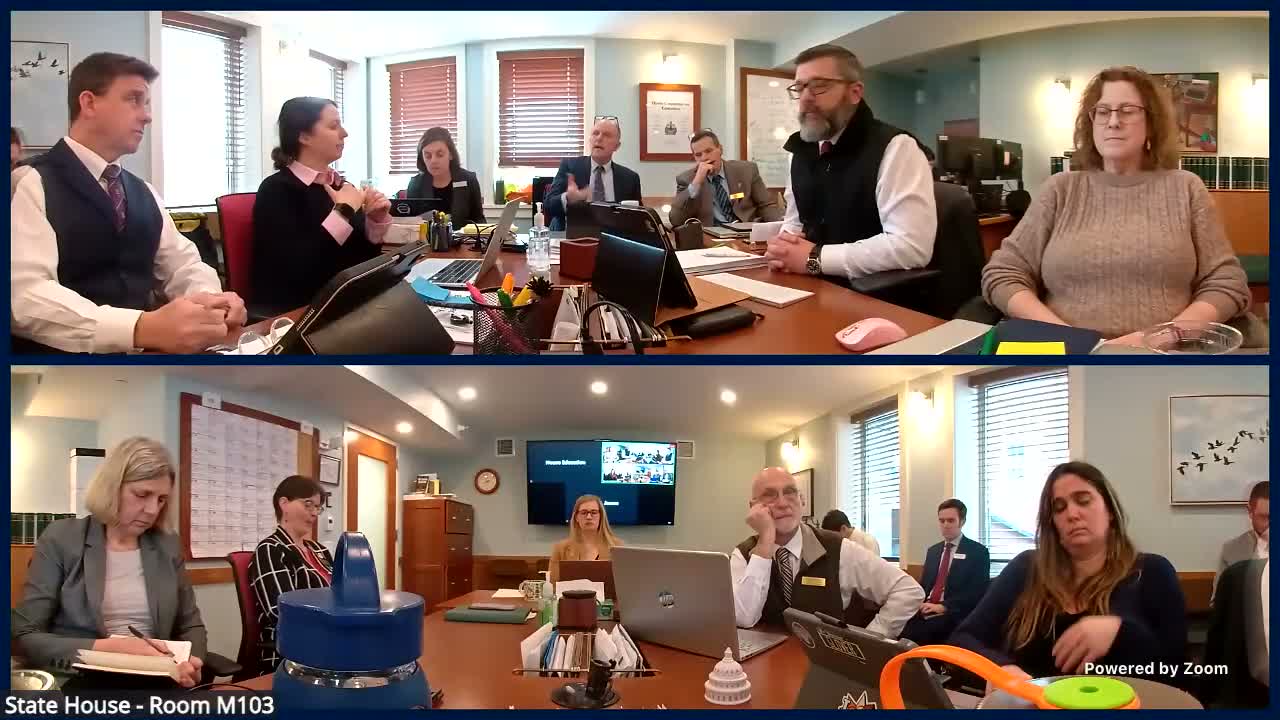
Summary
On Feb. 11 the House Education committee continued talks on whether Vermont should use a hybrid mix of supervisory unions and school districts, weighing impacts on rural schools, funding and representation; staff warned Act 46 and Title 16 create legal and operational constraints. No votes were taken.
The House Education committee on Feb. 11 continued a multi-day discussion over possible changes to school governance, considering a hybrid model that would allow both supervisory unions (SUs) and individual school districts (SDs) in different parts of the state.
Unidentified Speaker 1 opened the meeting by urging members to weigh three central concerns in proposals before the committee: "potential impact on rural areas and small schools," effects on school choice, and impacts on funding. "We all have something painful... in the proposals in front of us," Speaker 1 said, asking members to refine questions for counsel and for the record.
Unidentified Speaker 2 described the "hybrid model" as one that "contemplates both" SDs and SUs on a single map so communities that need supervisory unions can retain them while other areas operate as single districts. "To me, a hybrid model is... part of the state, part of us that wants just districts. And there are other parts of the state that want and need supervisory unions," Speaker 2 said.
Members flagged practical tradeoffs: proximity and population thresholds (members discussed targets such as "2,000 to 4,000 people" to make some district sizes feasible), representation on very large boards, and the risk that local voters would feel they lost a voice in decisions about school closures and programming. Unidentified Speaker 7 warned that consolidation could "mean we're gonna cut programming. We're gonna cut teachers. We're gonna have fewer opportunities for students." Several members pressed for protections for small towns and for mechanisms (transition boards, proportional voting) to maintain local representation.
Unidentified Speaker 5, representing committee staff, summarized the statutory framework and cautioned that Act 46 and Title 16 impose constraints and legal questions. "Act 46 had specific language... the short answer is there may be constitutional concerns," Speaker 5 said, and she noted that much of Act 46 existed as session law and reflected a prior moment in policy. Speaker 5 explained the statutory distinction in Title 16: a supervisory union is an administrative unit that provides centralized services (special education, procurement, professional development), while a school district is the governing unit on which the foundation formula and school financing are based.
That statutory distinction has operational consequences: transferring SU responsibilities to SDs would require drafting new statutory language and attention to where special-education LEA responsibilities and contracting authority would sit. Speaker 5 said staff can draft language to assign SU duties to school boards if the committee chooses that path.
Budget transparency surfaced as a point of contention. Speaker 1 said SU budgets are "hidden and buried" within district ballots because voters see the allocated line items rather than a separate SU budget. Unidentified Speaker 9 disputed that characterization, saying regions try to make supervisory costs visible even though the structure and allocations are complex.
Members also discussed whether career and technical education (CTE) centers could serve as anchors for SU boundaries in rural regions, and whether maps built around CTEs or other regional centers could preserve local identity while gaining scale.
No formal vote was taken. The committee agreed to continue work: members asked staff to prepare clearer draft language, run options by legislative counsel, and explore map configurations and representation rules. Unidentified Speaker 1 adjourned the session "until tomorrow," offering members the option to remain in committee or go to the floor.
Next steps: staff will draft statutory language options and further study map permutations and representation mechanisms; the committee will reconvene to review those drafts.