
Senate advances S.209 to third reading to bar warrantless civil arrests at polling places, schools and health sites
Get AI-powered insights, summaries, and transcripts
Subscribe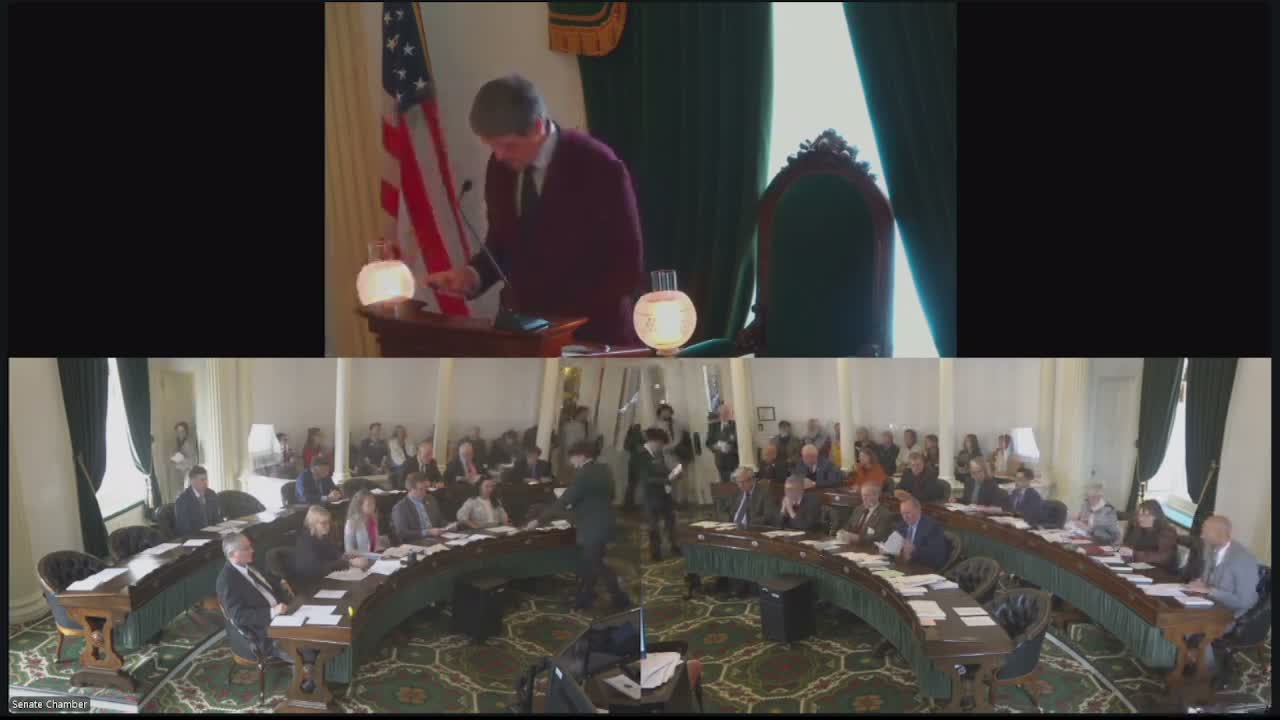
Summary
The Vermont Senate on Feb. 12 amended and ordered third reading of S.209, expanding existing protections against warrantless civil arrests from courthouses to "sensitive locations" including polling places, educational institutions, social service establishments, places of worship and health-care facilities; the roll call to order third reading passed 27–2.
The Vermont Senate on Feb. 12 amended and advanced S.209 to third reading, moving to expand a 2018 protection that barred warrantless civil arrests at courthouses to an explicit list of other "sensitive locations." The roll call to order third reading passed 27–2.
Senator Vychoski, reporting for the Senate Committee on Judiciary, told colleagues the bill adds a narrow list of sites where people should feel safe from warrantless civil arrests. "The locations that we have added to this list are polling places, educational institutions, social service establishments ... a place of worship, and then the bill goes on to identify ... health care facilities," she said during floor remarks. Vychoski said the committee's language was reviewed carefully and that judges and counsel were consulted.
The bill, as presented on the calendar, does not block arrests for violent conduct or arrests based on a valid warrant. "It is a prohibition on warrantless civil arrest," Vychoski said, drawing a distinction between that ban and lawful arrests when an officer has authority.
Committee members reported a unanimous committee vote in favor of the measure. "Your committee on judiciary voted 5–0 to support this bill," Vychoski said. She listed a range of witnesses who testified in committee, including legislative counsel and outside experts such as Jessica Bowman Posen of Columbia Law School and representatives of victim-service and civil-rights organizations.
During floor questioning, senators pressed for clarity about definitions. Vychoski said the bill's draft defines "social service establishments" to include crisis centers, domestic violence shelters, victim-service centers, child-advocacy centers, supervised visitation centers, facilities that serve people with disabilities, homeless shelters, substance-use treatment facilities and locations distributing food or essentials — language the committee took largely from prior federal guidance. Senators also asked whether state buildings were included; Vychoski said the bill initially included state buildings but the committee removed them to narrow the scope despite some members' preference to keep them.
After debate, the Senate first adopted the committee-recommended amendment by voice and then, on a subsequent roll call to order third reading, recorded 27 ayes and 2 nays. The two senators recorded as voting no were Ingalls and Williams. The presiding officer ordered the bill read a third time for further consideration.
Next steps: S.209 will proceed to a third reading on the Senate floor, where it may be debated further or brought to a final passage vote.