
Columbus police report falling violent crime, higher clearance rates and seek retention incentives
Get AI-powered insights, summaries, and transcripts
Subscribe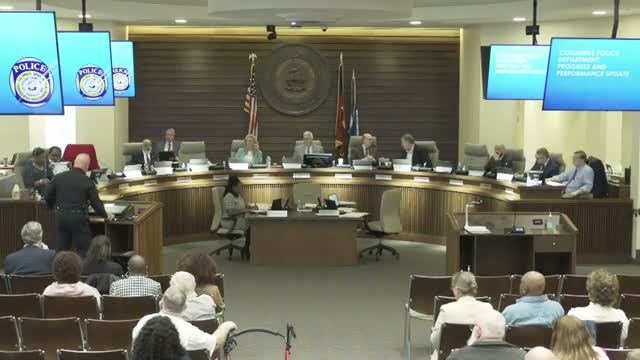
Summary
Police leaders told council murders and several other Part 1 crimes fell in 2025 and clearance rates exceeded national averages; the department requested certification pay and discussed recruitment, training and drone rollout to sustain gains.
Chief Mathis and senior commanders presented an extended public‑safety briefing, telling council that the Columbus Police Department has seen reductions in multiple violent‑crime categories alongside improvements in response times and investigation clearance rates.
Mathis opened by noting recent recognitions for officers and the department, including an FBI National Academy “agency of the year” award. Deputy Chief Roger Graham described recruiting and retention changes — increasing digital recruiting, high‑school and college pathways, a relocation stipend and a new Columbus Police Department Leadership Academy — that narrowed vacancy counts and expanded recruitment pipelines.
Staff presented year‑over‑year crime data. The department reported 27 murders in 2025, down from 35 the previous year; an ~81% murder clearance rate for 2025, which officials said exceeds national averages; and substantial reductions reported in robberies, aggravated assaults, burglaries and theft‑by‑taking motor vehicles. Command staff attributed part of the improvement to increased staffing and proactive policing, and they highlighted a 51% Part‑1 clearance rate against a cited national average of ~17.4% for comparable cities.
Chief Mathis requested council consider a certification pay program to boost retention and recognize specialized duties; staff estimated the certification program would cost about $270,000 annually and noted other options such as a broader overtime budget (the “171” pay structure) are under review. Council members expressed support for the department’s progress and asked for the presentation materials to be distributed publicly.
Council also received operational updates: the department is launching foot and bike patrols in targeted areas, enhancing scenario‑based and de‑escalation training, and preparing to bring drones online once site surveys and system integration are complete (staff estimated operations would begin within one to two months after the site work).
Next steps: Council asked staff to share the presentation, and flagged certification pay and overtime policy for budget‑season consideration.