St. Helena council approves Spring Grove tentative map despite residents’ fire‑access concerns
Loading...
Summary
After a four-hour public hearing and contested legal arguments about local fire‑code amendments, the St. Helena City Council adopted staff recommendations to approve the Spring Grove tentative map and authorize a water‑neutrality in‑lieu fee, voting 3–1. Council cited staff and fire‑department findings and state housing law constraints in its decision.
The St. Helena City Council voted 3–1 on Feb. 10 to adopt staff recommendations approving the tentative map for the Spring Grove subdivision and to authorize the project’s water‑neutrality in‑lieu fee.
The council’s decision followed a multi-hour public hearing on a proposed 41‑unit condominium project on about 2.53 acres on Spring Street. Consultant planner Mike Janicek told council the project meets minimum lot‑size and width requirements, would provide 41 units (two more than the local minimum) and includes eight deed‑restricted affordable units. He said planning staff and public‑works reviewers verified the applicant’s in‑lieu water‑neutrality calculation and recommended council authorize the fee request.
The hearing focused on two fault lines: public‑safety concerns over a single public access route and a legal dispute about how local fire‑code amendments interact with state housing laws. Land‑use attorney Mark Wolf, representing neighborhood opponents, read language from the city’s local amendments and argued the sprinkler exception had been deleted in prior code amendments, meaning local law requires two separate and approved fire roads for developments exceeding 30 units. ‘‘Developments … where the number of dwelling units exceeds 30 shall be provided two separate and approved fire roads,’’ Wolf said, urging the council to require a second egress or deny the map.
City Attorney Walsh and staff answered that the council must apply state housing statutes and determine whether objective standards are met. Walsh summarized the legal framework under the Housing Accountability Act (SB 330), explaining that if a council finds there is substantial evidence a reasonable person could conclude the project comports with applicable objective standards, courts generally defer to that record. He warned of potential consequences for denying a qualifying housing project: review or enforcement by the state Department of Housing and Community Development, possible decertification of the housing element, court orders to approve the project, and exposure to attorney’s fees and statutory penalties (Walsh cited initial penalties on the order of $10,000 per unit in some enforcement scenarios).
Fire Department staff presented technical findings. Fire Inspector Alec Midler and Fire Chief John Swanson said the internal circulation includes hammerhead turnarounds, proposed emergency vehicle access widths generally between 26–28 feet, NFPA‑13 sprinklers for the buildings and proposed hydrant locations; their review concluded the project meets life‑safety standards as written. Midler said engineers will verify foundations, anchoring and final placements, and Swanson said water‑supply and sprinkler plans must clear fire‑department review during permit processing.
Public commenters were deeply divided. Supporters, including a representative from Generation Housing, urged approval to add market and ‘‘missing middle’’ housing. Opponents — including residents, independent fire‑ and wildland‑fire consultants, and several neighborhood attorneys — pressed that the single external access presents an unacceptable evacuation risk in high‑wind wildfire conditions and questioned whether required objective standards had been fully applied. One resident read aloud a recent wildland‑fire analysis concluding the project’s single egress and dense construction create a ‘‘material and high risk of wildfire danger.’’
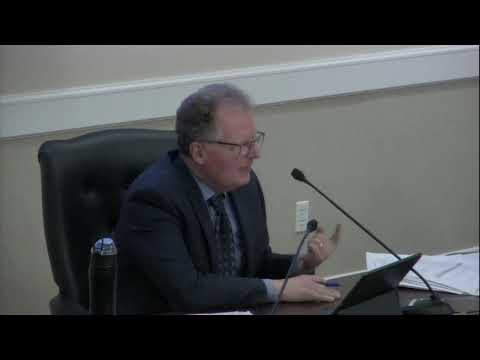
Council deliberations weighed the competing inputs. Several members expressed deep concern about evacuation scenarios and the absence of a clearly usable second access, while noting that staff, the fire department and the city attorney had concluded the project complied with the objective standards used in this review. After the legal briefing and extended discussion, Councilmembers Barrick and Spatarato and Mayor Paul Doreen voted to adopt staff recommendations; Vice Mayor Dizzy voted no.
The staff approval includes follow‑on requirements: final map review, an affordable‑housing agreement, finalized sprinkler and hydrant plans, and any permits required by Fish & Wildlife for riparian or stormwater work. Walsh reminded council the project remains subject to subsequent ministerial and permit reviews and that litigation remains possible. The council did not alter the in‑lieu fee formula tonight but directed staff to implement outreach and administration of retrofit funds tied to the fee.
The city clerk recorded the vote 3–1. Council also asked staff to return with clarified policy language and to continue outreach and administrative steps tied to the in‑lieu program.