
U.S. secretary says oil sales, targeted licenses are central to new Venezuela strategy; funds routed under U.S. control
Get AI-powered insights, summaries, and transcripts
Sign Up Free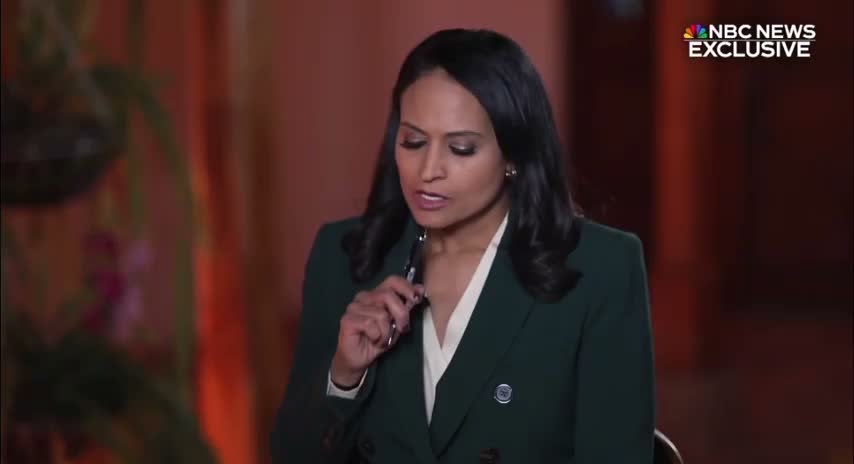
Summary
In an interview in Caracas, a U.S. cabinet secretary defended recent U.S.-overseen Venezuelan oil sales, said sale proceeds have been routed through a Treasury- and U.S.-controlled account to Venezuela after an interim Qatar holding, and argued that private companies—not U.S. taxpayers—will rebuild energy infrastructure as part of a strategy to restore stability and attract investment.
An hourlong interview in Caracas focused on the United States' role in recent oil sales and the oversight of funds meant to support Venezuela's recovery. The secretary (Speaker 2) said the U.S. is using control over oil revenues and targeted licensing to exert leverage without deploying troops or taxpayer money.
The secretary said the administration supervised the first sale of Venezuelan oil and that the $500,000,000 initially generated from that sale was returned to Venezuela. "We sold that oil, and we returned those funds to Venezuela," the secretary said. He added that subsequent sales have pushed totals over $1,000,000,000, with short-term agreements that could bring another $5,000,000,000 in the months ahead.
The interviewer (Speaker 1) repeatedly pressed for specifics about where proceeds were deposited and whether funds were reaching Venezuelans rather than the former regime. The secretary said concern about creditor seizures prompted the use of an intermediary account in Qatar "controlled by the US government" and overseen by the U.S. Treasury and the Office of Foreign Assets Control (OFAC). He said the Qatar account was used to land funds quickly and that the money has since been moved to a Treasury-controlled account and "has indeed" been sent on to Venezuelan authorities subject to local audits.
Asked whether U.S. taxpayers would underwrite reconstruction, the secretary denied that taxpayer funds would be used, saying reconstruction would be financed by private American and international companies. "Private businesses will do it. We don't need government funding to fix the situation here in Venezuela," he said. He also described strong private-sector interest and said some incumbent firms, including Chevron, are planning large expansions.
The secretary defended the choice of large, fast-moving oil traders in the first sale after the interviewer cited a Financial Times report that the top trader was a major donor to the president's campaign. "The choice of the oil traders has absolutely nothing to do with whether anyone donated to president Trump," he said, adding the decision was based on the traders' ability to move quickly.
On legality and sanctions, the secretary said the administration is issuing "specific licenses" in targeted areas to permit oil sales and described the steps as legal under U.S. law. He said the overall approach is to enforce sanctions where needed while using trade and investment to change Venezuela's trajectory.
The secretary further characterized the ouster of Nicolás Maduro as the removal of a "criminal" and asserted Maduro and his wife were arrested and would face trial in the United States. He linked the effort to curb drug trafficking and restore Venezuelan production, and predicted substantial increases in oil and natural gas output and improvements in electricity access "by the time this administration leaves."
The interviewer pressed on timing for free and fair elections. The secretary said such a process takes months and suggested elections are possible within the current administration, noting some opposition leaders estimate a 9- to 10-month timescale to prepare.
The secretary framed the approach as a form of leverage that seeks practical results for both Americans and Venezuelans: reduced migration and criminal spillover, lower energy prices, and reestablished economic ties. He repeatedly characterized the arrangement as "no soldiers on the ground, no taxpayer money," and as conditional on continuing positive progress and audits.
The interview did not include independent verification of the secretary's claims about arrests, the amounts returned, or the precise status of all accounts and audits; those assertions are reported as the secretary's statements. The secretary said the operation is likely to conclude during this administration and that private investment will drive reconstruction.