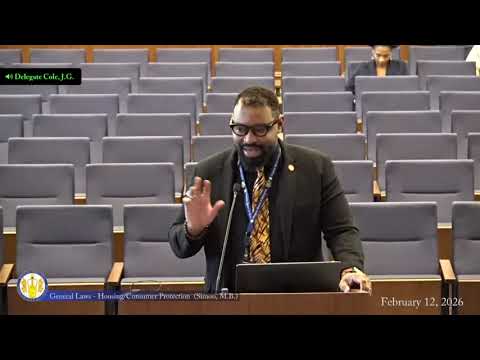
Va. subcommittee advances kratom consumer‑protection substitute after contentious testimony
Get AI-powered insights, summaries, and transcripts
SubscribeSummary
A House General Laws subcommittee advanced HB360, a consumer‑protection bill on kratom that would require labeling, limit 7‑hydroxymitragynine to 1% and move enforcement into the Virginia Consumer Protection Act; witnesses and industry experts sharply disagreed on the science and some label language was negotiated as a friendly amendment.
Delegate Dahlia Price presented HB360 and a committee substitute that shifts enforcement and regulation into the Virginia Consumer Protection Act and adds consumer warnings and placement rules for kratom products. Price told the panel the bill "does not ban kratom" and "does not criminalize possession," but seeks to require clearer warnings and to lower the allowable 7‑hydroxymitragynine level to 1 percent of total alkaloids.
Supporters described clinical harms and addictive effects. Dean Francis, a family member of someone who sought treatment after using kratom, recounted his son's decline and told the committee, "I would not wish this on anyone." Kate Gibson, a psychiatric nurse practitioner who treats substance use disorders, said many of her patients now require detox protocols similar to those used for heroin and prescription‑opioid dependence and urged passage: "Please, I implore you with every ounce of my heart to pass this bill." Pharmacists and health‑system representatives said they see kratom‑related emergency encounters and favor age limits, behind‑the‑counter placement and labeling.
Industry representatives and some scientific witnesses disputed key framings. The American Kratom Association opposed the bill in its current form, arguing that labeling kratom as "opioid‑like" risks unintended consequences and that beverages should not automatically be placed behind the counter. Professor Jack E. Henningfield and former FDA/industry experts told the committee that while 7‑hydroxymitragynine is pharmacologically potent, most kratom products are primarily mitragynine and that evidence about opioid‑like withdrawal is contested. One expert said federal actions focus on 7‑hydroxy rather than blanket bans.
Committee members pressed on implementation details. Questions centered on whether refrigerated kratom beverages should be exempted from behind‑the‑counter storage and how enforcement would work under the Virginia Consumer Protection Act. The sponsor signaled willingness to accept a friendly amendment to allow refrigerated beverage products to be treated like beer and wine in coolers. The panel agreed to "go by temporarily" to allow council staff and stakeholders to refine language, and later adopted an amendment addressing refrigerated beverages. The record shows subsequent procedural steps to report the bill out of committee with amendments and send it to the Appropriations committee for further consideration.
What happens next: the subcommittee sought additional technical drafting and stakeholder work before fuller committee consideration. The sponsor asked staff to work with industry and enforcement agencies on label language and exemptions; committee members said they expect further refinements before final votes.
Sources: testimony and exchanges recorded in the House General Laws subcommittee hearing (committee presentation, clinical and industry witnesses).