LCCC ramps up hands-on IT pathway as Cheyenne data‑center activity grows
Loading...
Summary
Laramie County Community College has expanded its IT pathway with stackable credit diplomas, a cyber range and rolling data‑center labs, saying enrollment has more than tripled since 2020 and announcing TechCon, a free hands‑on event for K–12 on April 18.
Laramie County Community College is scaling a skills‑focused IT pathway it says is preparing more local residents for jobs in Cheyenne’s growing technology sector, including data‑center and cybersecurity positions.
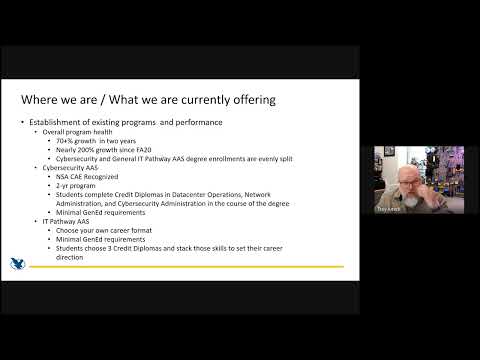
Troy Umick, director of the IT pathway at LCCC, told the City Technology Advisory Council that the program shifted in 2019 to align course content with industry needs and now offers stackable credit diplomas that feed into two associate degrees, including an NSA CAE‑recognized cybersecurity associate. "We more than tripled in size since that time," Umick said of enrollment since 2020.
The program emphasizes hands‑on learning and employer readiness. Students follow targeted diploma sequences — for example data‑center operations, network administration and cybersecurity — rather than picking unrelated electives, Umick said, so graduates leave with a coherent, employable skill set. He described assessment that requires two cumulative final exams and applied, production‑style projects to prove competency: "We assess based on the concept of do you know it and can you do it?" he said.
Coursework and certification targets cited include CompTIA A+ and Server+, Network+, Linux and Azure fundamentals (AZ‑900 and AZ‑104), and vendor‑agnostic cloud and virtualization instruction using Hyper‑V and Proxmox. Umick told the meeting the cybersecurity associate has been validated through the NSA CAE process: "They kind of just stamped it and said, 'Yeah, you're way beyond this already.'"
To give students reality‑based experience, LCCC operates a nine‑server virtualized cyber lab and a cyber range where teams practice attacks, defense and forensics, and uses rolling data‑center carts and shipped hardware kits to give remote students the same hands‑on opportunities as those in person. In describing those carts, Umick said they contain four ProLiant Gen10 servers, a Cisco switch, a patch panel and PDUs with UPS backup — "the only thing I can't really mimic is cooling," he said.
Industry partnerships and equipment donations play a major role in the program’s sustainability, Umick said. He cited donations (including Microsoft servers) and local firms such as TriHydro that have supplied laptops and components the college repurposes for student use or sells at low cost to seed home labs. That downcycling strategy has helped the program grow "without massively blowing the budget up for the school," Umick said.
The college is also experimenting with outreach events to broaden recruitment. Umick announced TechCon, a free, hands‑on mini‑conference for K–12 students on April 18 at LCCC’s Lehi Tech Building that will include soldering, hardware penetration testing, RJ‑45 cable building and a PC‑build race. The initial event is funded by an NSF grant nearing the end of its first cycle; Umick said the program will seek an extension. More information is listed at lccctechcon.com and industry partners can contact Tamick@lccc.wy.edu about sponsorships and participation.
On longer‑term plans, Umick said LCCC is exploring a bachelor’s option with a target of around 2028 but emphasized the need to avoid duplicative statewide programs and to coordinate advanced science and research work with Wyoming’s university system.
A high‑school teacher in the meeting asked how many high‑school students were currently enrolled in the IT fundamentals diploma; Umick said he did not have that figure on hand but reported that about 90% of students who attended LCCC boot camps subsequently joined the program and that one junior will finish the diploma early this year. The boot camps have been funded by the NSF grant for two years; Umick asked industry partners to consider sponsoring the camps after that funding ends.
The council thanked Umick for details about curricula, labs and industry partnerships and noted that the program’s growth and employer focus are central to keeping Cheyenne’s tech sector staffed as data‑center presence and other technology roles expand locally. The college and community partners plan to continue outreach and pursue funding to sustain hands‑on programming and the proposed bachelor’s pathway.