
Senate Judiciary hears testimony on S.193 to create forensic competency-restoration pathway for small number of serious cases
Get AI-powered insights, summaries, and transcripts
Subscribe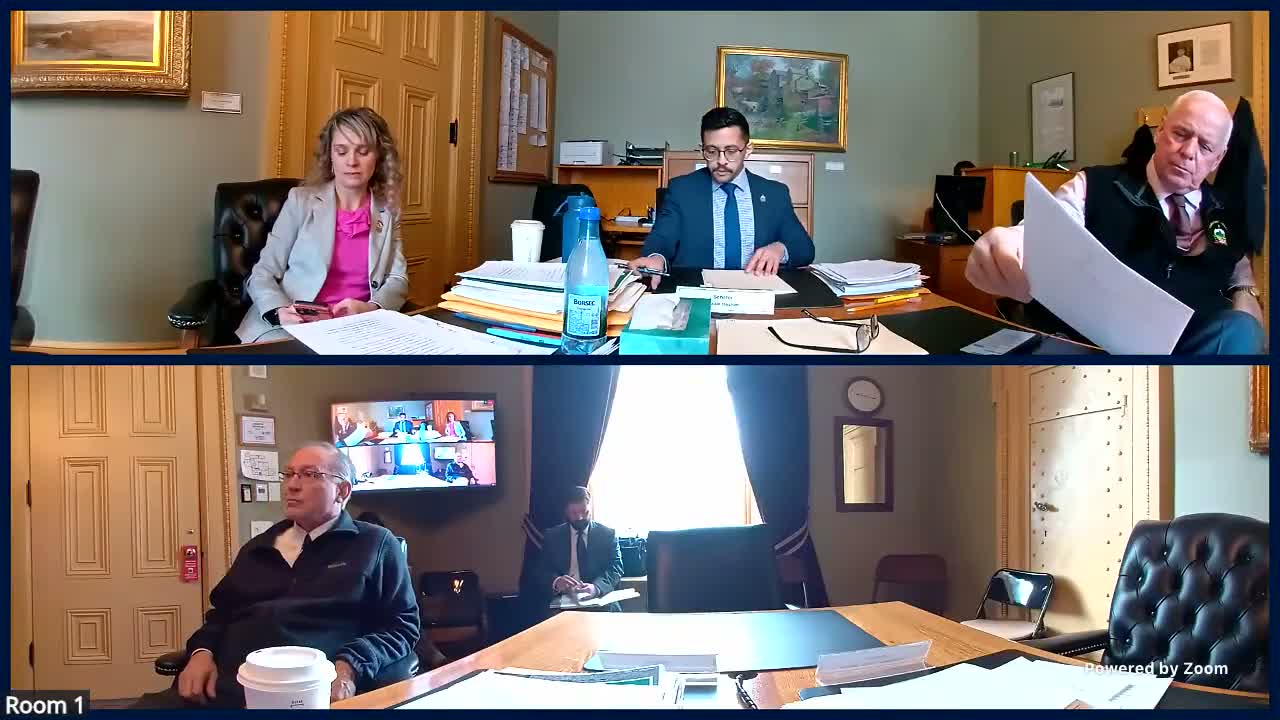
Summary
State's attorneys and a judge described S.193 as a narrowly tailored bill to provide competency restoration and placements in secure forensic facilities for a small subset of life-offense cases; the committee deferred votes and asked for edits and additional stakeholder input.
State's attorneys and a judge told the Senate Judiciary committee on Feb. 12 that S.193 would create a forensic competency-restoration pathway for a small number of serious cases and is modeled in part on a federal statute.
Jared Bianchi, a Bennington County state's attorney testifying for the state's attorneys and sheriffs, said the bill would provide a restorative process in an appropriate forensic facility so people who are not currently competent can access the criminal process. "Competency has to do with the defendant's ability at a given moment to engage with the trial process, to talk with his attorney... to aid in their own defense," Bianchi said.
Bianchi distinguished competency from insanity (sanity), which he said attaches to the time of the offense. He described the bill's structure: Section 1 addresses competency restoration within a forensic setting; Section 2 would permit dismissal of inactive misdemeanor cases after two years; Section 3 provides for placement in forensic facilities after insanity verdicts with periodic review and the possibility of supervised community release; Section 5 delegates rulemaking authority; and Section 6 would mirror probation-like supervision for those released on supervised status.
Bianchi said the bill focuses on life-penalty offenses (murder, rape, kidnapping) and is intended for a very small population. On caseload size, committee witnesses and attorneys said the category likely consists of "about 4 or 5 at any given time." He also told senators that the attorney general's office and county state's attorneys coordinate prosecution responsibilities now and suggested consulting those offices on which entity should take particular cases.
Judge Zoe, an associate superior judge, cautioned that the bill's timelines and procedures would likely be subject to judicial review under existing U.S. Supreme Court precedent. She cited Jackson v. Indiana, which requires a court to determine whether restoration is likely within a reasonable period and to either pursue civil commitment procedures or release the defendant if restoration is not achieved. "What is reasonable... will be challenged," she told the committee.
Committee members asked about confidentiality; Bianchi said records would remain confidential and go only to case parties. Members also discussed whether to attach broader misdemeanor diversion provisions; Bianchi recommended against folding a broad diversion program into this narrowly tailored bill. The committee did not vote on S.193 and asked staff to review suggested edits and gather additional witnesses before reconvening.
What happens next: The committee requested suggested edits from staff and plans to invite additional stakeholders (Lehi counsel, AHS, PGM) and to consider the revised bill at a later meeting.